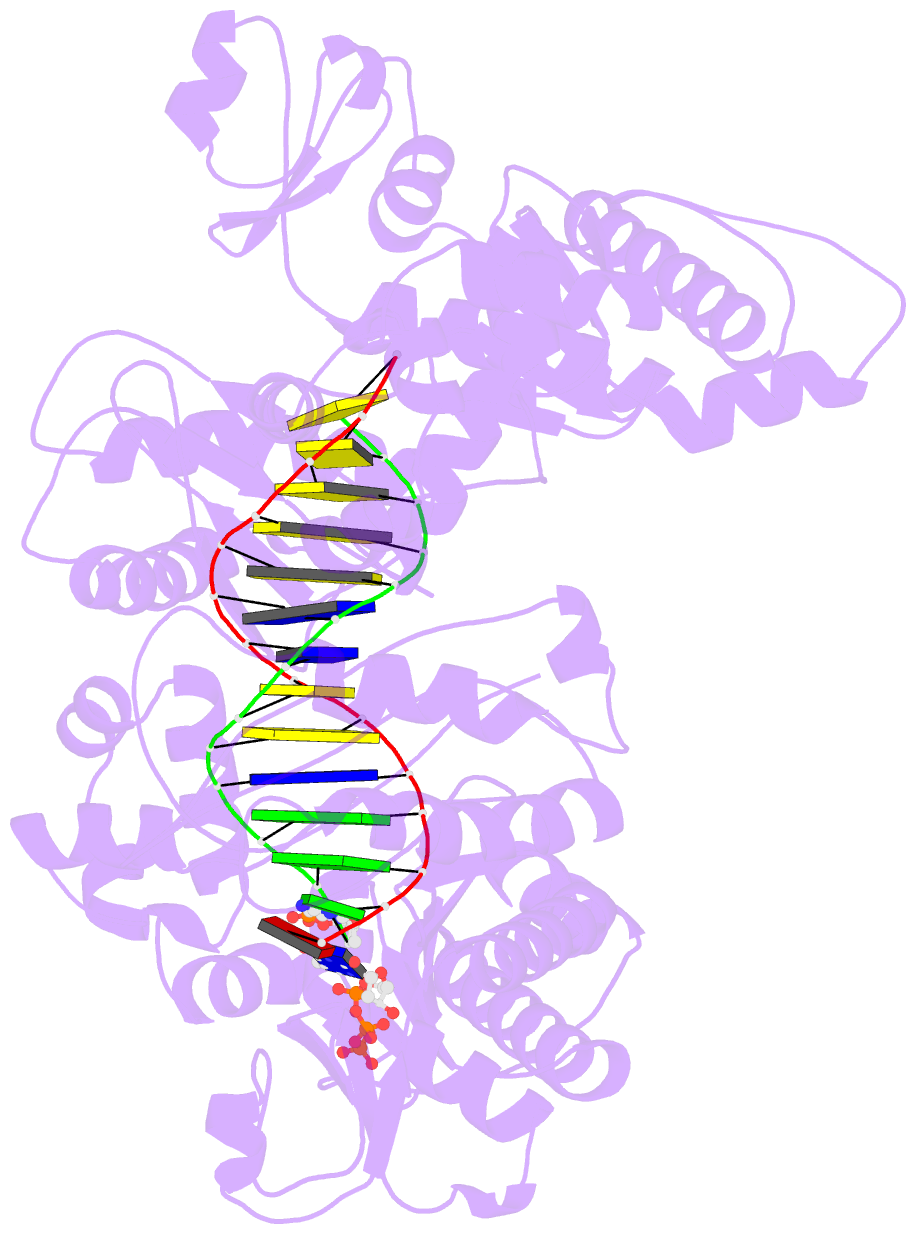
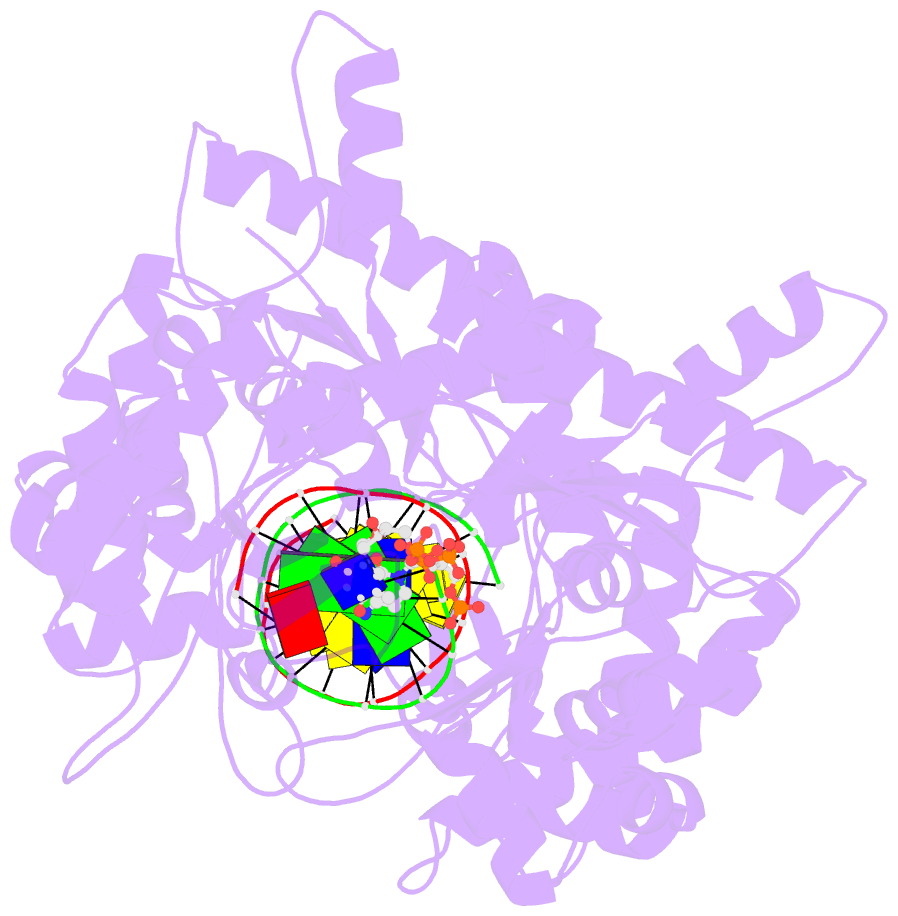
Summary information and primary citation
- PDB-id
-
1t3n;
DSSR-derived features in text and
JSON formats
- Class
- replication-DNA
- Method
- X-ray (2.3 Å)
- Summary
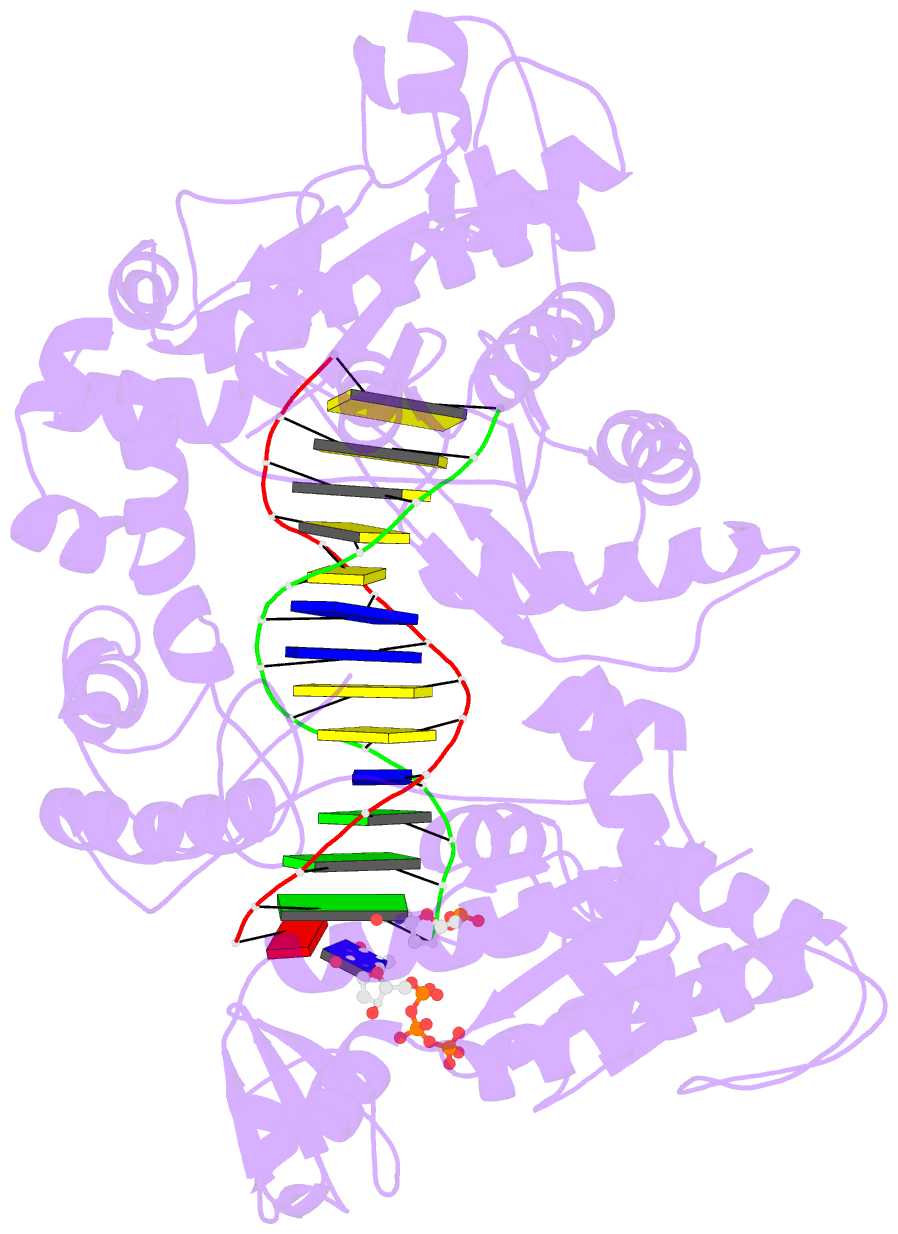
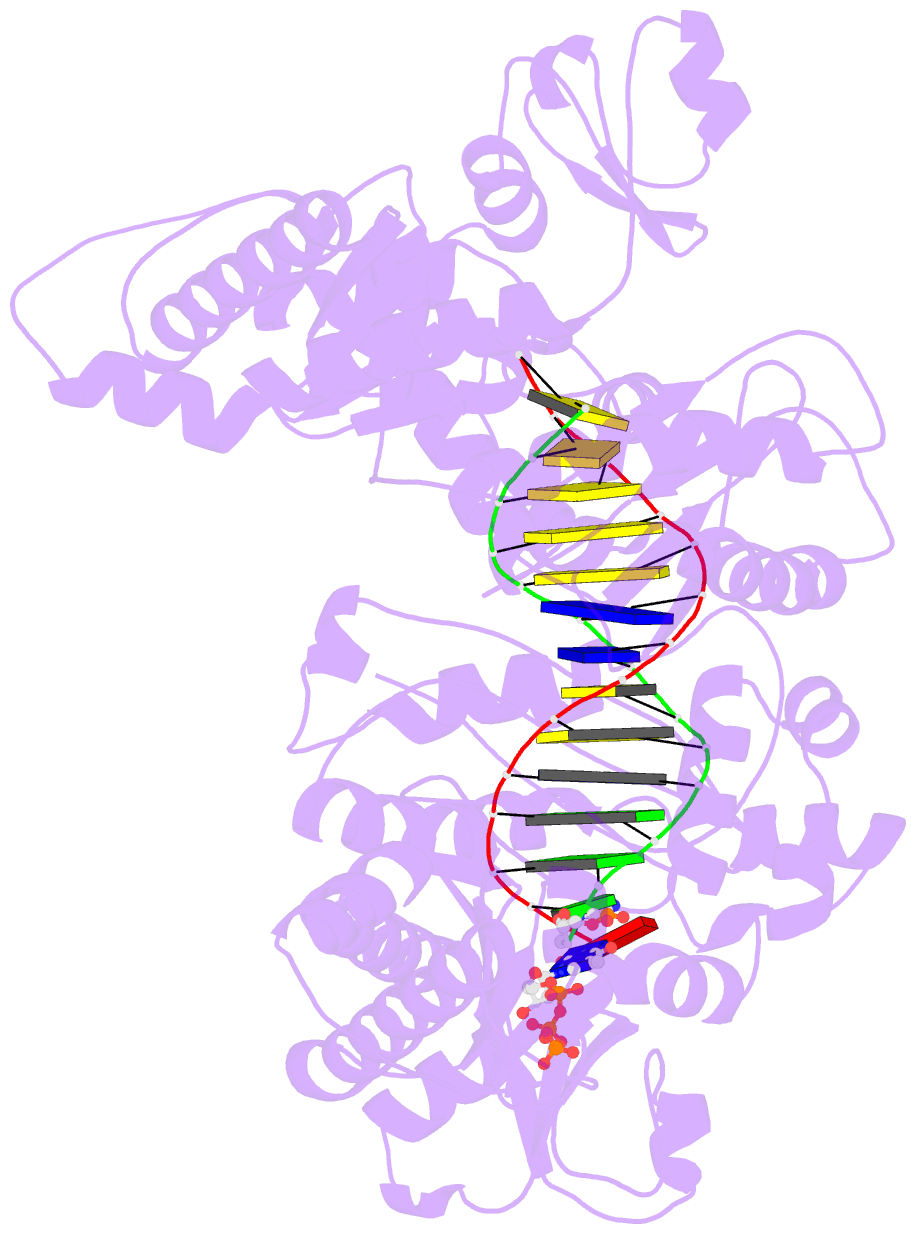
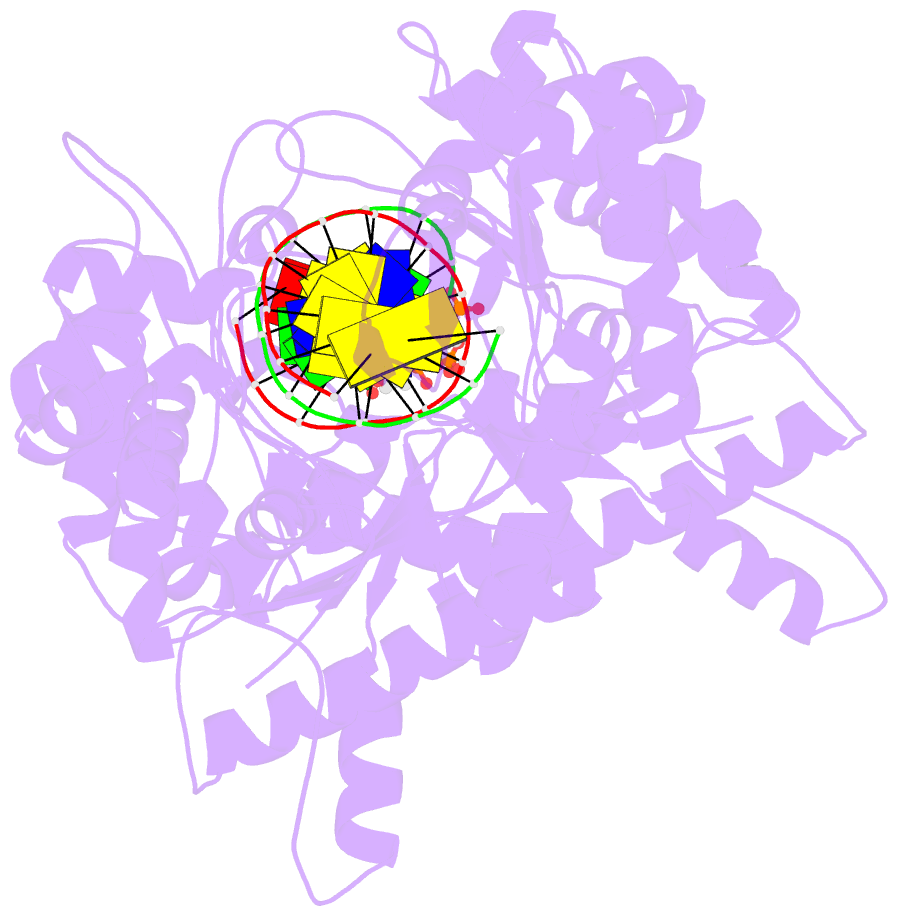
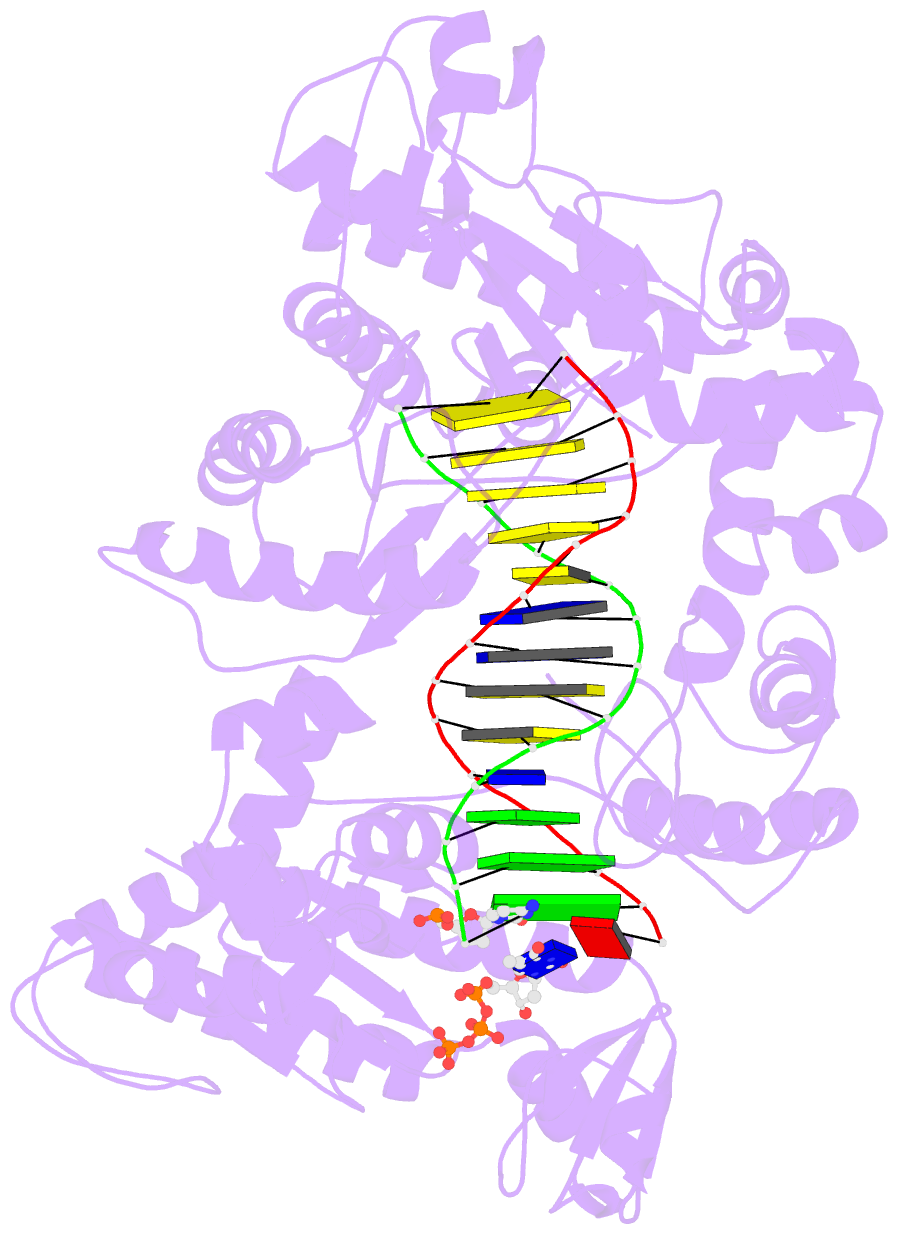
- Structure of the catalytic core of DNA polymerase iota
in complex with DNA and dttp
- Reference
-
Nair DT, Johnson RE, Prakash S, Prakash L, Aggarwal AK
(2004): "Replication
by human DNA polymerase-iota occurs by Hoogsteen
base-pairing." Nature, 430,
377-380. doi: 10.1038/nature02692.
- Abstract
- Almost all DNA polymerases show a strong preference for
incorporating the nucleotide that forms the correct
Watson-Crick base pair with the template base. In addition,
the catalytic efficiencies with which any given polymerase
forms the four possible correct base pairs are roughly the
same. Human DNA polymerase-iota (hPoliota), a member of the
Y family of DNA polymerases, is an exception to these
rules. hPoliota incorporates the correct nucleotide
opposite a template adenine with a several hundred to
several thousand fold greater efficiency than it
incorporates the correct nucleotide opposite a template
thymine, whereas its efficiency for correct nucleotide
incorporation opposite a template guanine or cytosine is
intermediate between these two extremes. Here we present
the crystal structure of hPoliota bound to a template
primer and an incoming nucleotide. The structure reveals a
polymerase that is 'specialized' for Hoogsteen
base-pairing, whereby the templating base is driven to the
syn conformation. Hoogsteen base-pairing offers a basis for
the varied efficiencies and fidelities of hPoliota opposite
different template bases, and it provides an elegant
mechanism for promoting replication through minor-groove
purine adducts that interfere with replication.