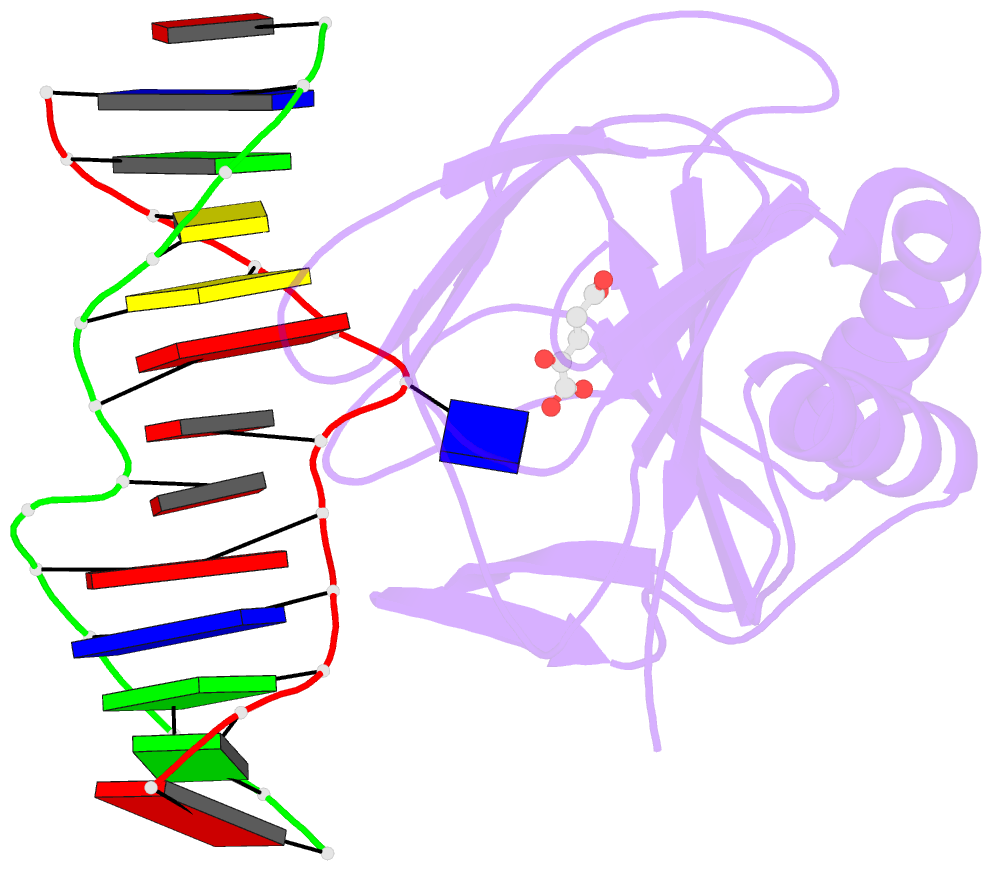
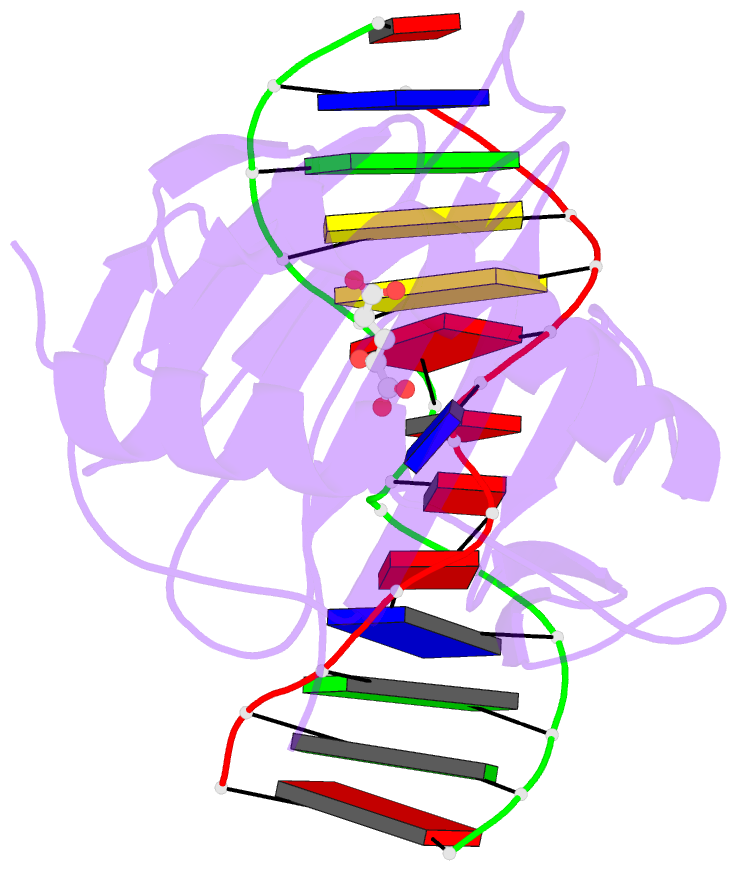
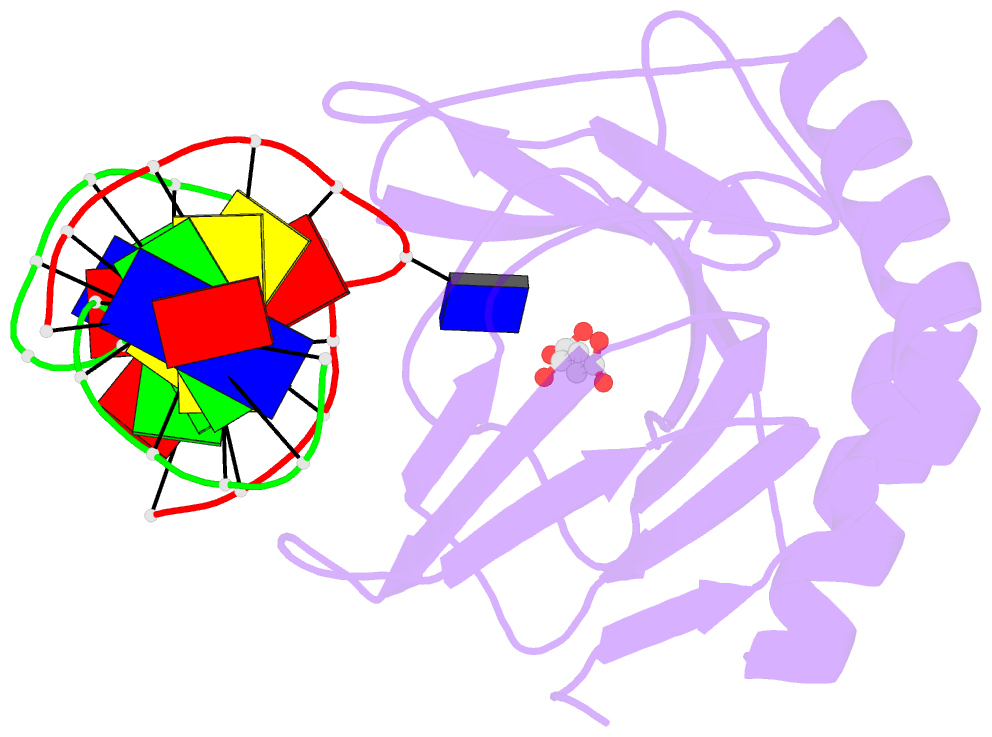
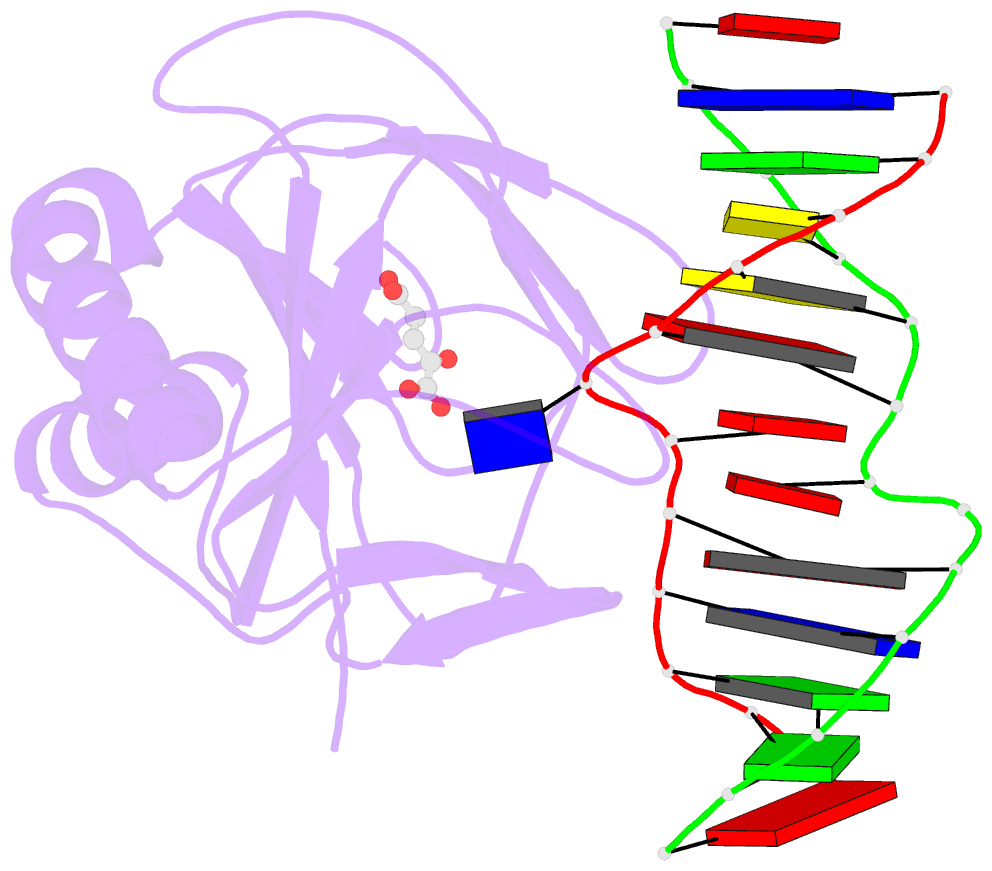
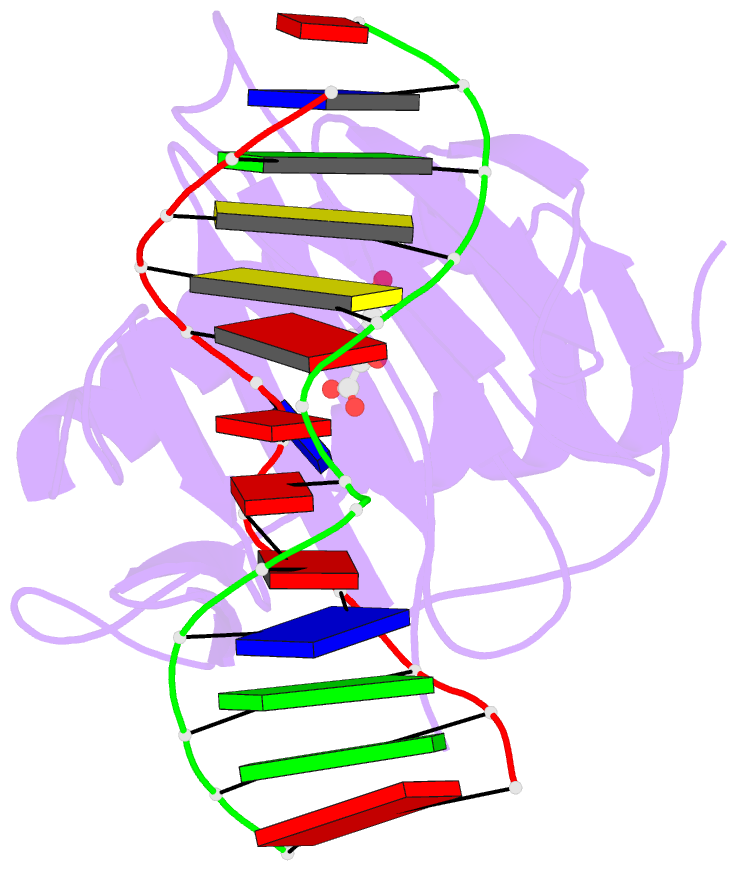
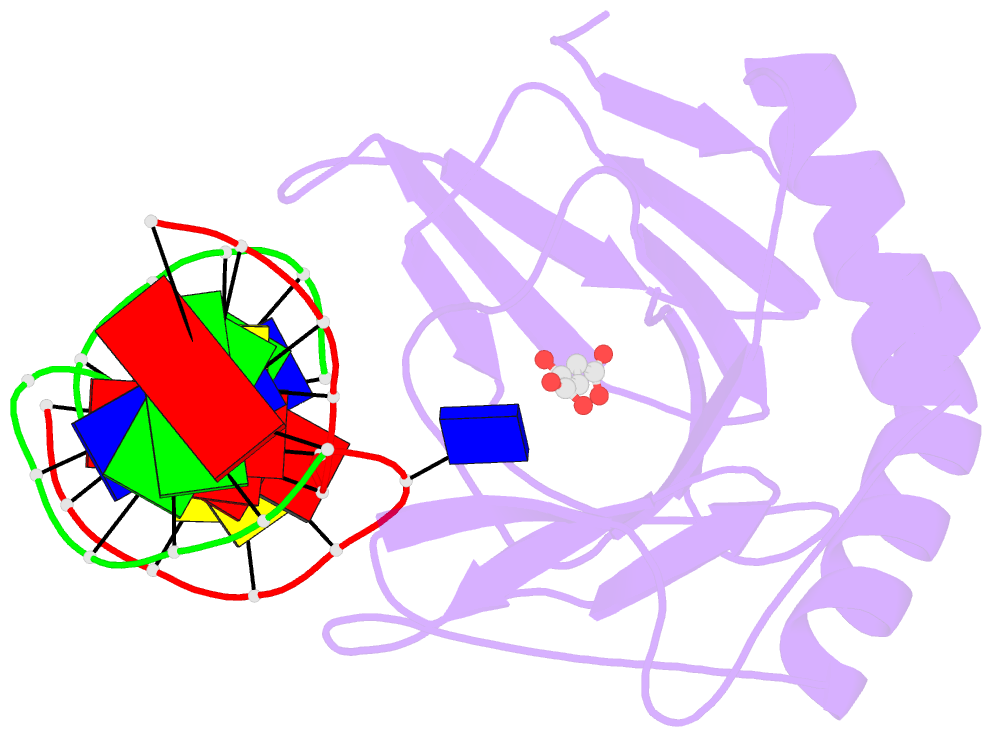
Summary information and primary citation
- PDB-id
-
3o1o;
DSSR-derived features in text and
JSON formats
- Class
- oxidoreductase
- Method
- X-ray (1.92 Å)
- Summary
- Iron-catalyzed oxidation intermediates captured in a
DNA repair dioxygenase
- Reference
-
Yi C, Jia G, Hou G, Dai Q, Zhang W, Zheng G, Jian X, Yang
C-G, Cui Q, He C (2010): "Iron-catalysed
oxidation intermediates captured in a DNA repair
dioxygenase." Nature, 468,
330-333.
- Abstract
- Mononuclear iron-containing oxygenases conduct a
diverse variety of oxidation functions in biology,
including the oxidative demethylation of methylated nucleic
acids and histones. Escherichia coli AlkB is the first such
enzyme that was discovered to repair methylated nucleic
acids, which are otherwise cytotoxic and/or mutagenic. AlkB
human homologues are known to play pivotal roles in various
processes. Here we present structural characterization of
oxidation intermediates for these demethylases. Using a
chemical cross-linking strategy, complexes of AlkB-double
stranded DNA (dsDNA) containing 1,N(6)-etheno adenine (εA),
N(3)-methyl thymine (3-meT) and N(3)-methyl cytosine
(3-meC) are stabilized and crystallized, respectively.
Exposing these crystals, grown under anaerobic conditions
containing iron(II) and α-ketoglutarate (αKG), to dioxygen
initiates oxidation in crystallo. Glycol (from εA) and
hemiaminal (from 3-meT) intermediates are captured; a
zwitterionic intermediate (from 3-meC) is also proposed,
based on crystallographic observations and computational
analysis. The observation of these unprecedented
intermediates provides direct support for the oxidative
demethylation mechanism for these demethylases. This study
also depicts a general mechanistic view of how a methyl
group is oxidatively removed from different biological
substrates.