Summary information and primary citation
- PDB-id
-
3os0;
DSSR-derived features in text and
JSON formats
- Class
- recombination-DNA
- Method
- X-ray (2.81 Å)
- Summary
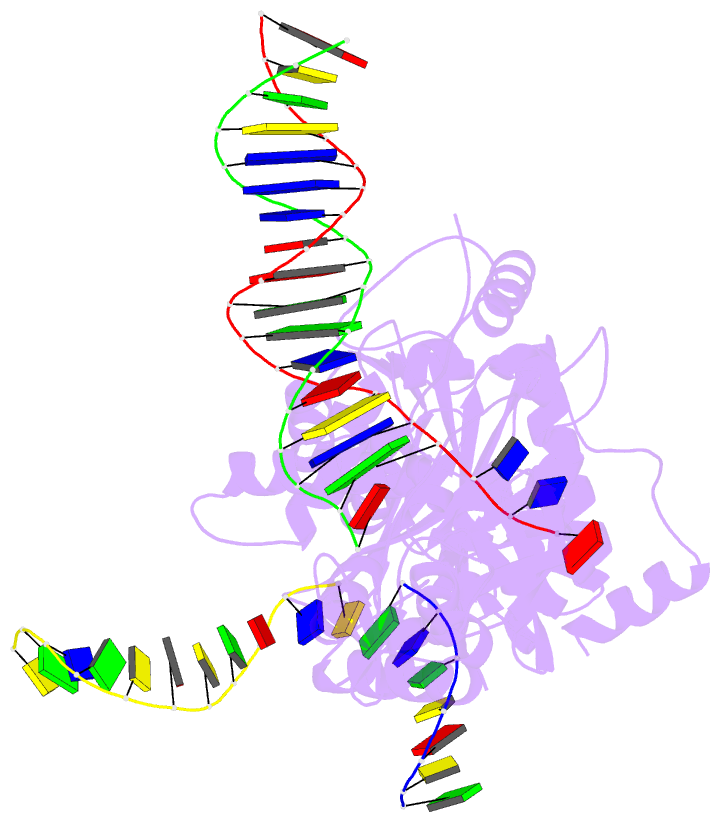
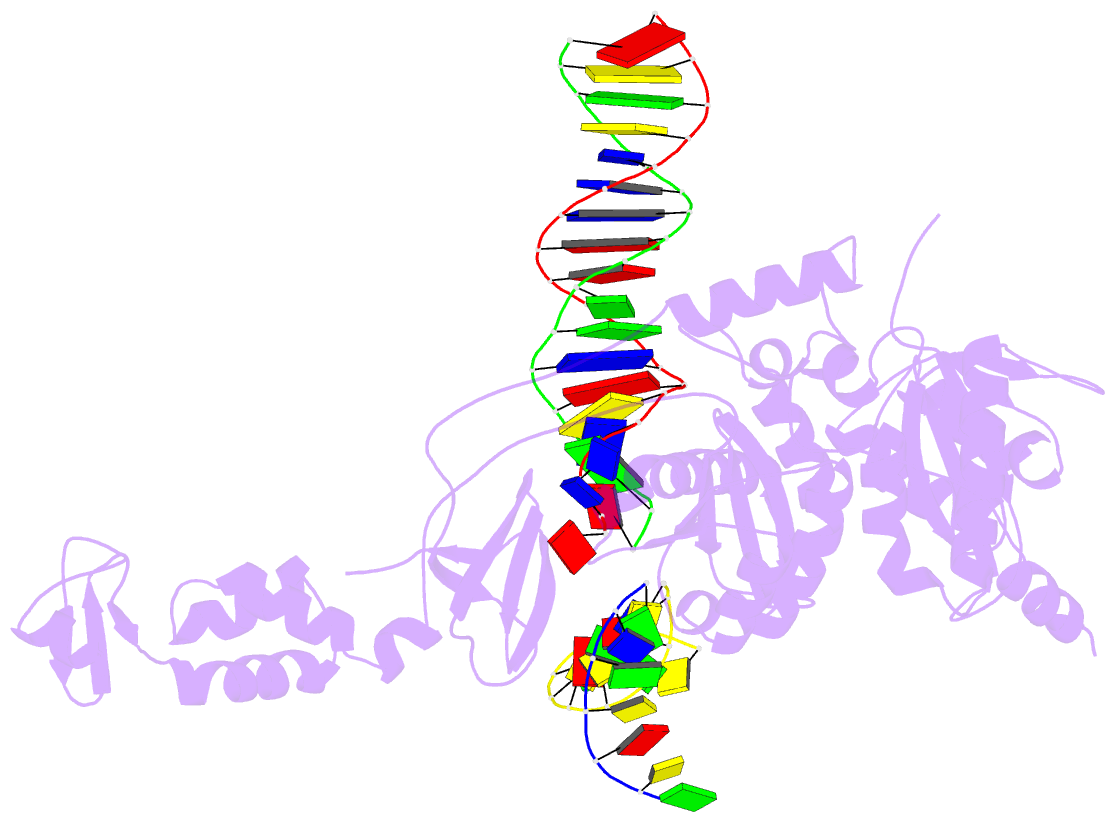
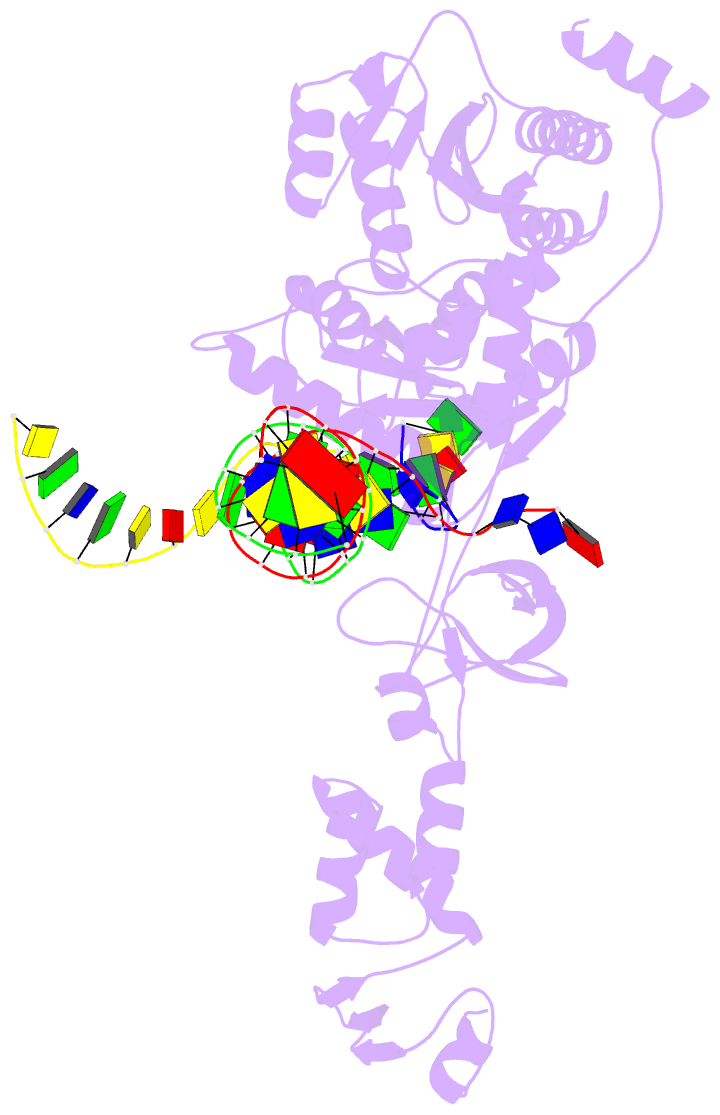
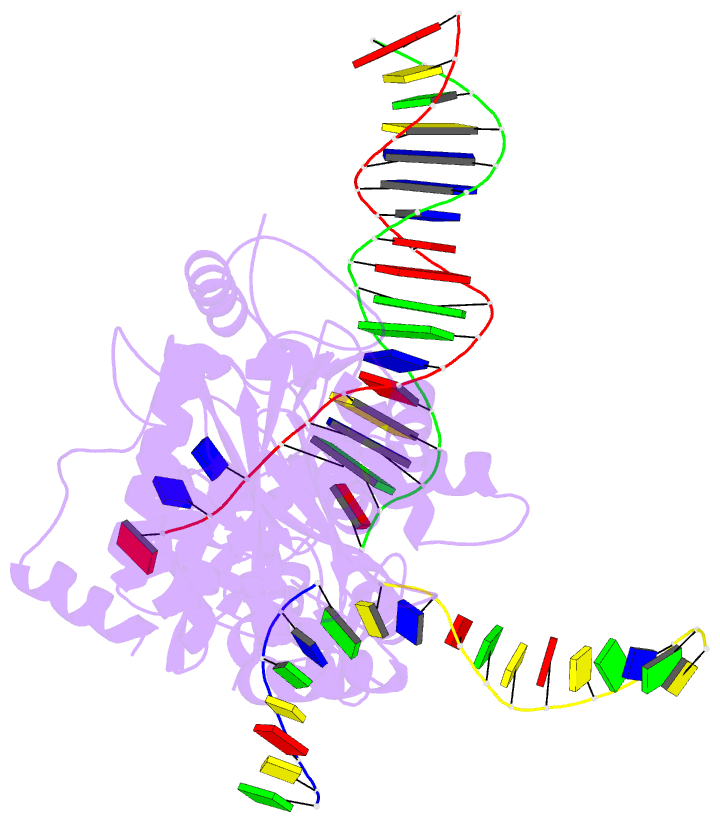
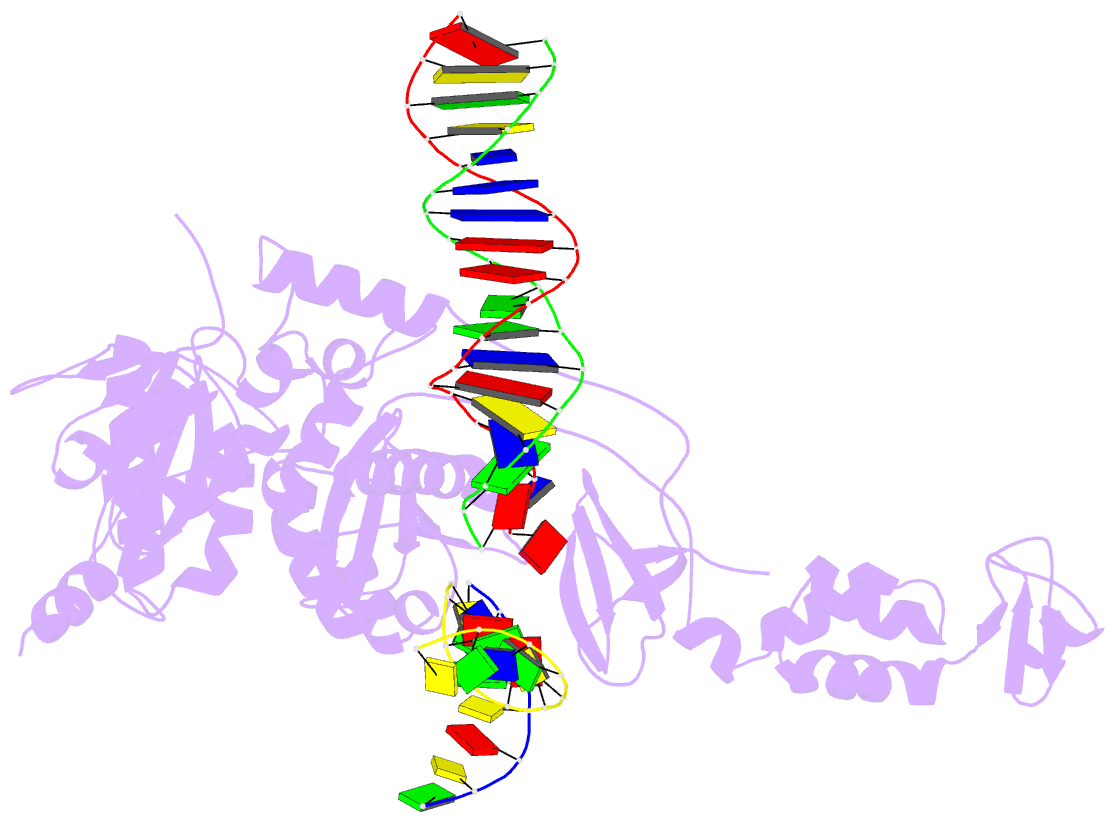
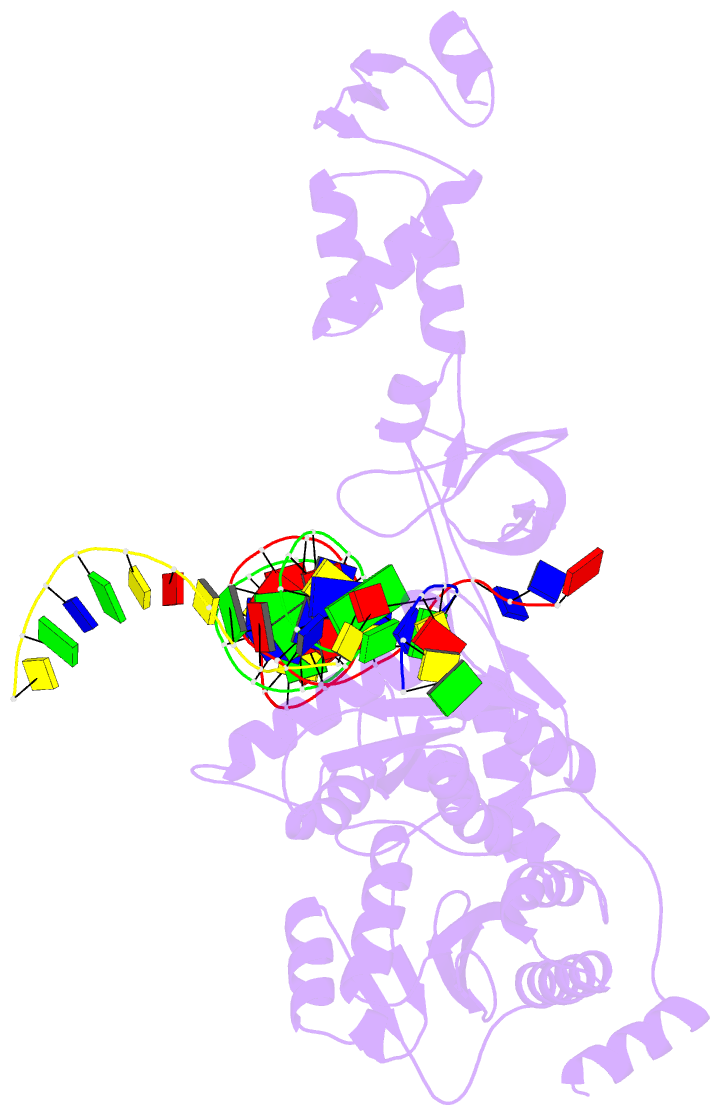
- Pfv strand transfer complex (stc) at 2.81 Å
resolution
- Reference
-
Maertens GN, Hare S, Cherepanov P (2010): "The
mechanism of retroviral integration from X-ray structures
of its key intermediates." Nature,
468, 326-329. doi: 10.1038/nature09517.
- Abstract
- To establish productive infection, a retrovirus must
insert a DNA replica of its genome into host cell
chromosomal DNA. This process is operated by the intasome,
a nucleoprotein complex composed of an integrase tetramer
(IN) assembled on the viral DNA ends. The intasome engages
chromosomal DNA within a target capture complex to carry
out strand transfer, irreversibly joining the viral and
cellular DNA molecules. Although several
intasome/transpososome structures from the DDE(D)
recombinase superfamily have been reported, the mechanics
of target DNA capture and strand transfer by these enzymes
remained unclear. Here we report crystal structures of the
intasome from prototype foamy virus in complex with target
DNA, elucidating the pre-integration target DNA capture and
post-catalytic strand transfer intermediates of the
retroviral integration process. The cleft between IN dimers
within the intasome accommodates chromosomal DNA in a
severely bent conformation, allowing widely spaced IN
active sites to access the scissile phosphodiester bonds.
Our results resolve the structural basis for retroviral DNA
integration and provide a framework for the design of INs
with altered target sequences.