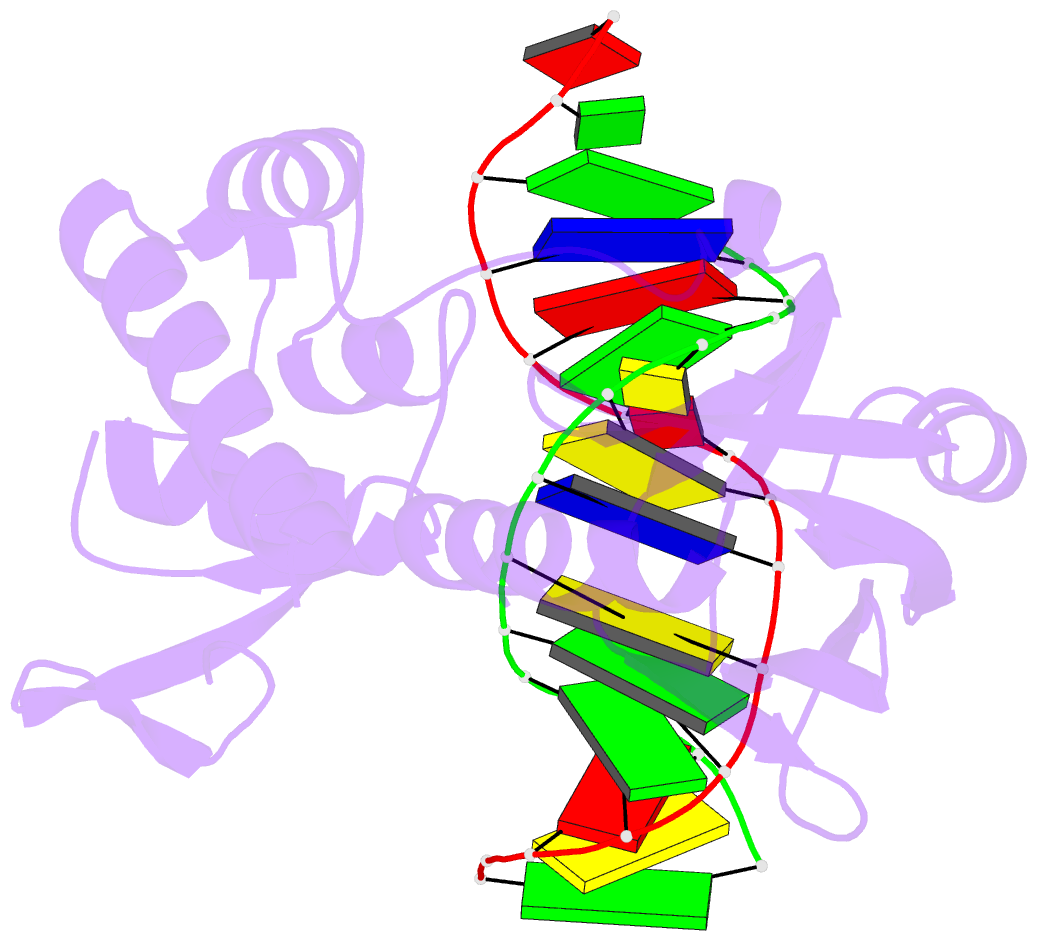
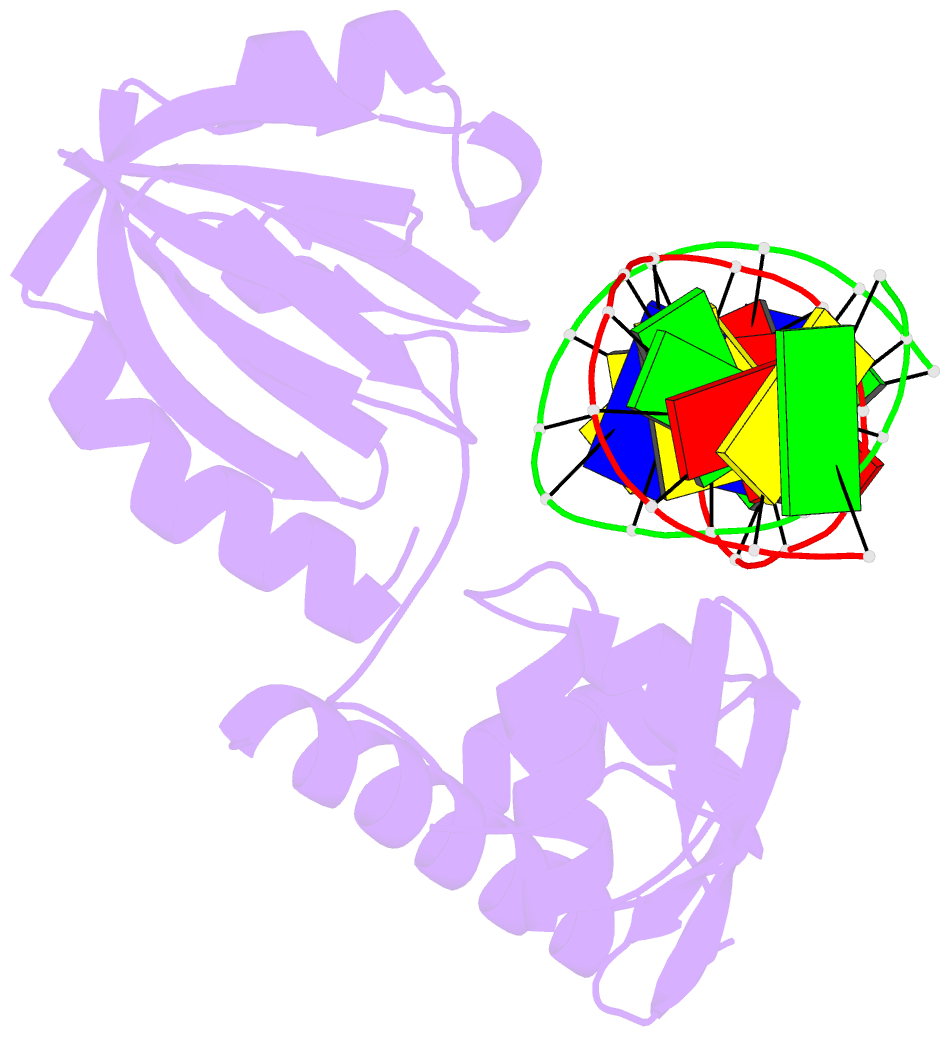
Summary information and primary citation
- PDB-id
-
4g4n;
DSSR-derived features in text and
JSON formats
- Class
- hydrolase-DNA
- Method
- X-ray (1.85 Å)
- Summary
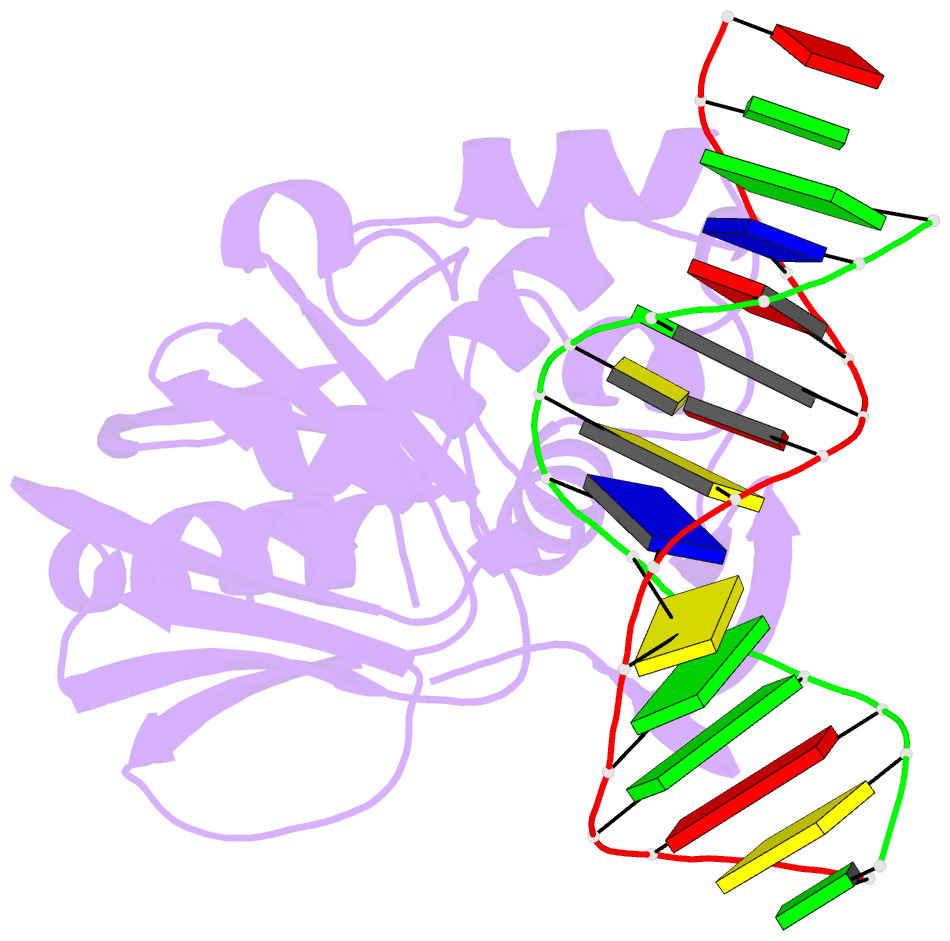
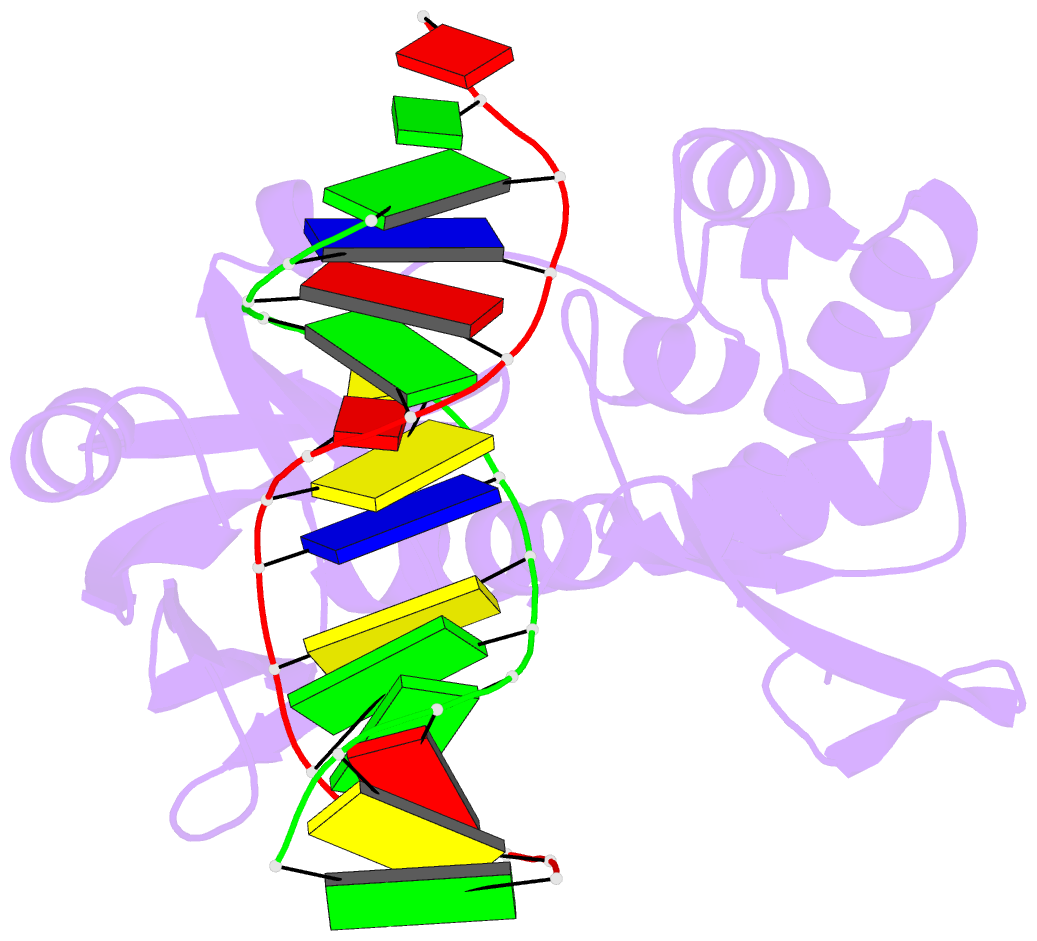
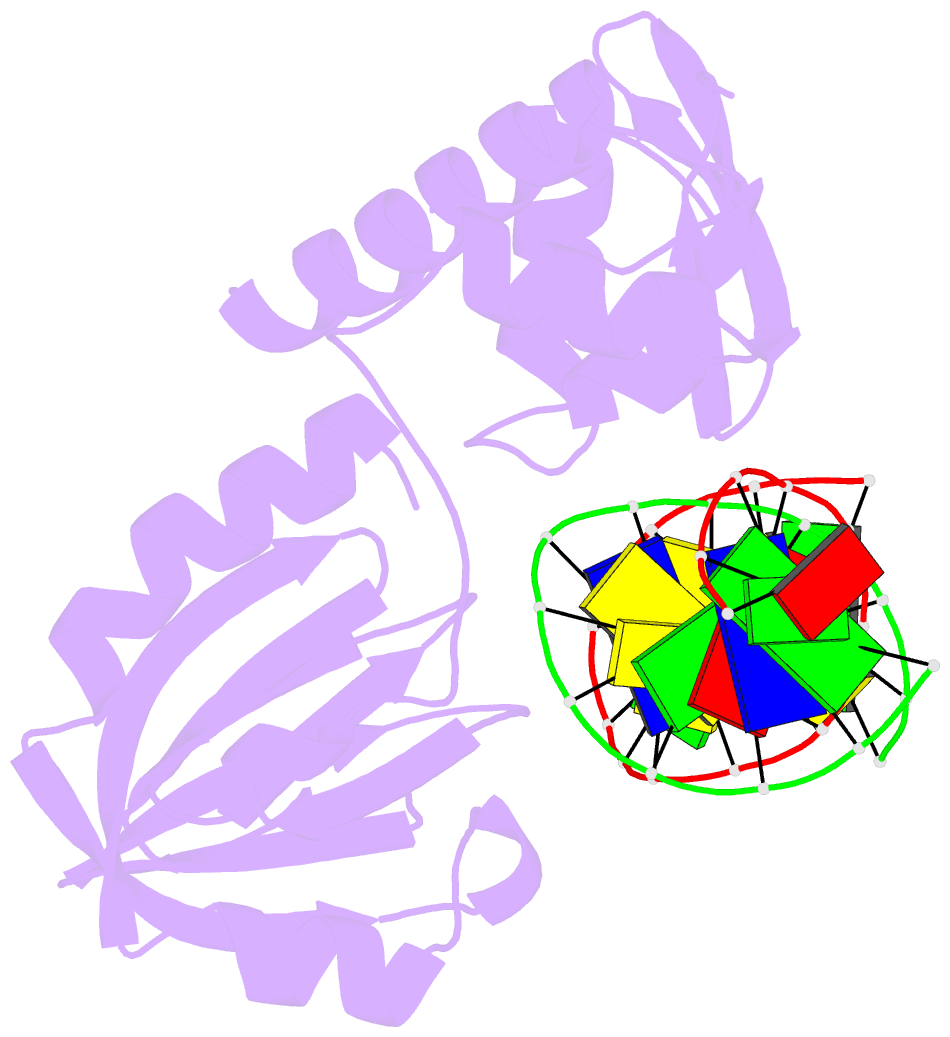
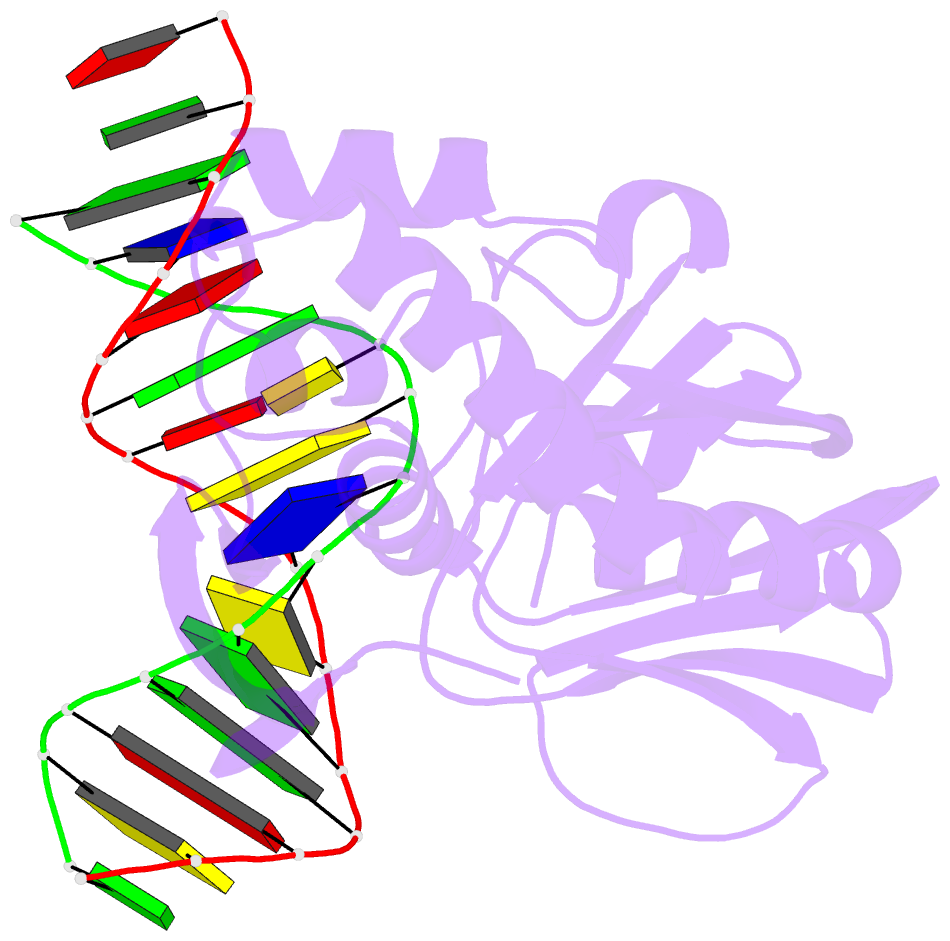
- Mutm containing m77a mutation bound to undamaged
DNA
- Reference
-
Sung RJ, Zhang M, Qi Y, Verdine GL (2013): "Structural
and Biochemical Analysis of DNA Helix Invasion by the
Bacterial 8-Oxoguanine DNA Glycosylase MutM."
J.Biol.Chem., 288, 10012-10023.
doi: 10.1074/jbc.M112.415612.
- Abstract
- MutM is a bacterial DNA glycosylase that serves as the
first line of defense against the highly mutagenic
8-oxoguanine (oxoG) lesion, catalyzing glycosidic bond
cleavage of oxoG to initiate base excision DNA repair.
Previous work has shown that MutM actively interrogates DNA
for the presence of an intrahelical oxoG lesion. This
interrogation process involves significant buckling and
bending of the DNA to promote extrusion of oxoG from the
duplex. Structural snapshots have revealed several
different highly conserved residues that are prominently
inserted into the duplex in the vicinity of the target oxoG
before and after base extrusion has occurred. However, the
roles of these helix-invading residues during the lesion
recognition and base extrusion process remain unclear. In
this study, we set out to probe the function of residues
Phe(114) and Met(77) in oxoG recognition and repair. Here
we report a detailed biochemical and structural
characterization of MutM variants containing either a F114A
or M77A mutation, both of which showed significant
decreases in the efficiency of oxoG repair. These data
reveal that Met(77) plays an important role in stabilizing
the lesion-extruded conformation of the DNA. Phe(114), on
the other hand, appears to destabilize the intrahelical
state of the oxoG lesion, primarily by buckling the target
base pair. We report the observation of a completely
unexpected interaction state, in which the target base pair
is ruptured but remains fully intrahelical; this structure
vividly illustrates the disruptive influence of MutM on the
target base pair.