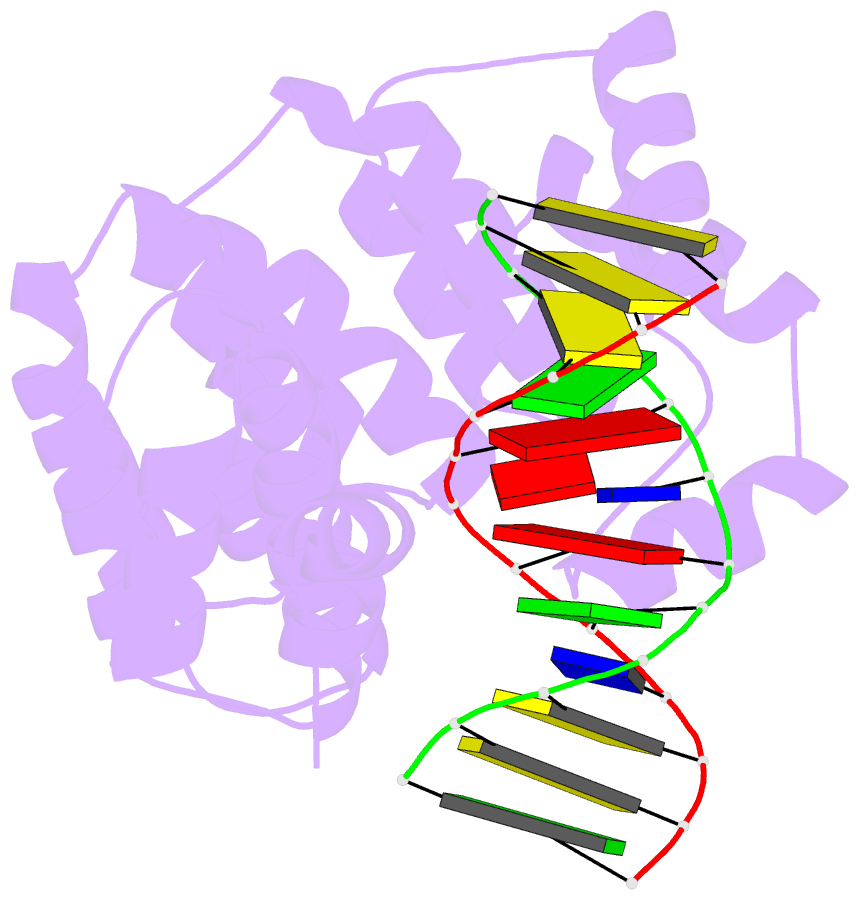
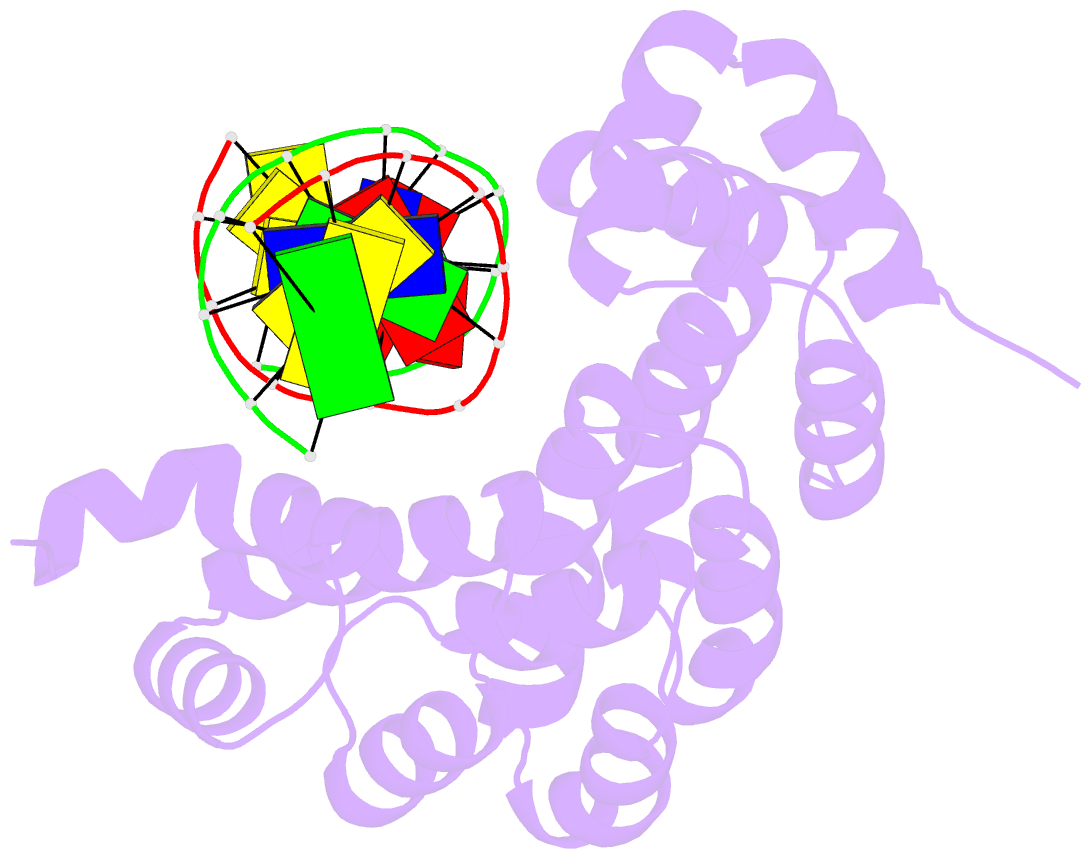
Summary information and primary citation
- PDB-id
-
5cl7;
DSSR-derived features in text and
JSON formats
- Class
- hydrolase-DNA
- Method
- X-ray (1.44 Å)
- Summary
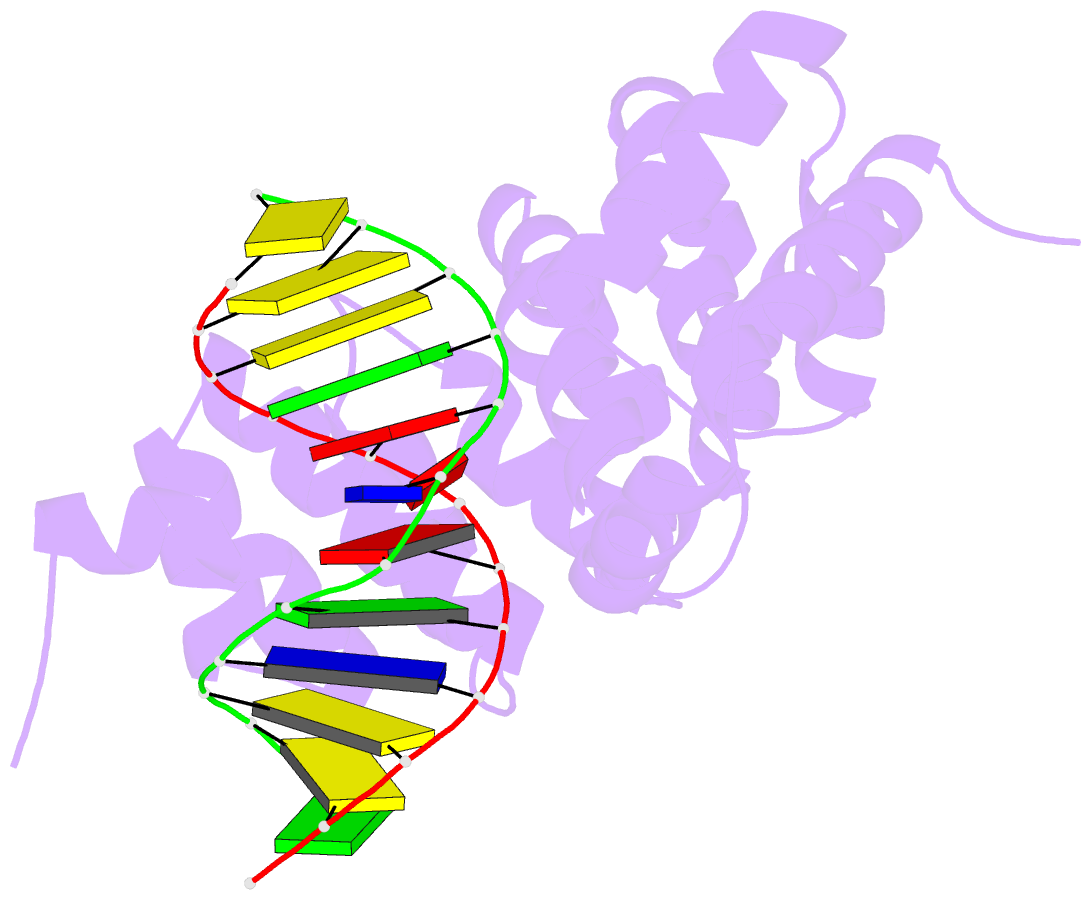
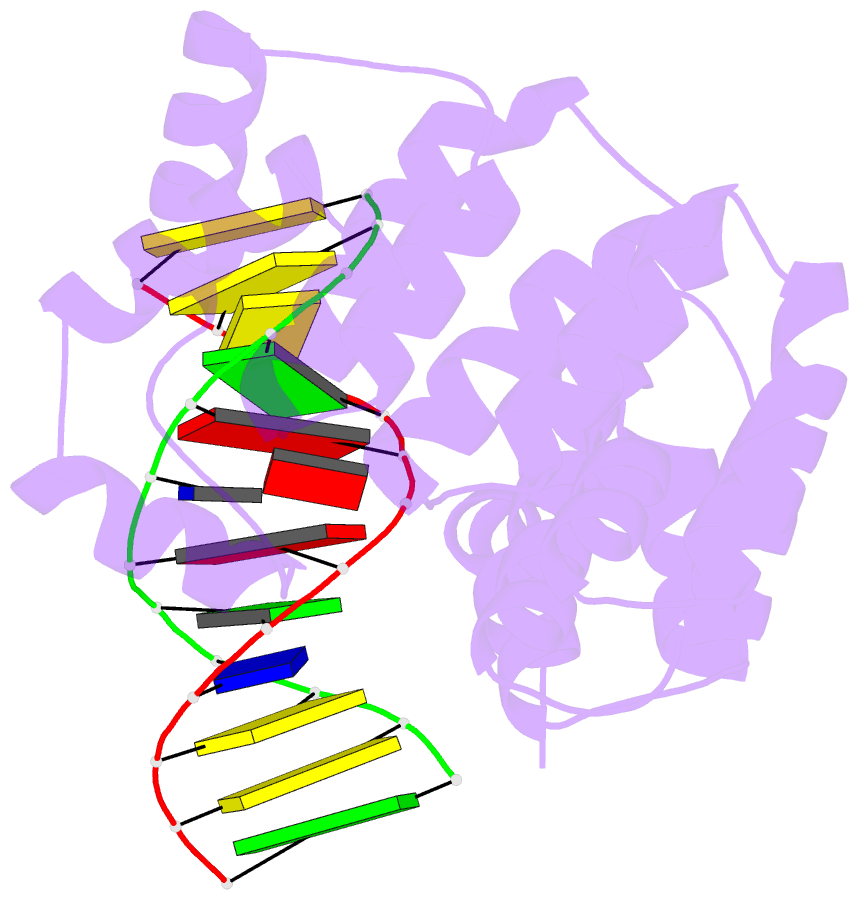
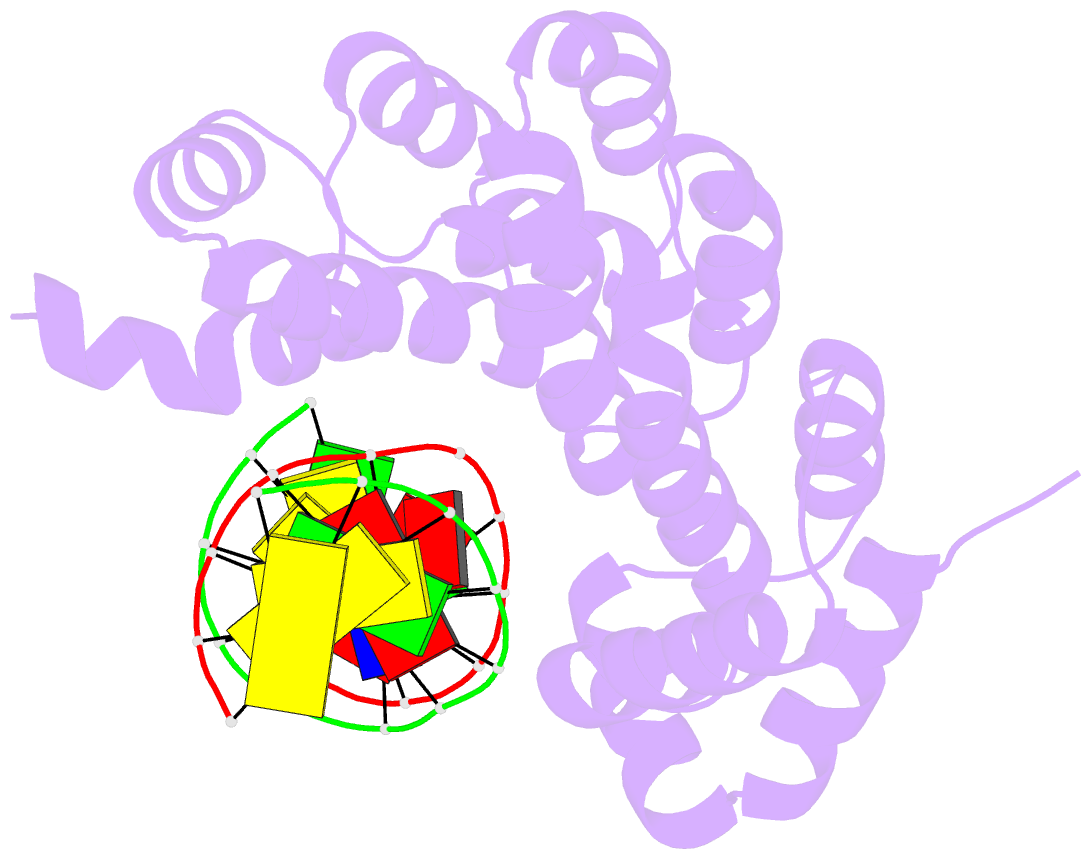
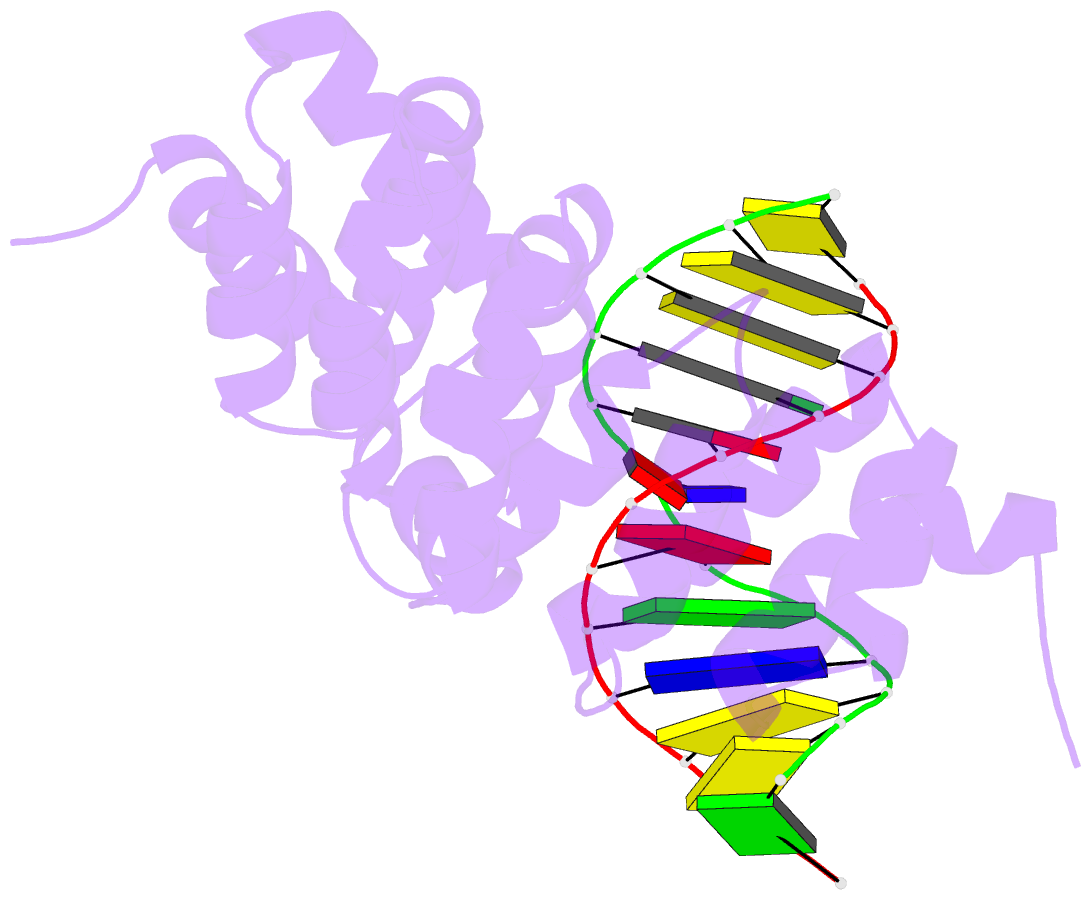
- Alkylpurine DNA glycosylase alkd bound to DNA
containing a 3-methyladenine analog or DNA containing an
abasic site and a free nucleobase (18% substrate-82%
product at 96 hours)
- Reference
-
Mullins EA, Shi R, Parsons ZD, Yuen PK, David SS,
Igarashi Y, Eichman BF (2015): "The DNA
glycosylase AlkD uses a non-base-flipping mechanism to
excise bulky lesions." Nature,
527, 254-258. doi: 10.1038/nature15728.
- Abstract
- Threats to genomic integrity arising from DNA damage
are mitigated by DNA glycosylases, which initiate the base
excision repair pathway by locating and excising aberrant
nucleobases. How these enzymes find small modifications
within the genome is a current area of intensive research.
A hallmark of these and other DNA repair enzymes is their
use of base flipping to sequester modified nucleotides from
the DNA helix and into an active site pocket. Consequently,
base flipping is generally regarded as an essential aspect
of lesion recognition and a necessary precursor to base
excision. Here we present the first, to our knowledge, DNA
glycosylase mechanism that does not require base flipping
for either binding or catalysis. Using the DNA glycosylase
AlkD from Bacillus cereus, we crystallographically
monitored excision of an alkylpurine substrate as a
function of time, and reconstructed the steps along the
reaction coordinate through structures representing
substrate, intermediate and product complexes. Instead of
directly interacting with the damaged nucleobase, AlkD
recognizes aberrant base pairs through interactions with
the phosphoribose backbone, while the lesion remains
stacked in the DNA duplex. Quantum mechanical calculations
revealed that these contacts include catalytic
charge-dipole and CH-π interactions that preferentially
stabilize the transition state. We show in vitro and in
vivo how this unique means of recognition and catalysis
enables AlkD to repair large adducts formed by yatakemycin,
a member of the duocarmycin family of antimicrobial natural
products exploited in bacterial warfare and
chemotherapeutic trials. Bulky adducts of this or any type
are not excised by DNA glycosylases that use a traditional
base-flipping mechanism. Hence, these findings represent a
new model for DNA repair and provide insights into
catalysis of base excision.