Summary information and primary citation
- PDB-id
-
5uop;
DSSR-derived features in text and
JSON formats
- Class
- transferase-DNA-inhibitor
- Method
- X-ray (2.85 Å)
- Summary
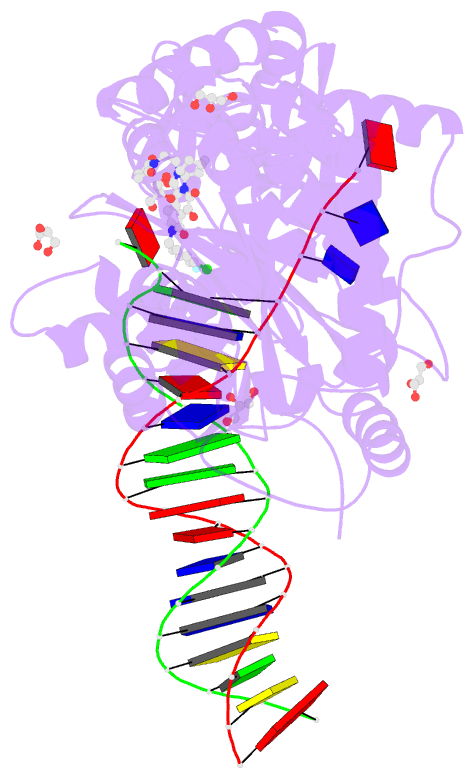
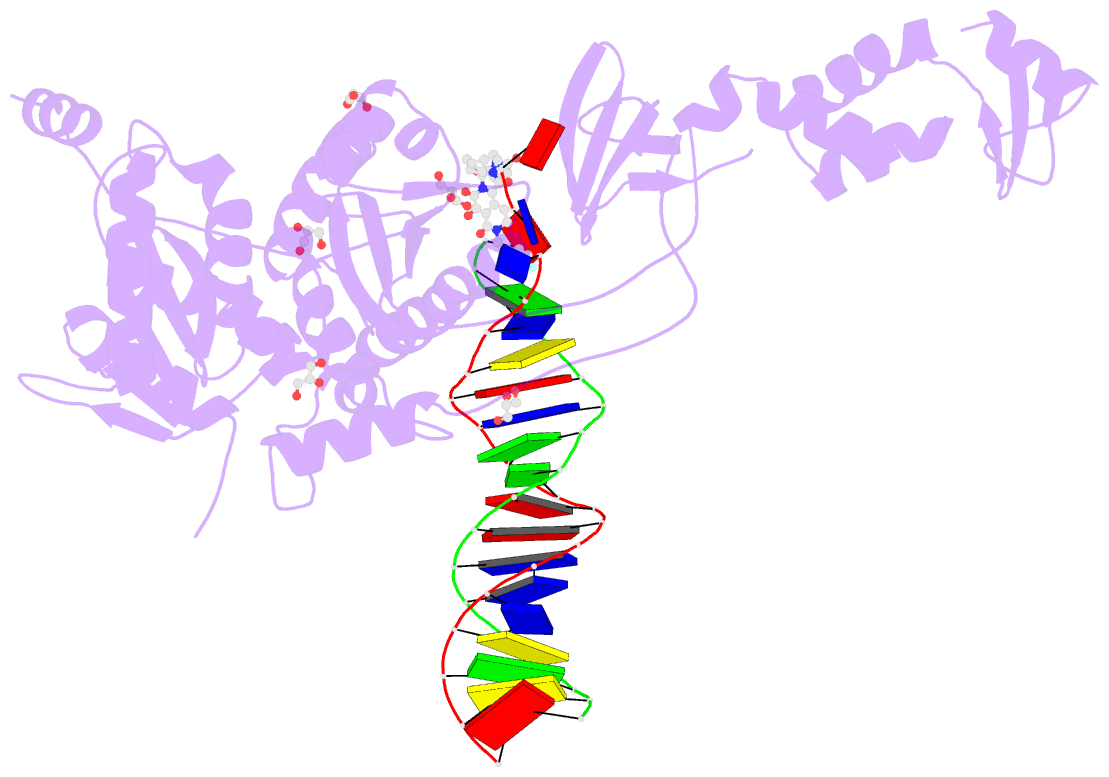
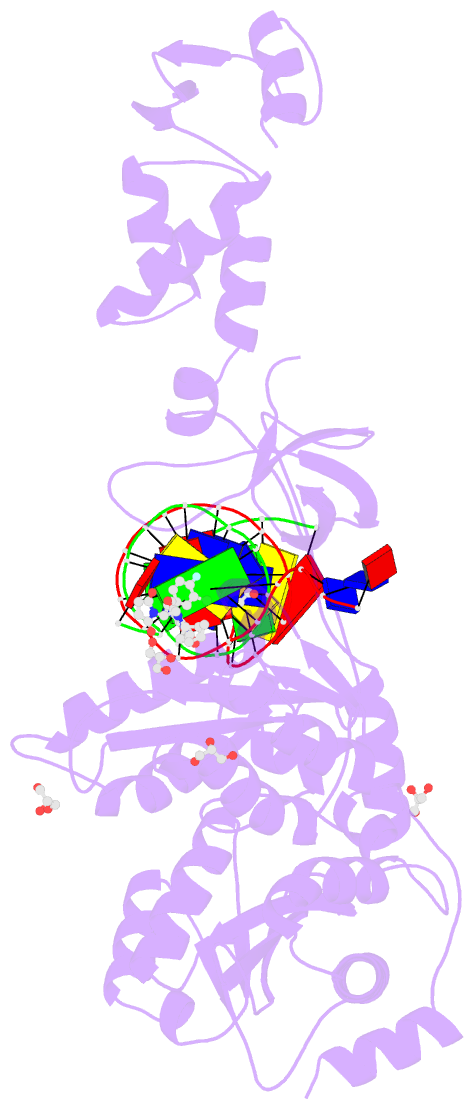
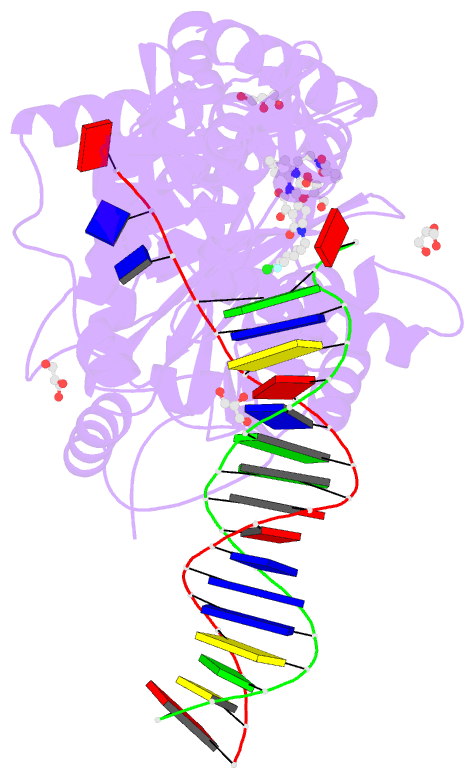
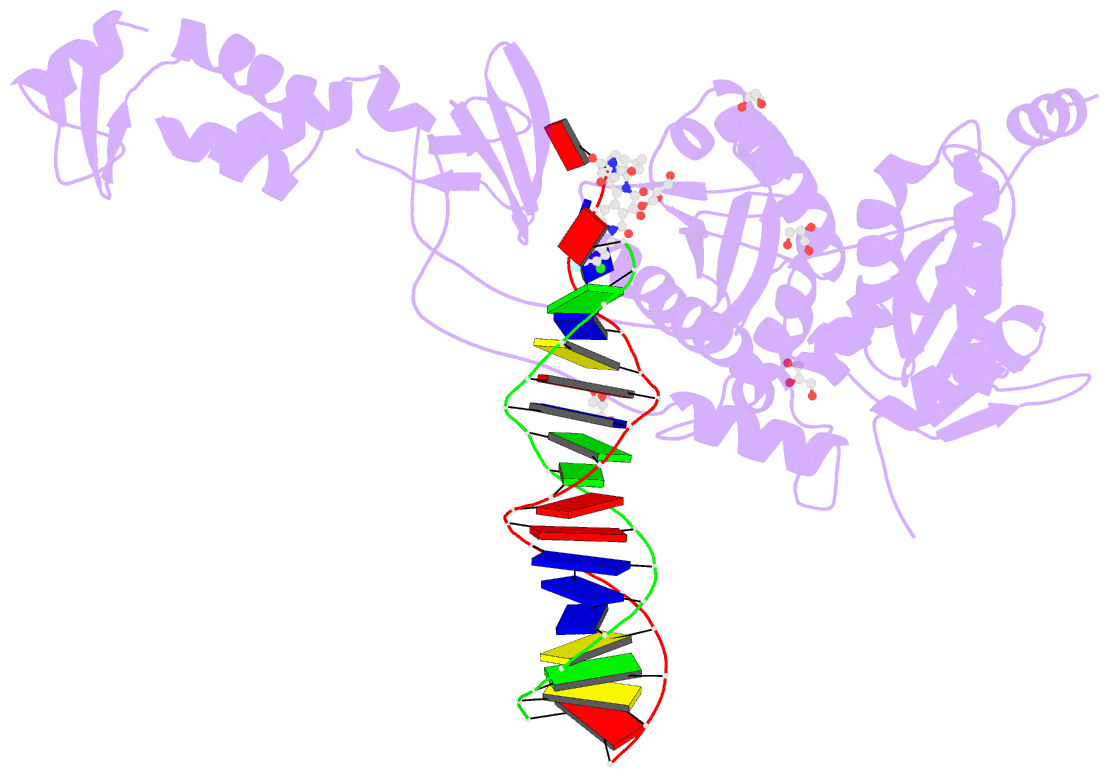
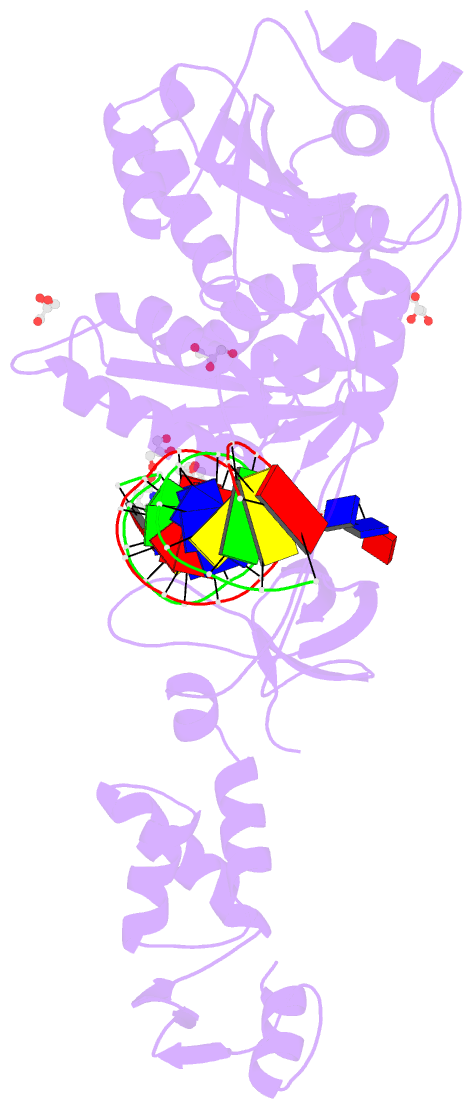
- Crystal structure of the prototype foamy virus intasome
with a 2- pyridinone aminal inhibitor (compound 18)
- Reference
-
Schreier JD, Embrey MW, Raheem IT, Barbe G, Campeau LC,
Dubost D, McCabe Dunn J, Grobler J, Hartingh TJ, Hazuda
DJ, Klein D, Miller MD, Moore KP, Nguyen N, Pajkovic N,
Powell DA, Rada V, Sanders JM, Sisko J, Steele TG, Wai J,
Walji A, Xu M, Coleman PJ (2017): "Discovery
and optimization of 2-pyridinone aminal integrase strand
transfer inhibitors for the treatment of HIV."
Bioorg. Med. Chem. Lett., 27,
2038-2046. doi: 10.1016/j.bmcl.2017.02.039.
- Abstract
- HIV integrase strand transfer inhibitors (InSTIs)
represent an important class of antiviral therapeutics with
proven efficacy and excellent tolerability for the
treatment of HIV infections. In 2007, Raltegravir became
the first marketed strand transfer inhibitor pioneering the
way to a first-line therapy for treatment-naïve patients.
Challenges with this class of therapeutics remain,
including frequency of the dosing regimen and the genetic
barrier to resistance. To address these issues, research
towards next-generation integrase inhibitors has focused on
imparting potency against RAL-resistent mutants and
improving pharmacokinetic profiles. Herein, we detail
medicinal chemistry efforts on a novel class of
2-pyridinone aminal InSTIs, inpsired by MK-0536, which led
to the discovery of important lead molecules for our
program. Systematic optimization carried out at the amide
and aminal positions on the periphery of the core provided
the necessary balance of antiviral activity and
physiochemical properties. These efforts led to a novel
aminal lead compound with the desired virological profile
and preclinical pharmacokinetic profile to support a
once-daily human dose prediction.