Summary information and primary citation
- PDB-id
-
7b0g;
DSSR-derived features in text and
JSON formats
- Class
- DNA binding protein
- Method
- X-ray (3.0 Å)
- Summary
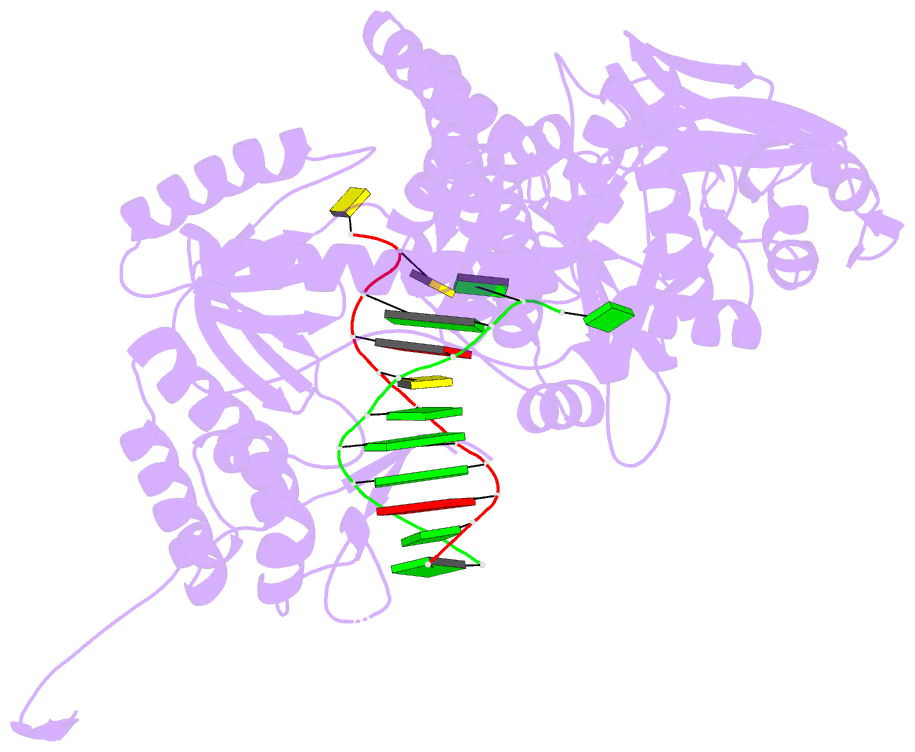
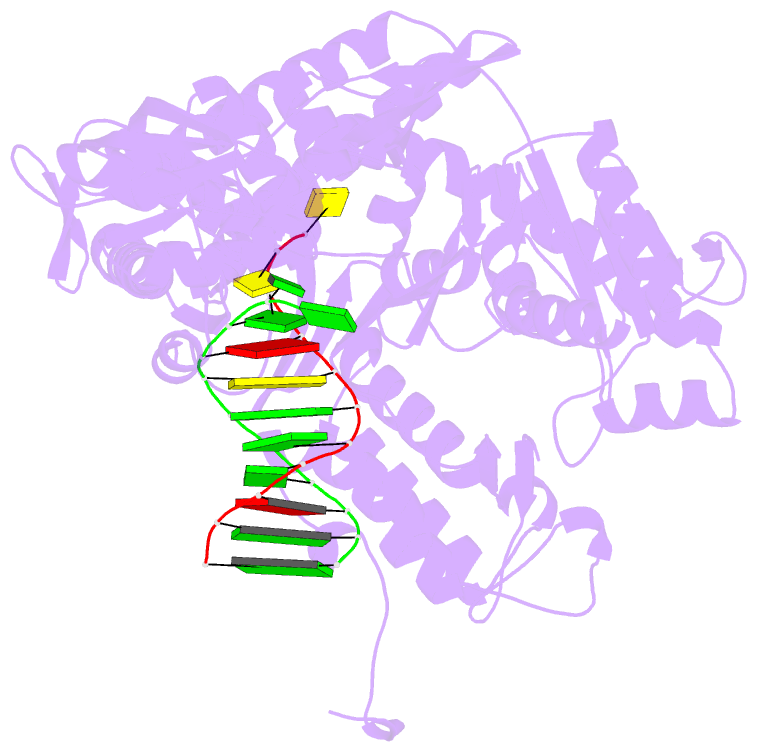
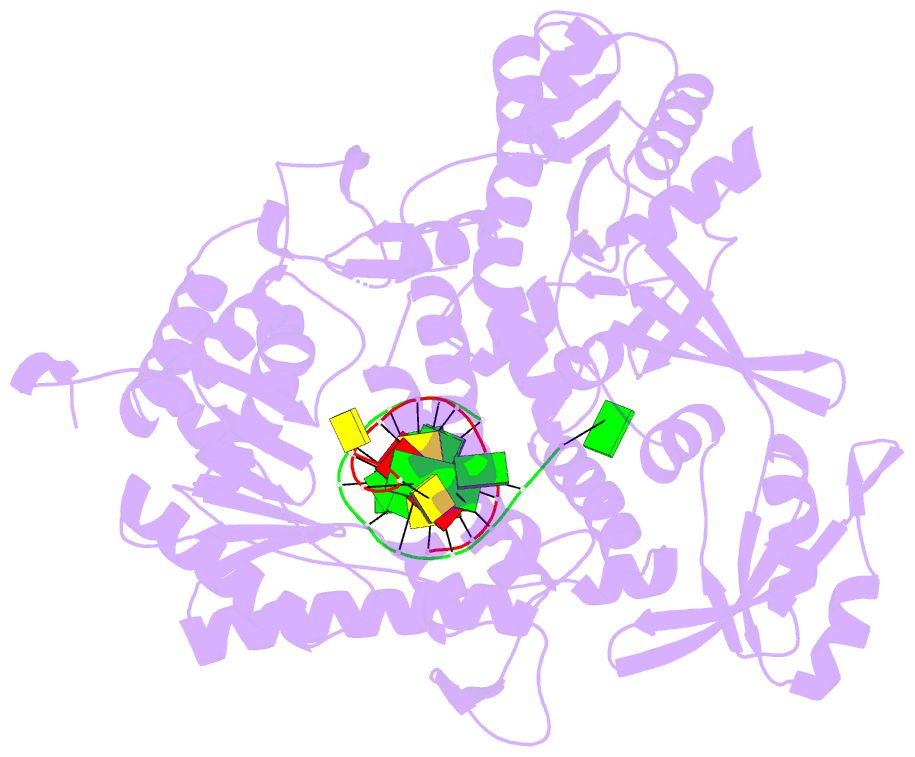
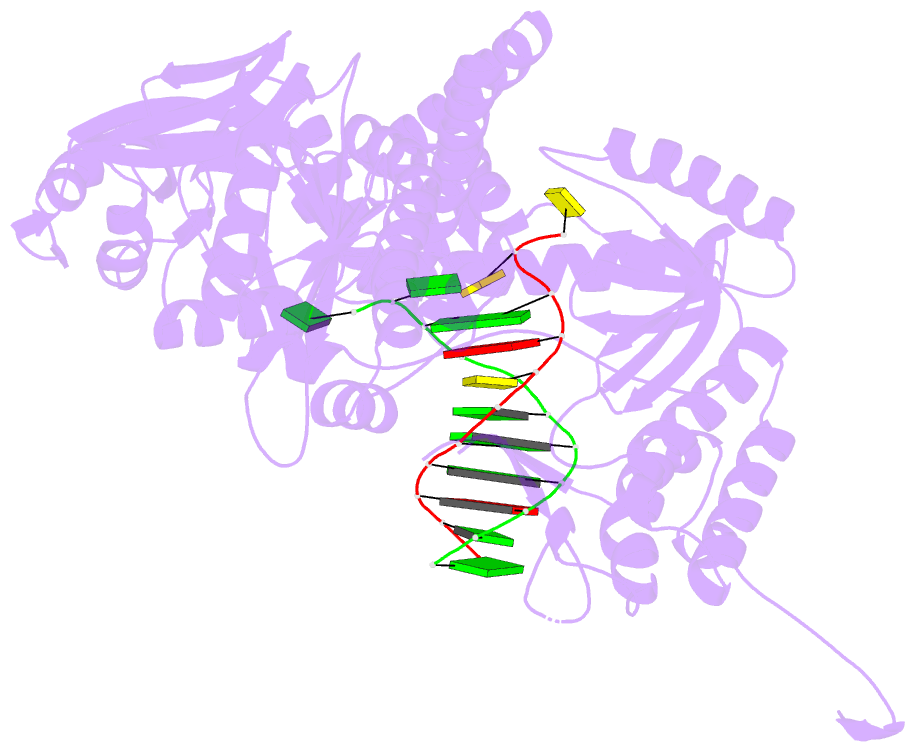
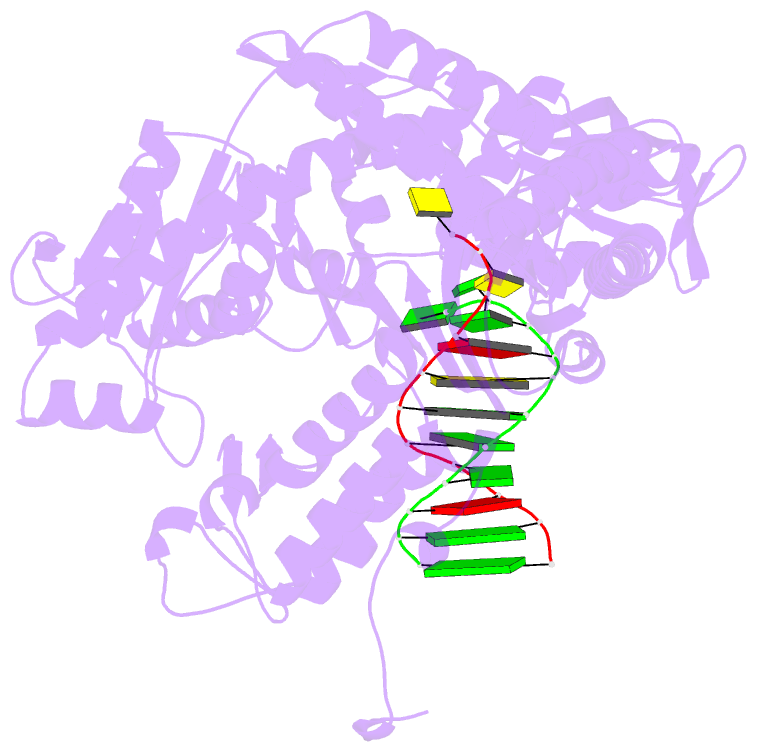
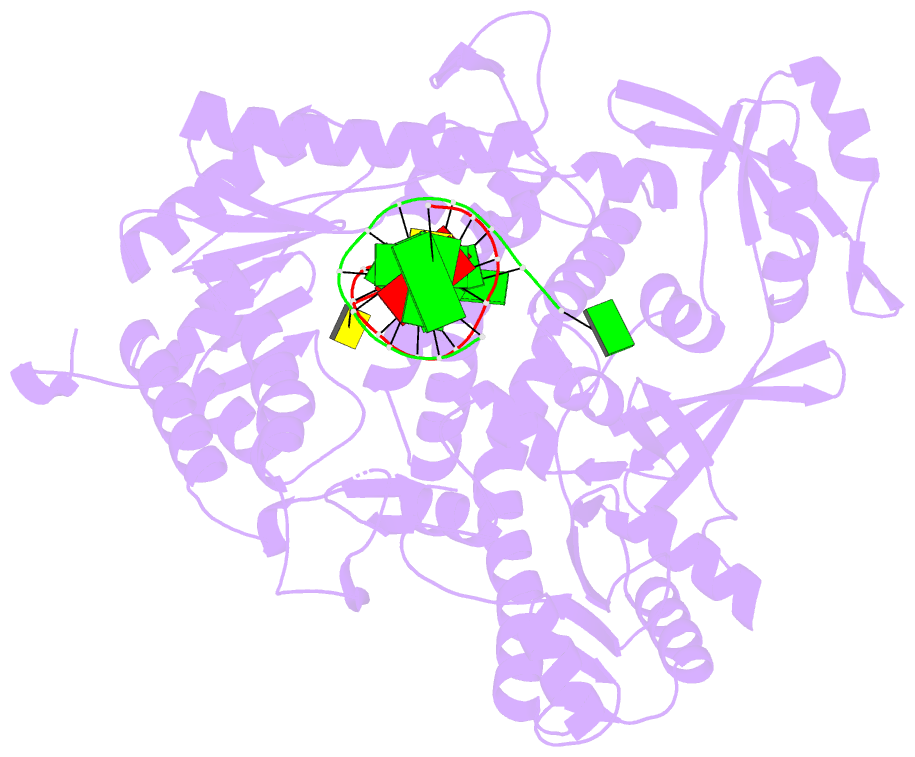
- Tgot_6g12 binary with 2 hctps
- Reference
-
Samson C, Legrand P, Tekpinar M, Rozenski J, Abramov M,
Holliger P, Pinheiro VB, Herdwijn P, Delarue M (2020):
"Structural
Studies of HNA Substrate Specificity in Mutants of an
Archaeal DNA Polymerase Obtained by Directed
Evolution." Biomolecules,
10. doi: 10.3390/biom10121647.
- Abstract
- Archaeal DNA polymerases from the B-family (polB) have
found essential applications in biotechnology. In addition,
some of their variants can accept a wide range of modified
nucleotides or xenobiotic nucleotides, such as
1,5-anhydrohexitol nucleic acid (HNA), which has the unique
ability to selectively cross-pair with DNA and RNA. This
capacity is essential to allow the transmission of
information between different chemistries of nucleic acid
molecules. Variants of the archaeal polymerase from
Thermococcus gorgonarius, TgoT, that can either generate
HNA from DNA (TgoT_6G12) or DNA from HNA (TgoT_RT521) have
been previously identified. To understand how DNA and HNA
are recognized and selected by these two laboratory-evolved
polymerases, we report six X-ray structures of these
variants, as well as an in silico model of a ternary
complex with HNA. Structural comparisons of the apo form of
TgoT_6G12 together with its binary and ternary complexes
with a DNA duplex highlight an ensemble of interactions and
conformational changes required to promote DNA or HNA
synthesis. MD simulations of the ternary complex suggest
that the HNA-DNA hybrid duplex remains stable in the A-DNA
helical form and help explain the presence of mutations in
regions that would normally not be in contact with the DNA
if it were not in the A-helical form. One complex with two
incorporated HNA nucleotides is surprisingly found in a one
nucleotide-backtracked form, which is new for a DNA
polymerase. This information can be used for engineering a
new generation of more efficient HNA polymerase
variants.