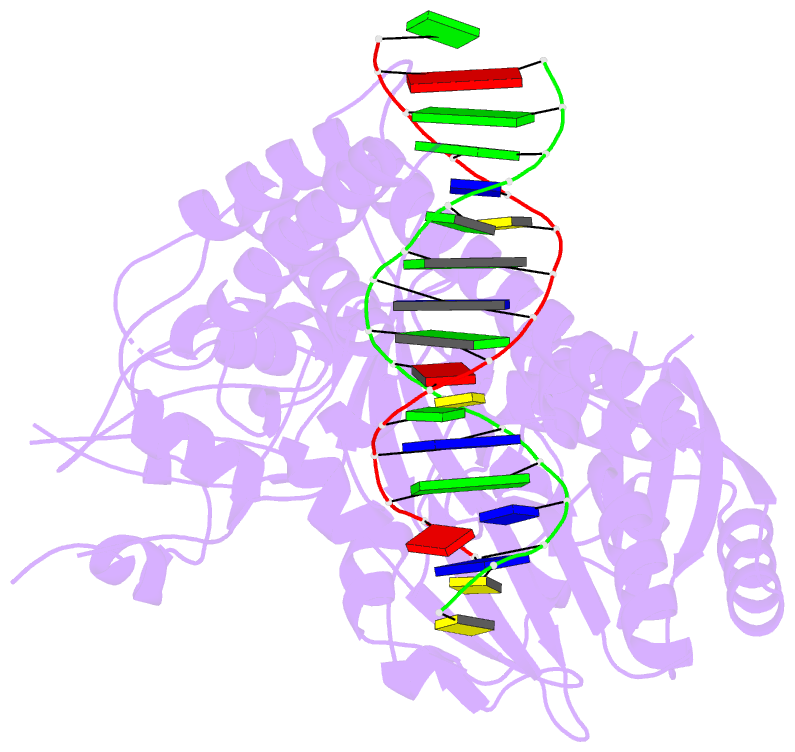
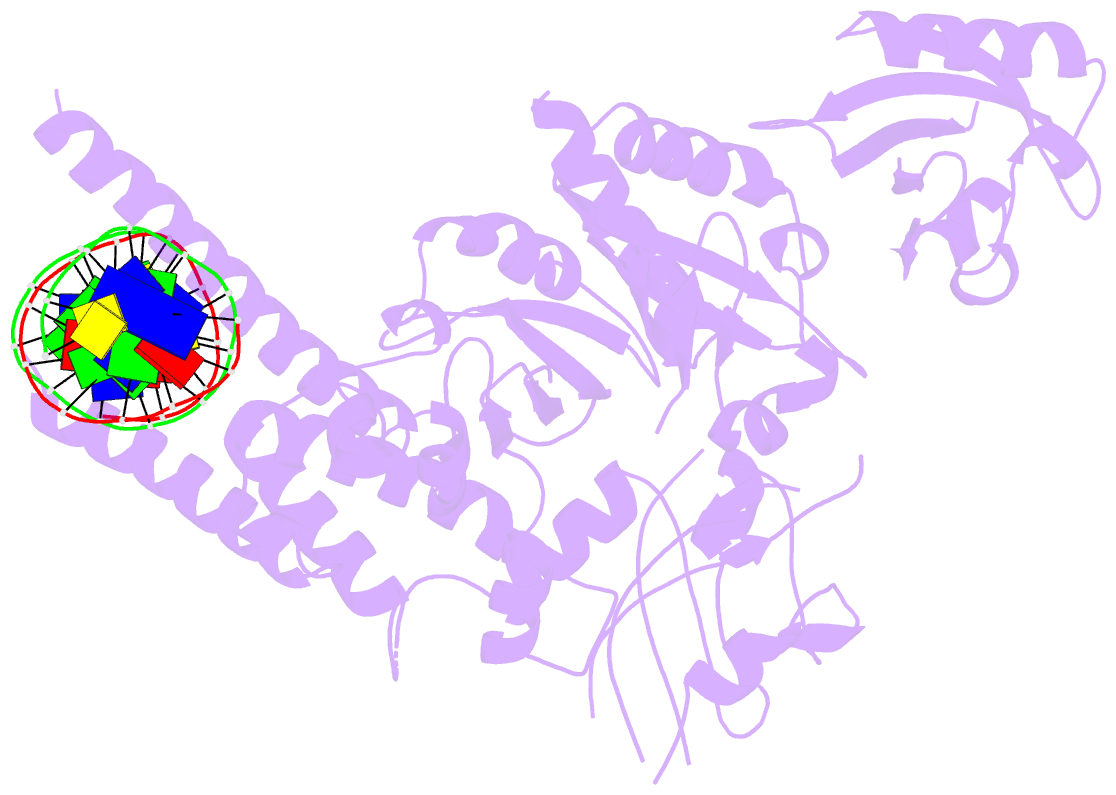
Summary information and primary citation
- PDB-id
-
7xi4;
DSSR-derived features in text and
JSON formats
- Class
- transcription
- Method
- X-ray (4.707 Å)
- Summary
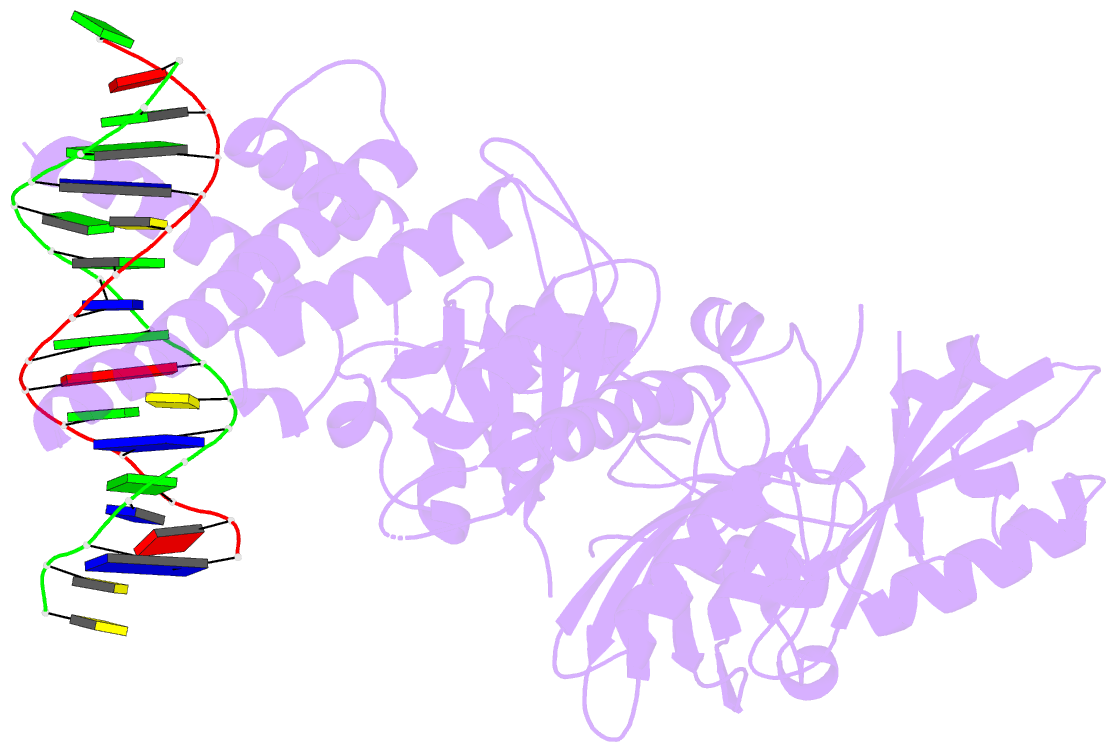
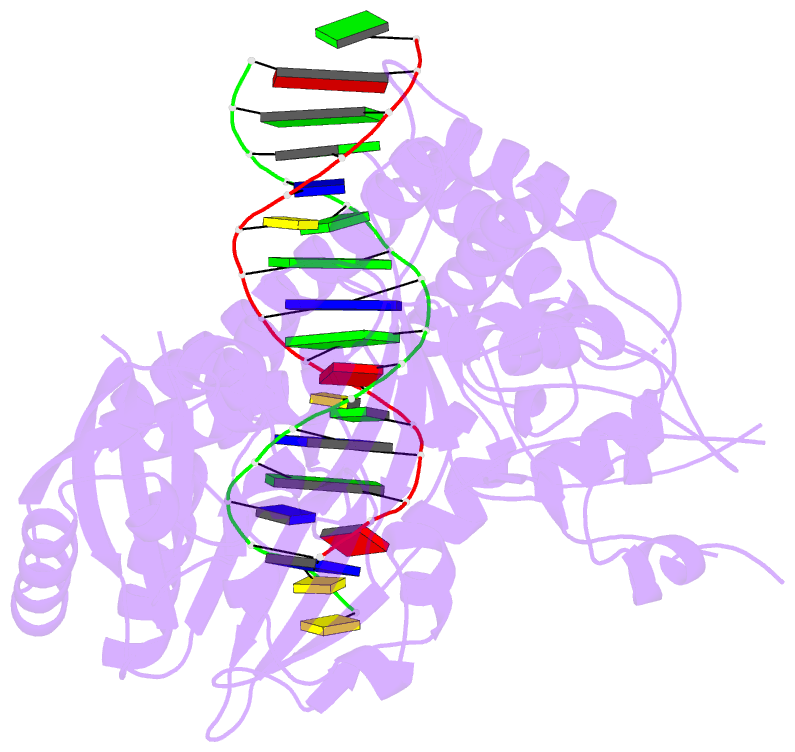
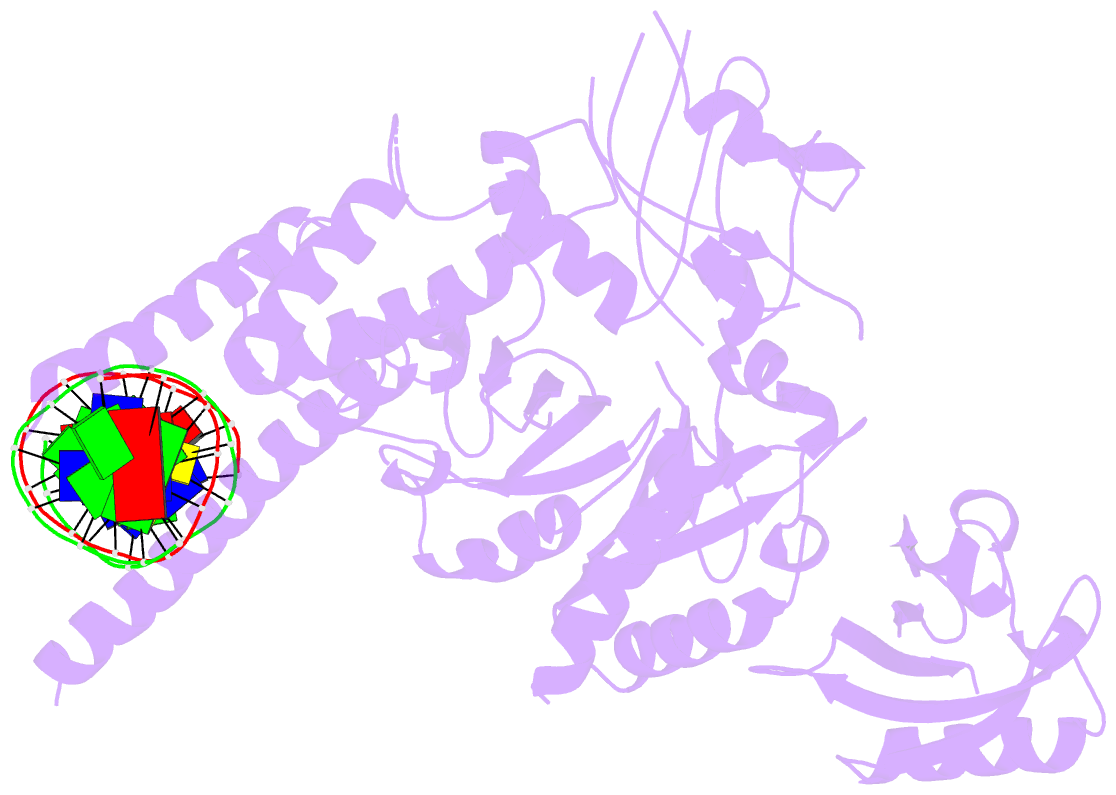
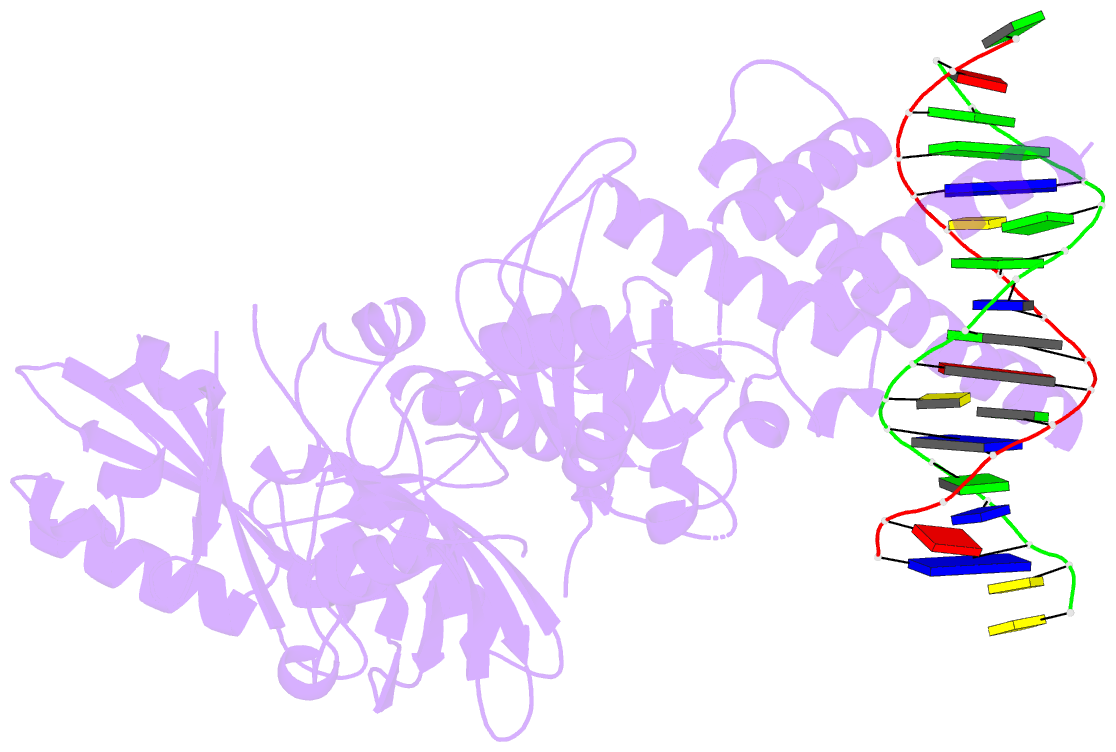
- Crystal structure of the npas4-arnt heterodimer in
complex with DNA
- Reference
-
Sun X, Jing L, Li F, Zhang M, Diao X, Zhuang J,
Rastinejad F, Wu D (2022): "Structures
of NPAS4-ARNT and NPAS4-ARNT2 heterodimers reveal new
dimerization modalities in the bHLH-PAS transcription
factor family." Proc.Natl.Acad.Sci.USA,
119, e2208804119. doi: 10.1073/pnas.2208804119.
- Abstract
- Neuronal PER-ARNT-SIM (PAS) domain protein 4 (NPAS4) is
a protective transcriptional regulator whose dysfunction
has been linked to a variety of neuropsychiatric and
metabolic diseases. As a member of the basic
helix-loop-helix PER-ARNT-SIM (bHLH-PAS) transcription
factor family, NPAS4 is distinguished by an ability to form
functional heterodimers with aryl hydrocarbon receptor
nuclear translocator (ARNT) and ARNT2, both of which are
also bHLH-PAS family members. Here, we describe the
quaternary architectures of NPAS4-ARNT and NPAS4-ARNT2
heterodimers in complexes involving DNA response elements.
Our crystallographic studies reveal a uniquely
interconnected domain conformation for the NPAS4 protein
itself, as well as its differentially configured
heterodimeric arrangements with both ARNT and ARNT2.
Notably, the PAS-A domains of ARNT and ARNT2 exhibit
variable conformations within these two heterodimers. The
ARNT PAS-A domain also forms a set of interfaces with the
PAS-A and PAS-B domains of NPAS4, different from those
previously noted in ARNT heterodimers formed with other
class I bHLH-PAS family proteins. Our structural
observations together with biochemical and cell-based
interrogations of these NPAS4 heterodimers provide
molecular glimpses of the NPAS4 protein architecture and
extend the known repertoire of heterodimerization patterns
within the bHLH-PAS family. The PAS-B domains of NPAS4,
ARNT, and ARNT2 all contain ligand-accessible pockets with
appropriate volumes required for small-molecule binding.
Given NPAS4's linkage to human diseases, the direct
visualization of these PAS domains and the further
understanding of their relative positioning and
interconnections within the NPAS4-ARNT and NPAS4-ARNT2
heterodimers may provide a road map for therapeutic
discovery targeting these complexes.