Summary information and primary citation
- PDB-id
-
8fng;
DSSR-derived features in text and
JSON formats
- Class
- viral protein-DNA-inhibitor
- Method
- cryo-EM (2.2 Å)
- Summary
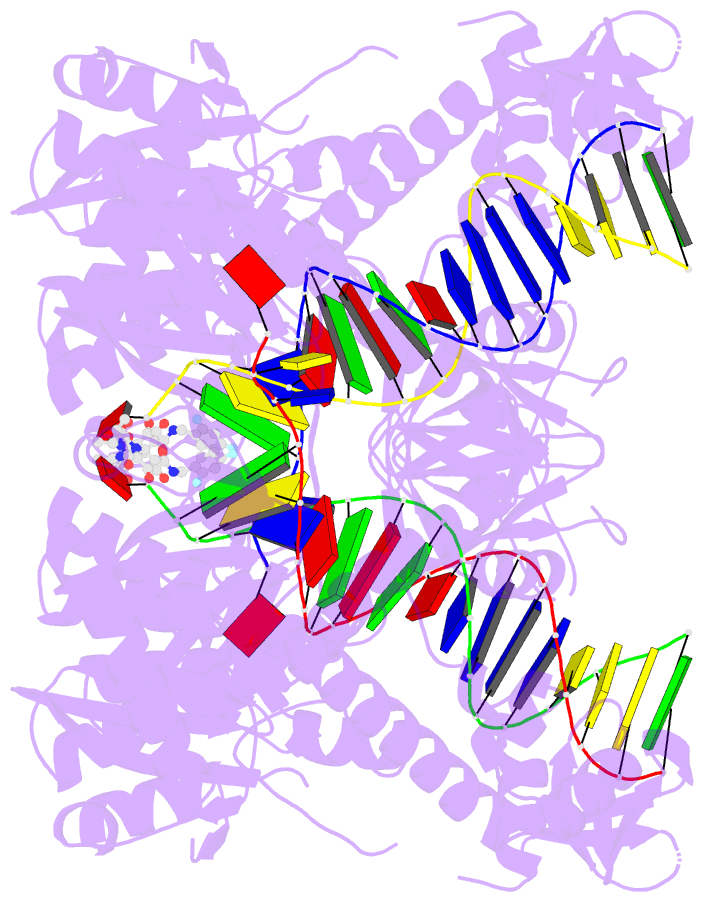
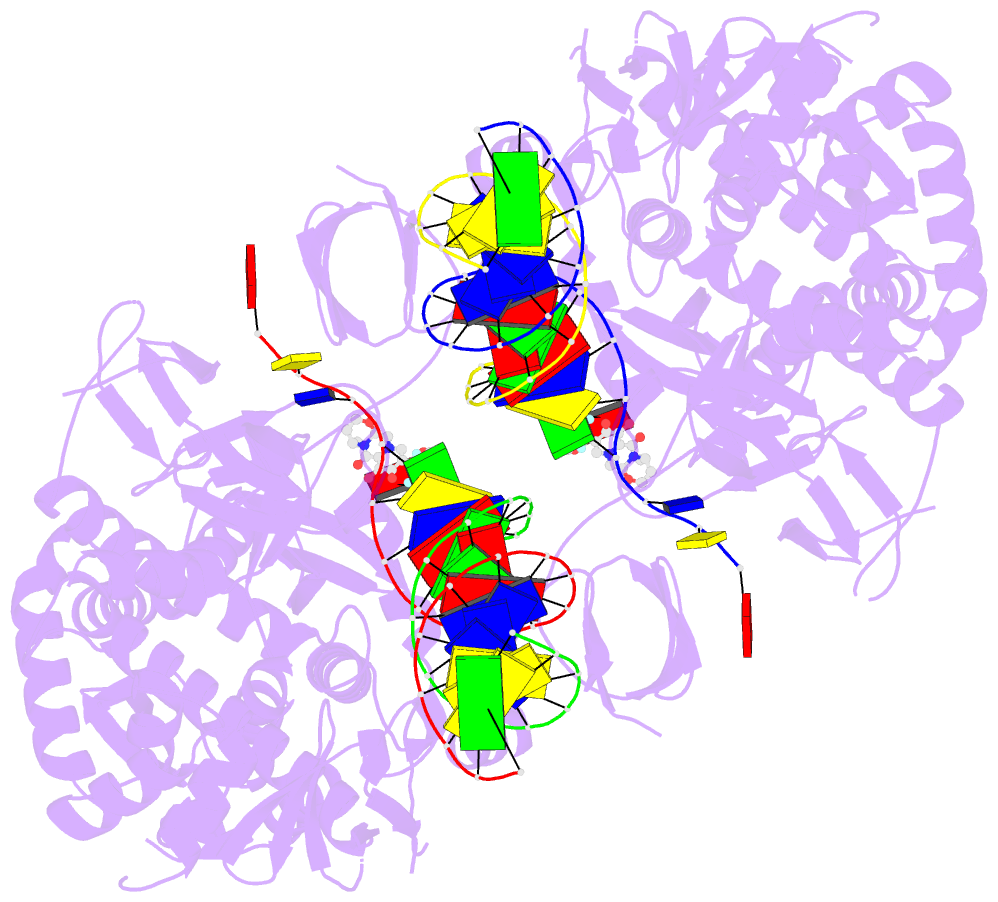
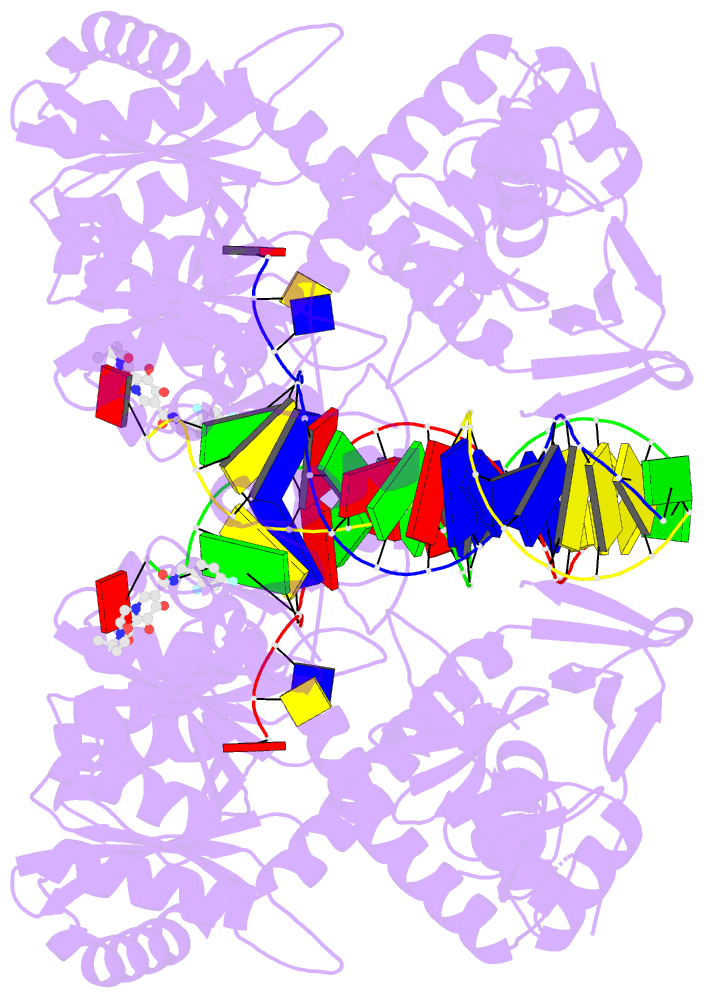
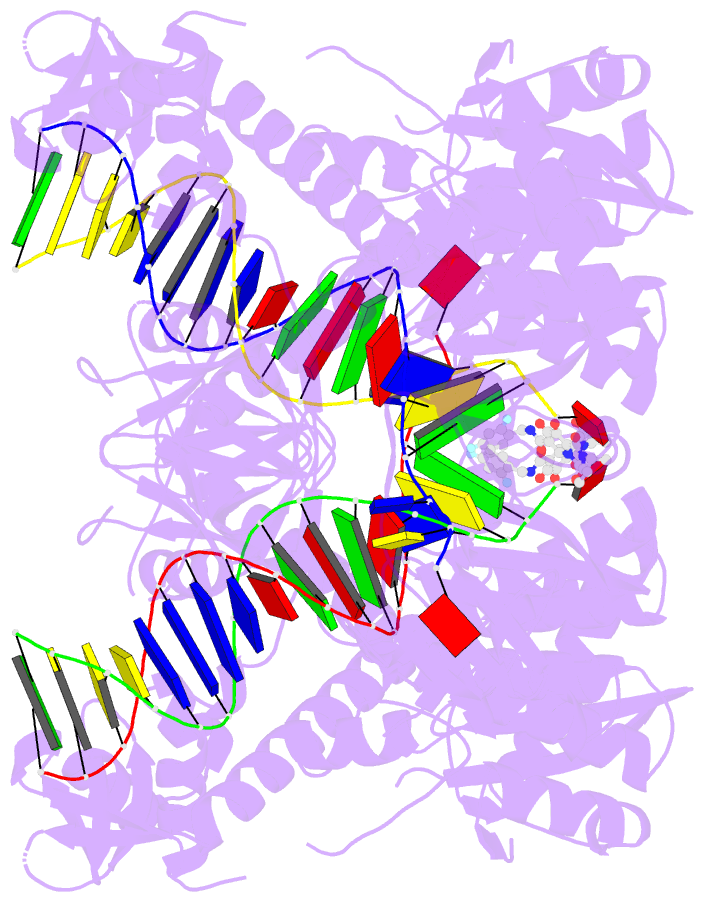
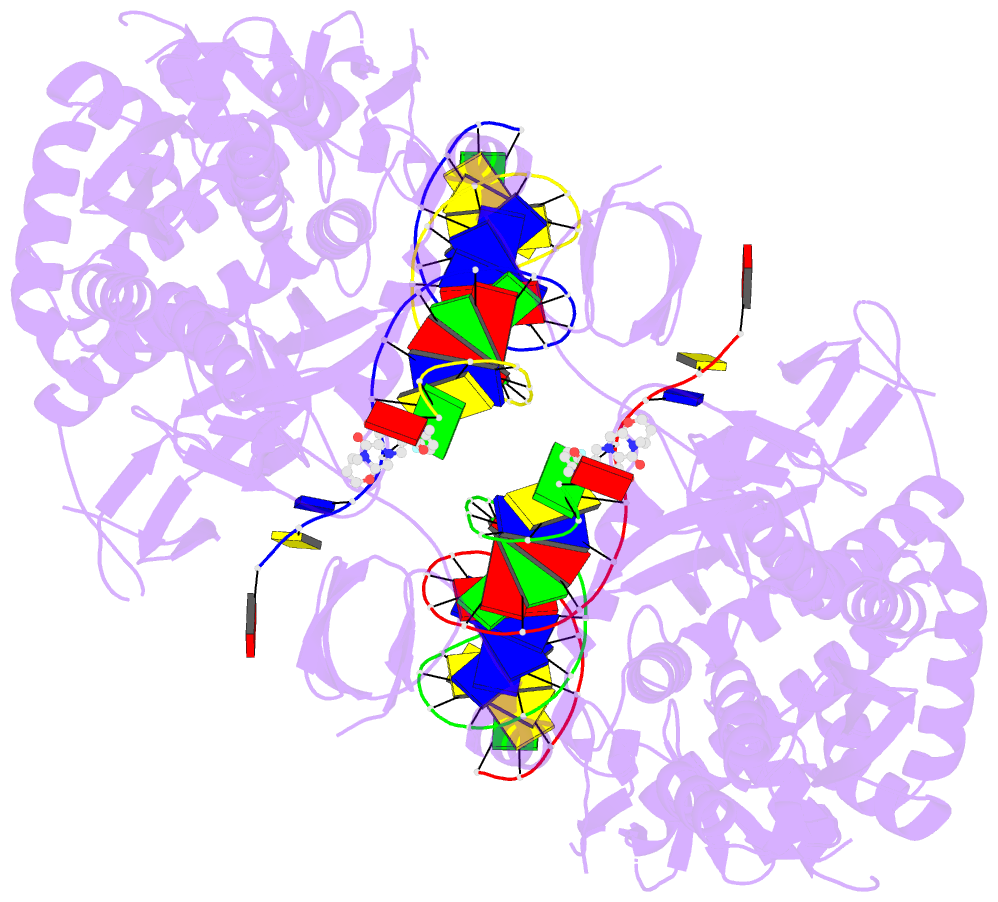
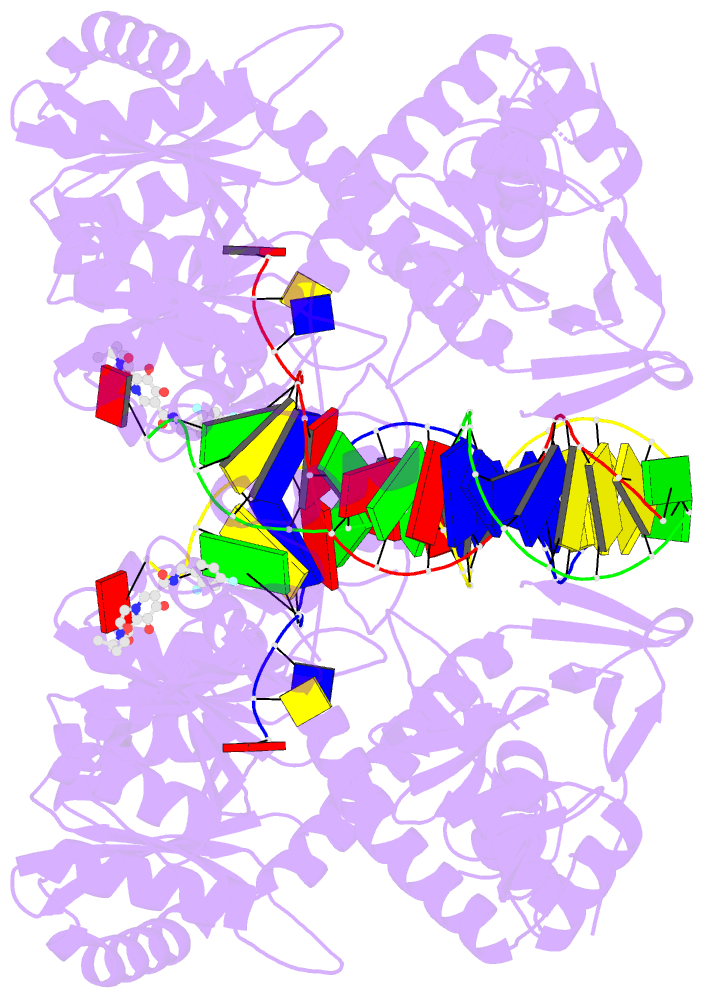
- Structure of g140a hiv-1 intasome with dolutegravir
bound
- Reference
-
Li M, Oliveira Passos D, Shan Z, Smith SJ, Sun Q, Biswas
A, Choudhuri I, Strutzenberg TS, Haldane A, Deng N, Li Z,
Zhao XZ, Briganti L, Kvaratskhelia M, Burke Jr TR, Levy
RM, Hughes SH, Craigie R, Lyumkis D (2023): "Mechanisms
of HIV-1 integrase resistance to dolutegravir and potent
inhibition of drug-resistant variants." Sci
Adv, 9, eadg5953. doi: 10.1126/sciadv.adg5953.
- Abstract
- HIV-1 infection depends on the integration of viral DNA
into host chromatin. Integration is mediated by the viral
enzyme integrase and is blocked by integrase strand
transfer inhibitors (INSTIs), first-line antiretroviral
therapeutics widely used in the clinic. Resistance to even
the best INSTIs is a problem, and the mechanisms of
resistance are poorly understood. Here, we analyze
combinations of the mutations E138K, G140A/S, and
Q148H/K/R, which confer resistance to INSTIs. The
investigational drug 4d more effectively inhibited the
mutants compared with the approved drug Dolutegravir (DTG).
We present 11 new cryo-EM structures of drug-resistant
HIV-1 intasomes bound to DTG or 4d, with better than 3-Å
resolution. These structures, complemented with free energy
simulations, virology, and enzymology, explain the
mechanisms of DTG resistance involving E138K + G140A/S +
Q148H/K/R and show why 4d maintains potency better than
DTG. These data establish a foundation for further
development of INSTIs that potently inhibit resistant forms
in integrase.