Summary information and primary citation
- PDB-id
-
8his;
DSSR-derived features in text and
JSON formats
- Class
- DNA
- Method
- X-ray (2.01 Å)
- Summary
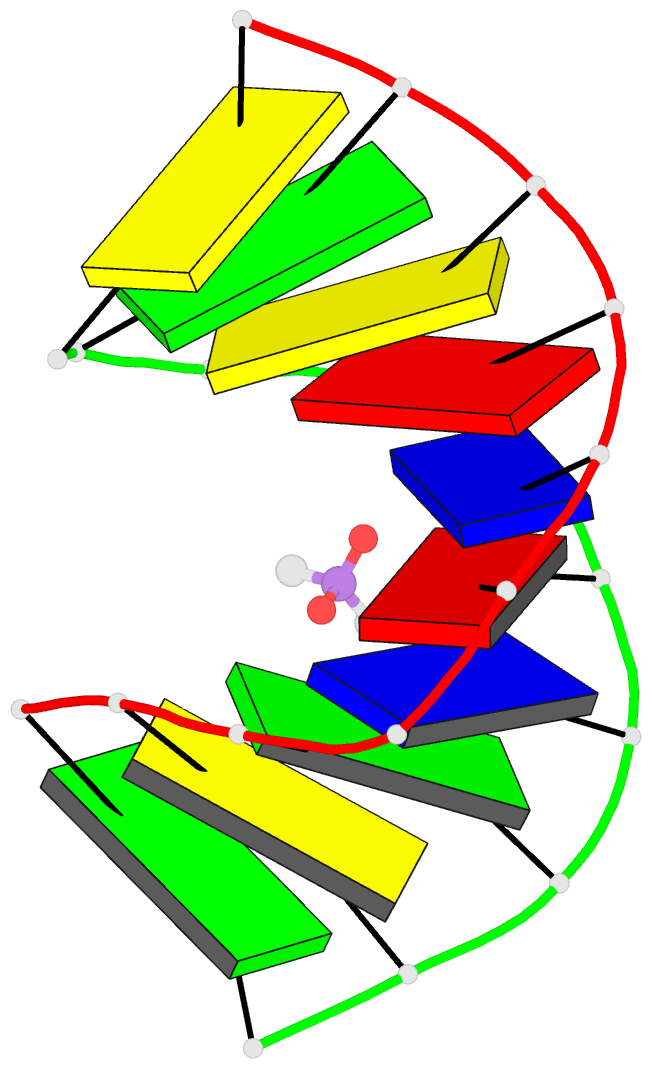
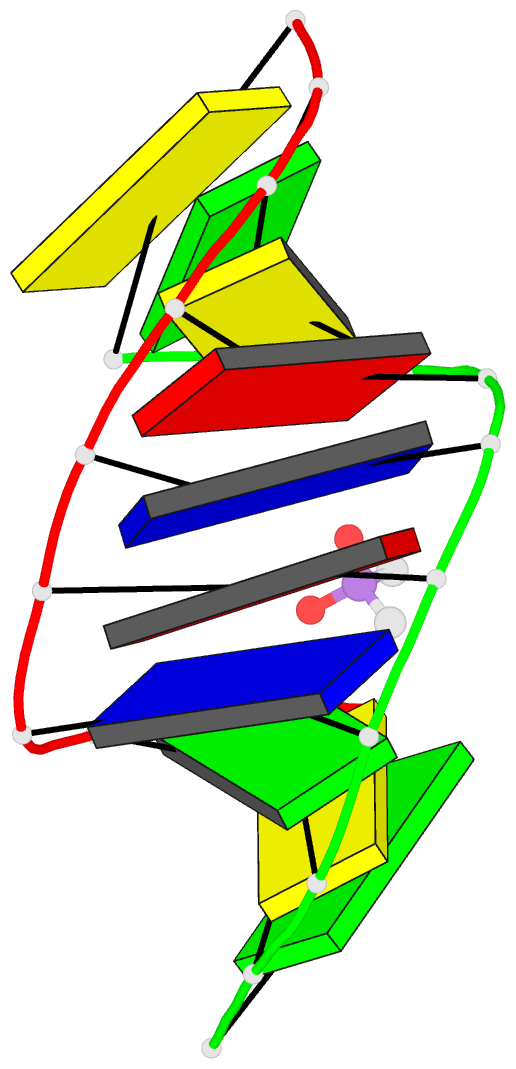
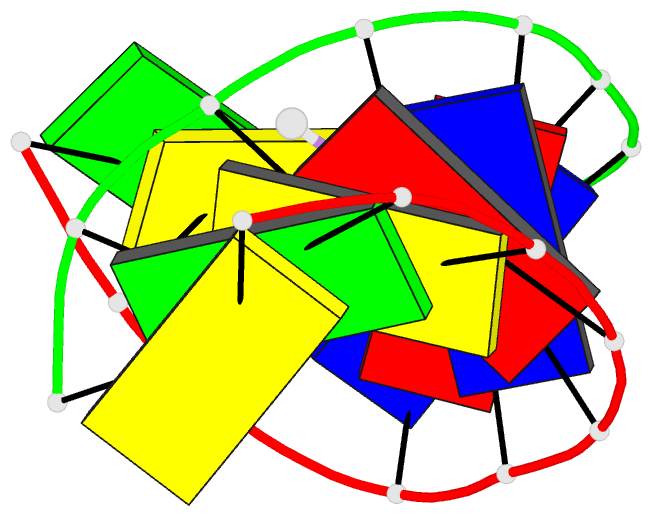
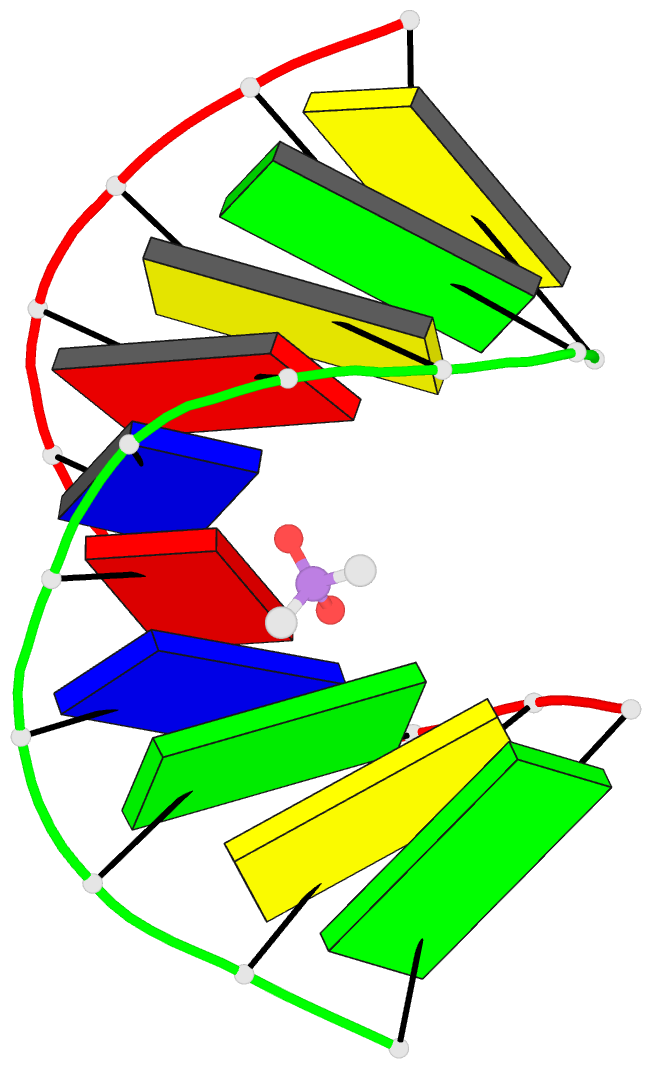
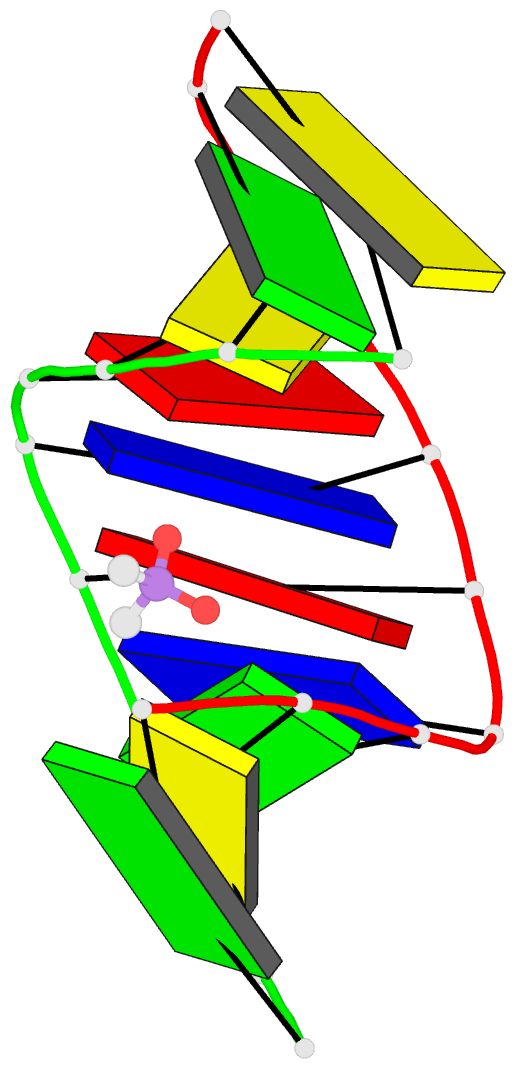
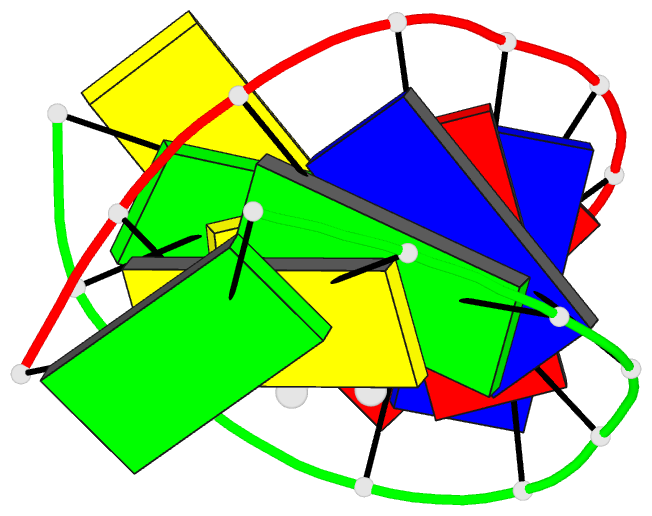
- Crystal structure of DNA decamer containing
guna[me,tbu]
- Reference
-
Yamaguchi T, Horie N, Aoyama H, Kumagai S, Obika S
(2023): "Mechanism
of the extremely high duplex-forming ability of
oligonucleotides modified with N-tert-butylguanidine- or
N-tert-butyl-N'- methylguanidine-bridged nucleic
acids." Nucleic Acids Res.,
51, 7749-7761. doi: 10.1093/nar/gkad608.
- Abstract
- Antisense oligonucleotides (ASOs) are becoming a
promising class of drugs for treating various diseases.
Over the past few decades, many modified nucleic acids have
been developed for application to ASOs, aiming to enhance
their duplex-forming ability toward cognate mRNA and
improve their stability against enzymatic degradations.
Modulating the sugar conformation of nucleic acids by
substituting an electron-withdrawing group at the
2'-position or incorporating a 2',4'-bridging structure is
a common approach for enhancing duplex-forming ability.
Here, we report on incorporating an N-tert-butylguanidinium
group at the 2',4'-bridging structure, which greatly
enhances duplex-forming ability because of its interactions
with the minor groove. Our results indicated that
hydrophobic substituents fitting the grooves of duplexes
also have great potential to increase duplex-forming
ability.