Summary information and primary citation
- PDB-id
-
6dbx;
DSSR-derived features in text and
JSON formats
- Class
- recombination-DNA
- Method
- cryo-EM (4.2 Å)
- Summary
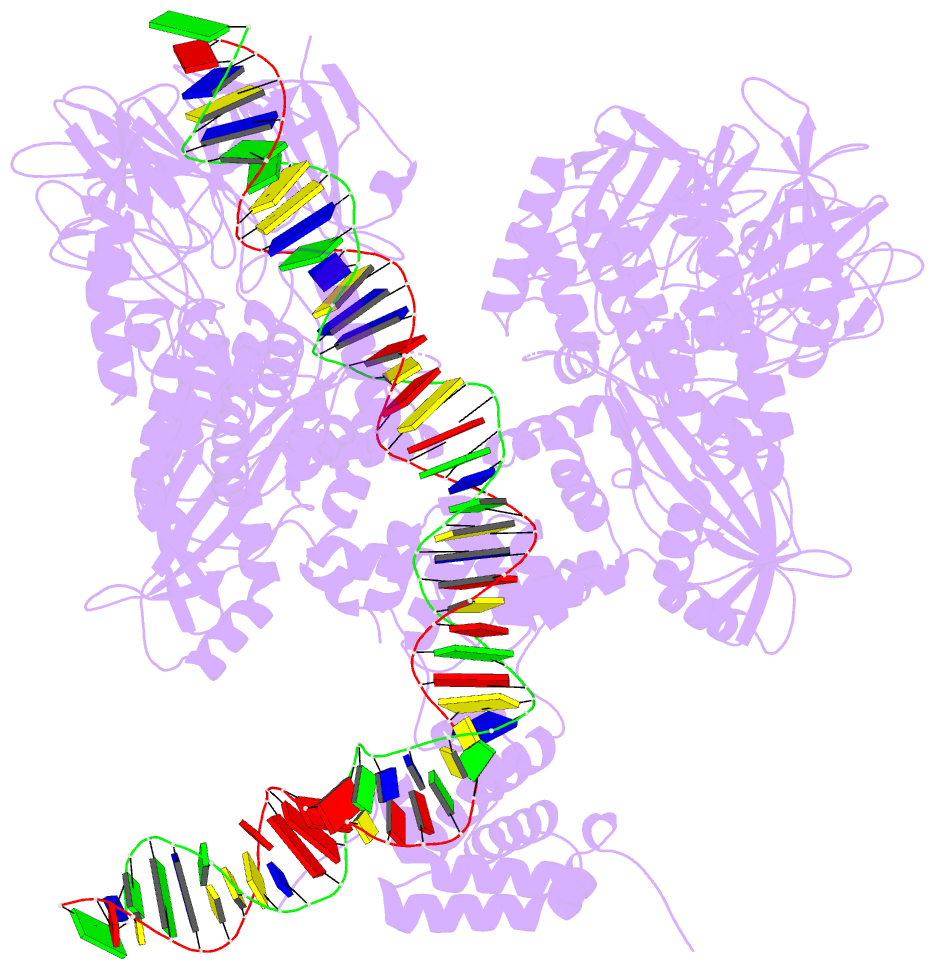
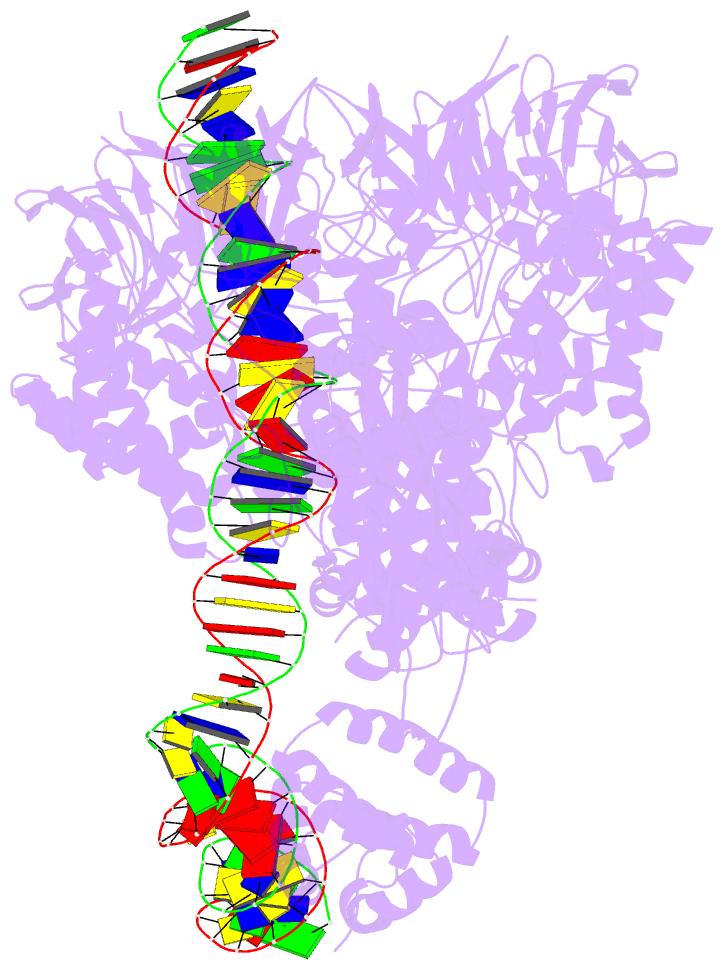
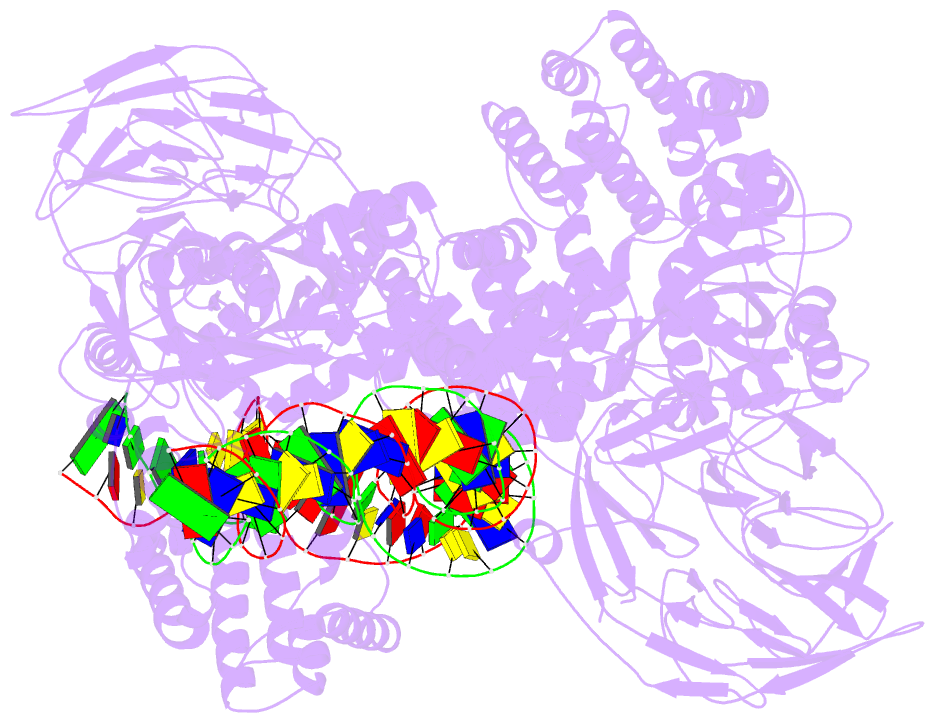
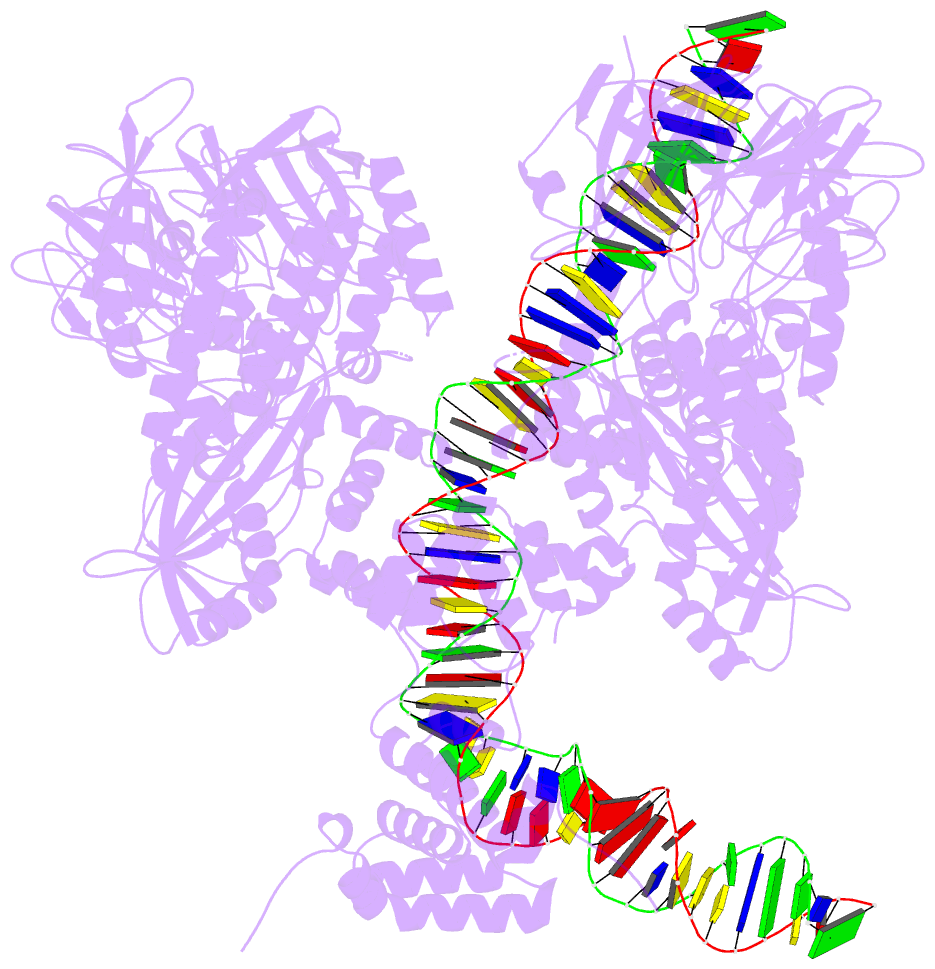
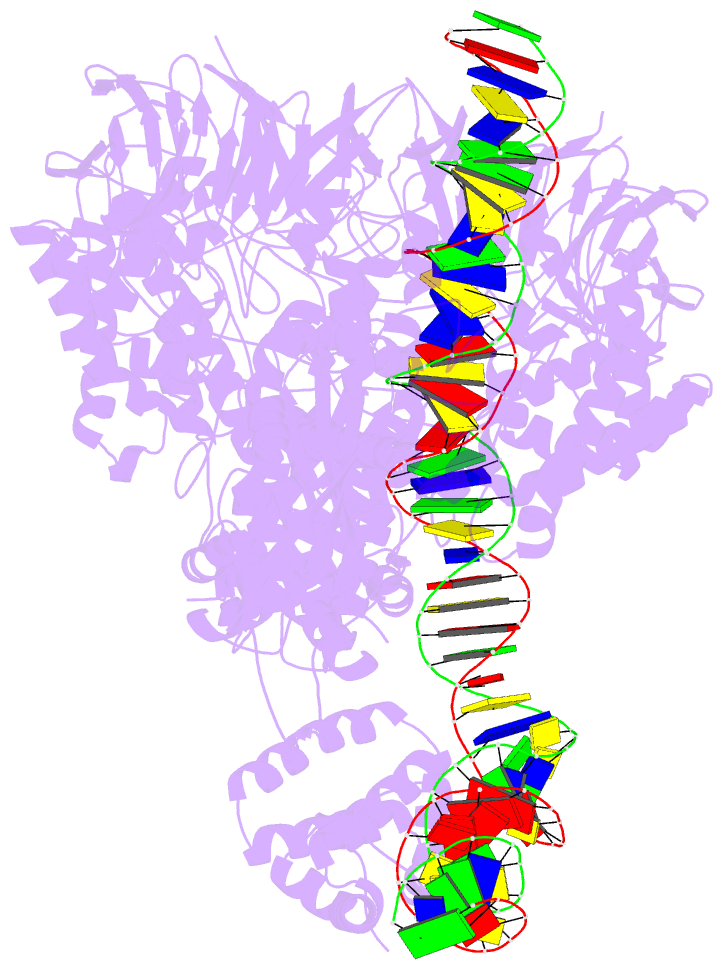
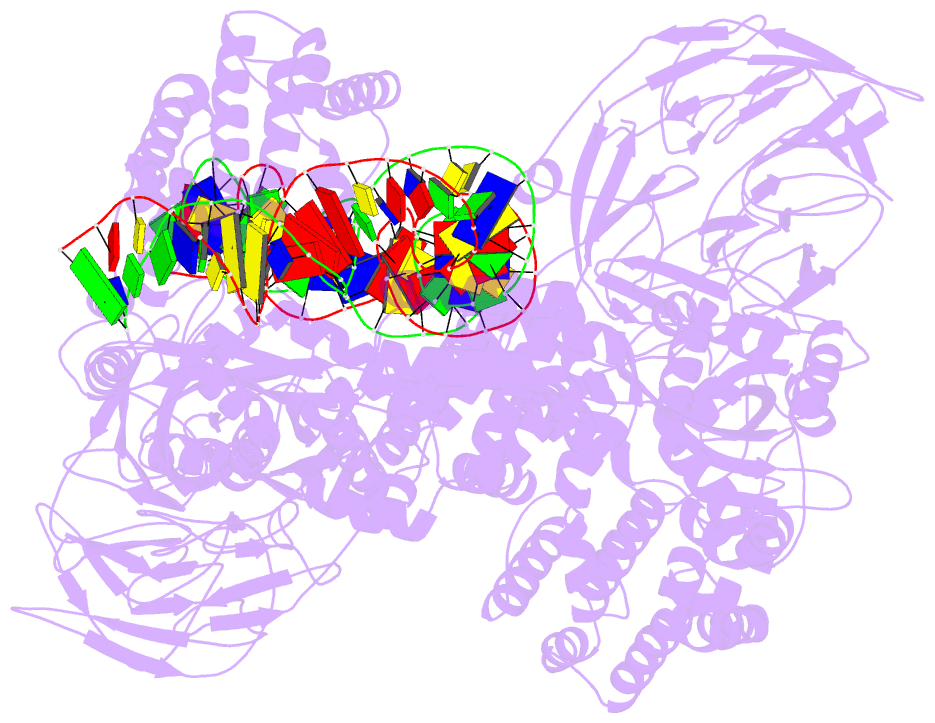
- cryo-EM structure of rag in complex with 12-rss
substrate DNA
- Reference
-
Ru H, Mi W, Zhang P, Alt FW, Schatz DG, Liao M, Wu H
(2018): "DNA
melting initiates the RAG catalytic pathway."
Nat. Struct. Mol. Biol., 25,
732-742. doi: 10.1038/s41594-018-0098-5.
- Abstract
- The mechanism for initiating DNA cleavage by DDE-family
enzymes, including the RAG endonuclease, which initiates
V(D)J recombination, is not well understood. Here we report
six cryo-EM structures of zebrafish RAG in complex with one
or two intact recombination signal sequences (RSSs), at up
to 3.9-Å resolution. Unexpectedly, these structures reveal
DNA melting at the heptamer of the RSSs, thus resulting in
a corkscrew-like rotation of coding-flank DNA and the
positioning of the scissile phosphate in the active site.
Substrate binding is associated with dimer opening and a
piston-like movement in RAG1, first outward to accommodate
unmelted DNA and then inward to wedge melted DNA. These
precleavage complexes show limited base-specific contacts
of RAG at the conserved terminal CAC/GTG sequence of the
heptamer, thus suggesting conservation based on a
propensity to unwind. CA and TG overwhelmingly dominate
terminal sequences in transposons and retrotransposons,
thereby implicating a universal mechanism for DNA melting
during the initiation of retroviral integration and DNA
transposition.