Summary information and primary citation
- PDB-id
-
6otz;
DSSR-derived features in text and
JSON formats
- Class
- transferase-DNA
- Method
- X-ray (2.857 Å)
- Summary
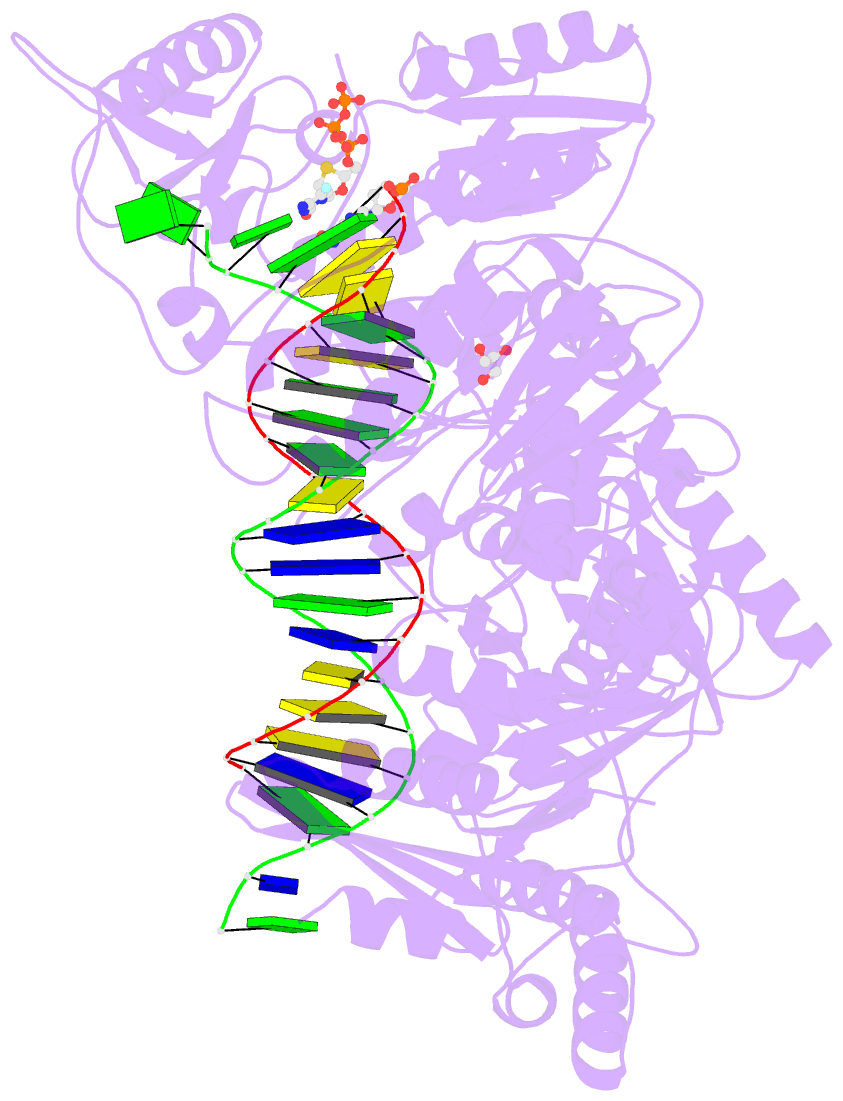
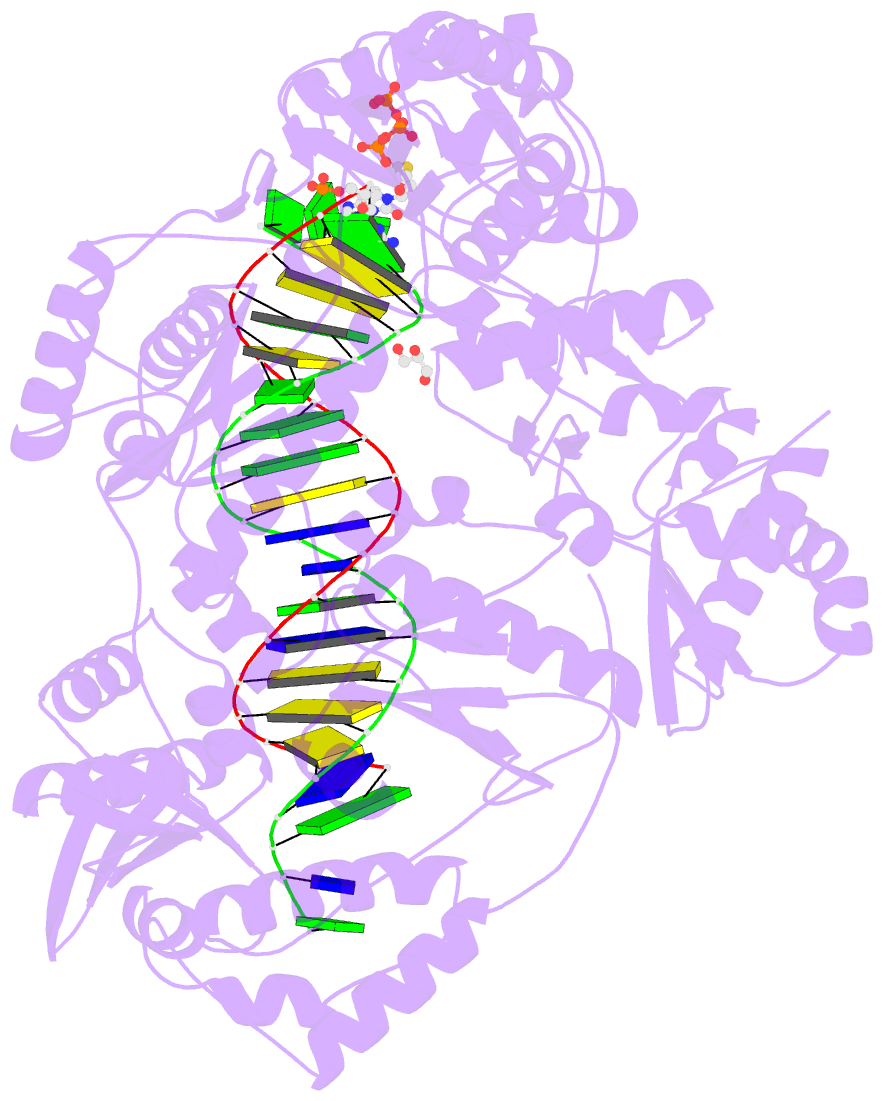
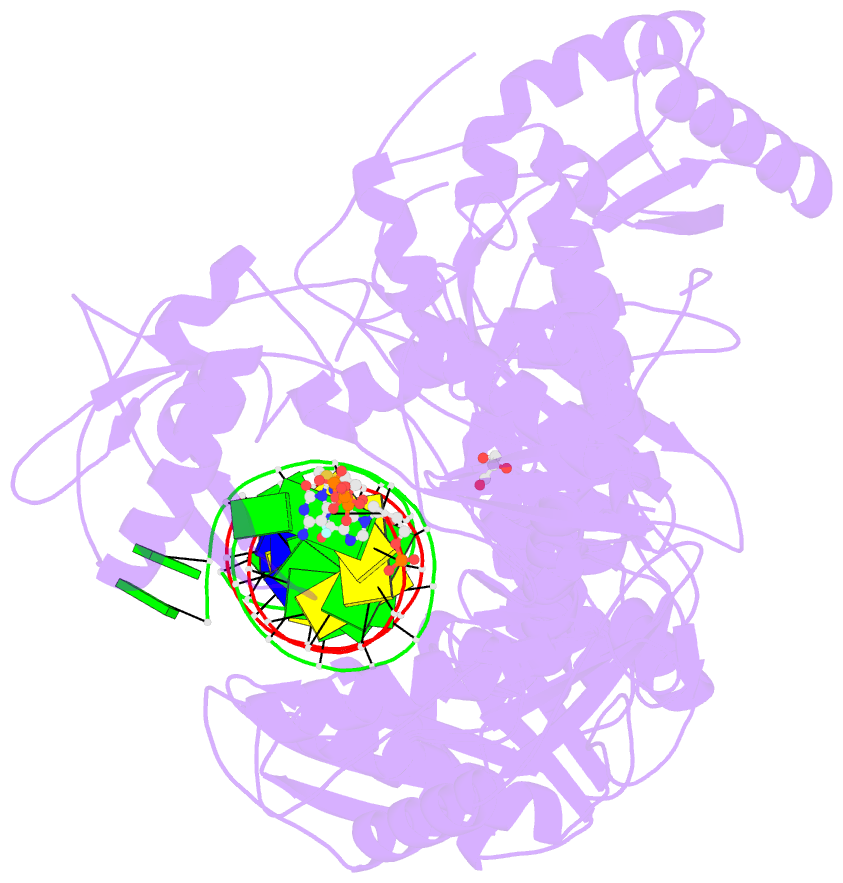
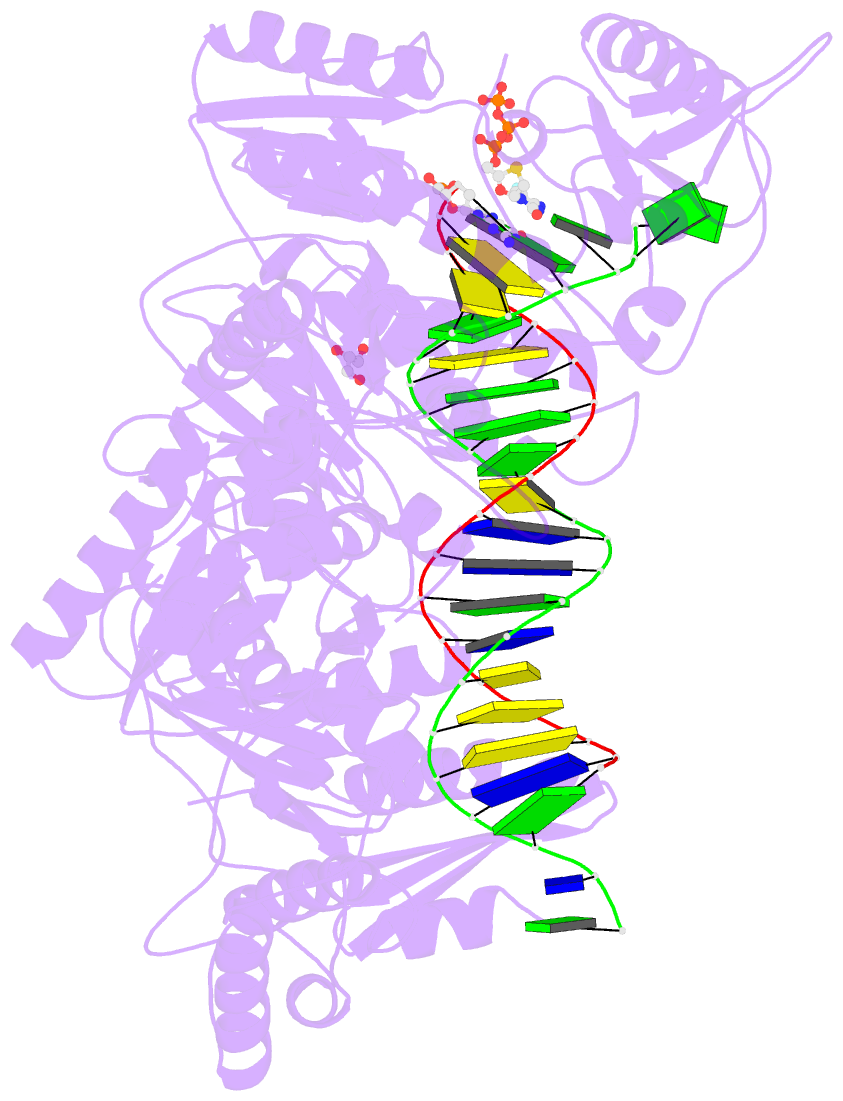
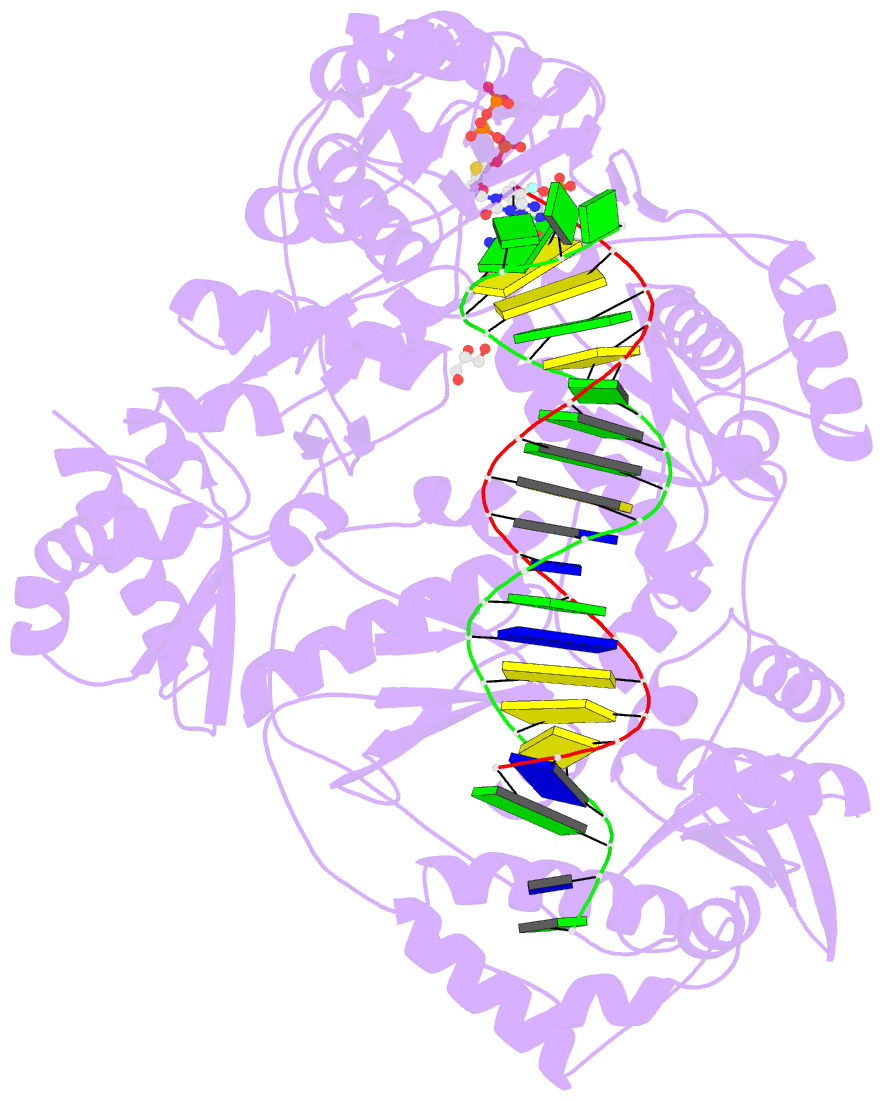
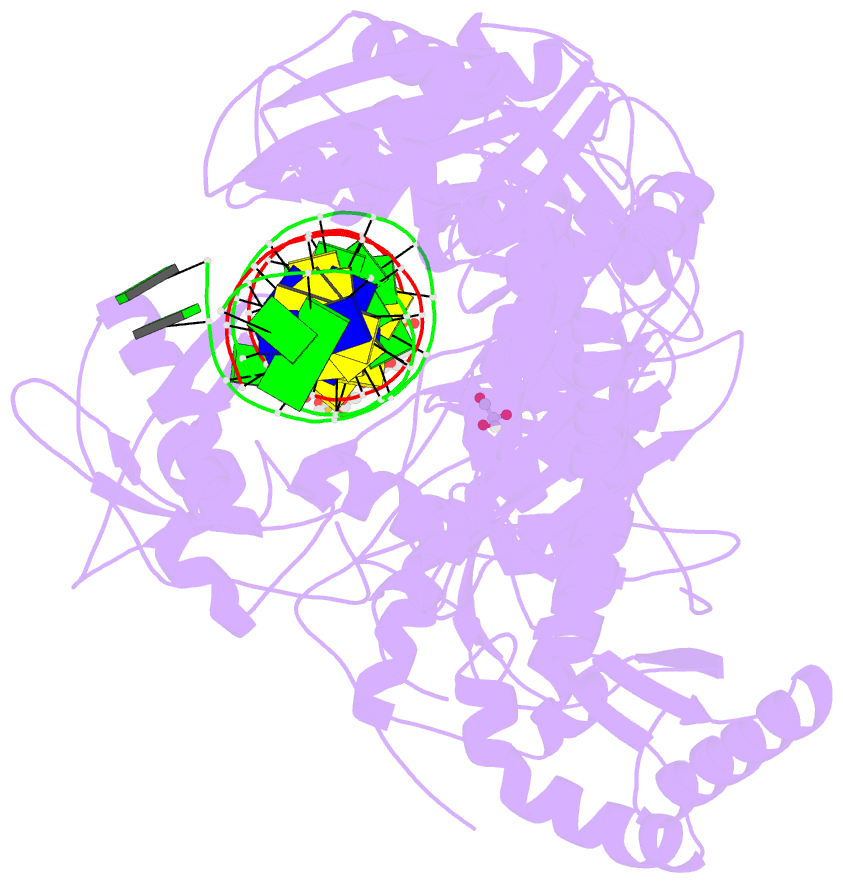
- Structure of hiv-1 reverse transcriptase (rt) in
complex with dsDNA and (+)ftc-tp
- Reference
-
Bertoletti N, Chan AH, Schinazi RF, Yin YW, Anderson KS
(2019): "Structural
insights into the recognition of nucleoside reverse
transcriptase inhibitors by HIV-1 reverse transcriptase:
First crystal structures with reverse transcriptase and
the active triphosphate forms of lamivudine and
emtricitabine." Protein Sci.,
28, 1664-1675. doi: 10.1002/pro.3681.
- Abstract
- The retrovirus HIV-1 has been a major health issue
since its discovery in the early 80s. In 2017, over 37
million people were infected with HIV-1, of which 1.8
million were new infections that year. Currently, the most
successful treatment regimen is the highly active
antiretroviral therapy (HAART), which consists of a
combination of three to four of the current 26 FDA-approved
HIV-1 drugs. Half of these drugs target the reverse
transcriptase (RT) enzyme that is essential for viral
replication. One class of RT inhibitors is nucleoside
reverse transcriptase inhibitors (NRTIs), a crucial
component of the HAART. Once incorporated into DNA, NRTIs
function as a chain terminator to stop viral DNA
replication. Unfortunately, treatment with NRTIs is
sometimes linked to toxicity caused by off-target side
effects. NRTIs may also target the replicative human
mitochondrial DNA polymerase (Pol γ), causing long-term
severe drug toxicity. The goal of this work is to
understand the discrimination mechanism of different NRTI
analogues by RT. Crystal structures and kinetic experiments
are essential for the rational design of new molecules that
are able to bind selectively to RT and not Pol γ.
Structural comparison of NRTI-binding modes with both RT
and Pol γ enzymes highlights key amino acids that are
responsible for the difference in affinity of these drugs
to their targets. Therefore, the long-term goal of this
research is to develop safer, next generation therapeutics
that can overcome off-target toxicity.