Summary information and primary citation
- PDB-id
-
6wya;
DSSR-derived features in text and
JSON formats
- Class
- transferase-DNA
- Method
- X-ray (2.41 Å)
- Summary
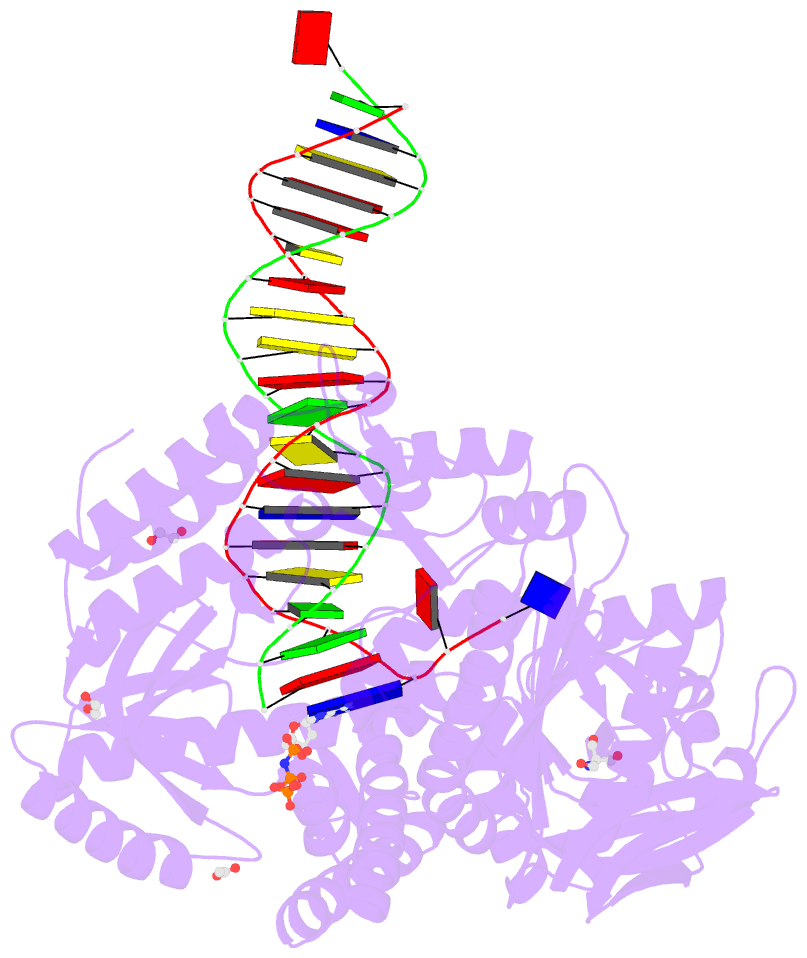
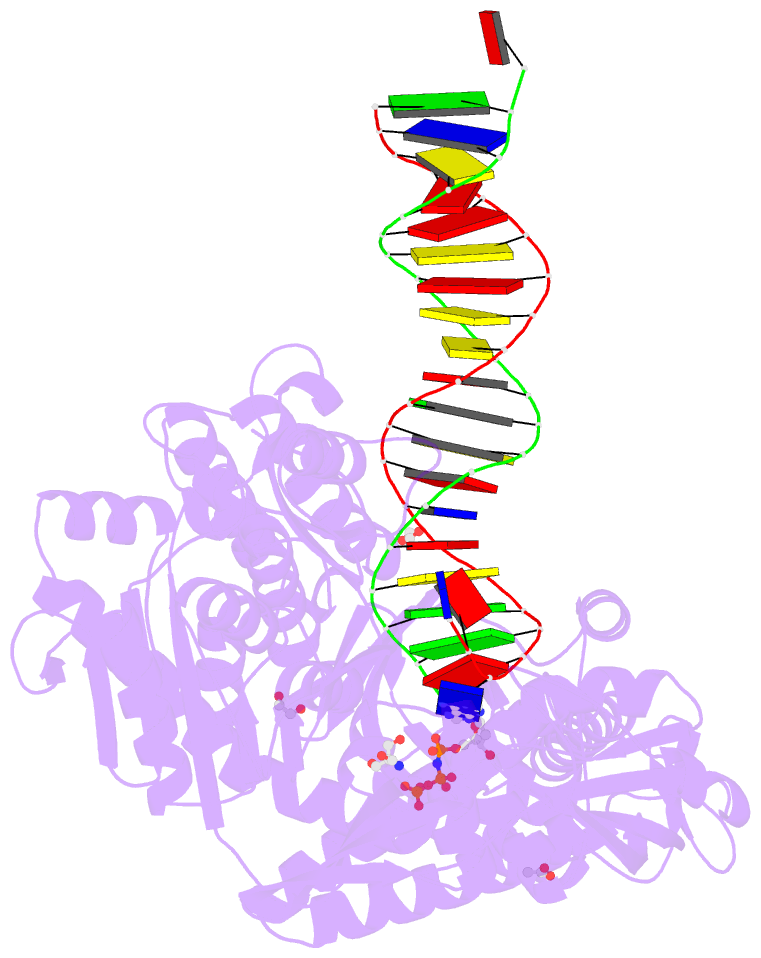
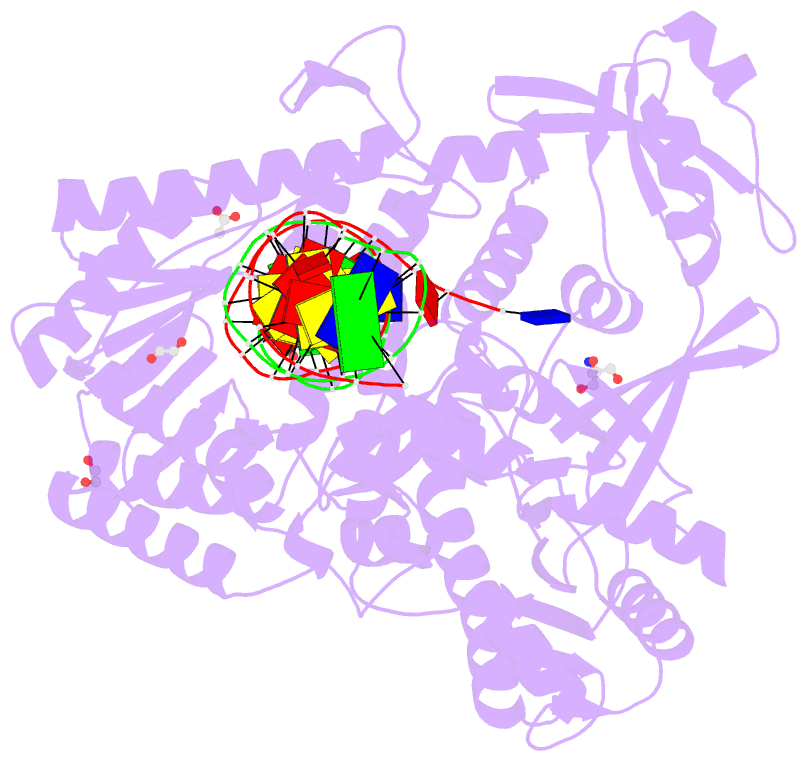
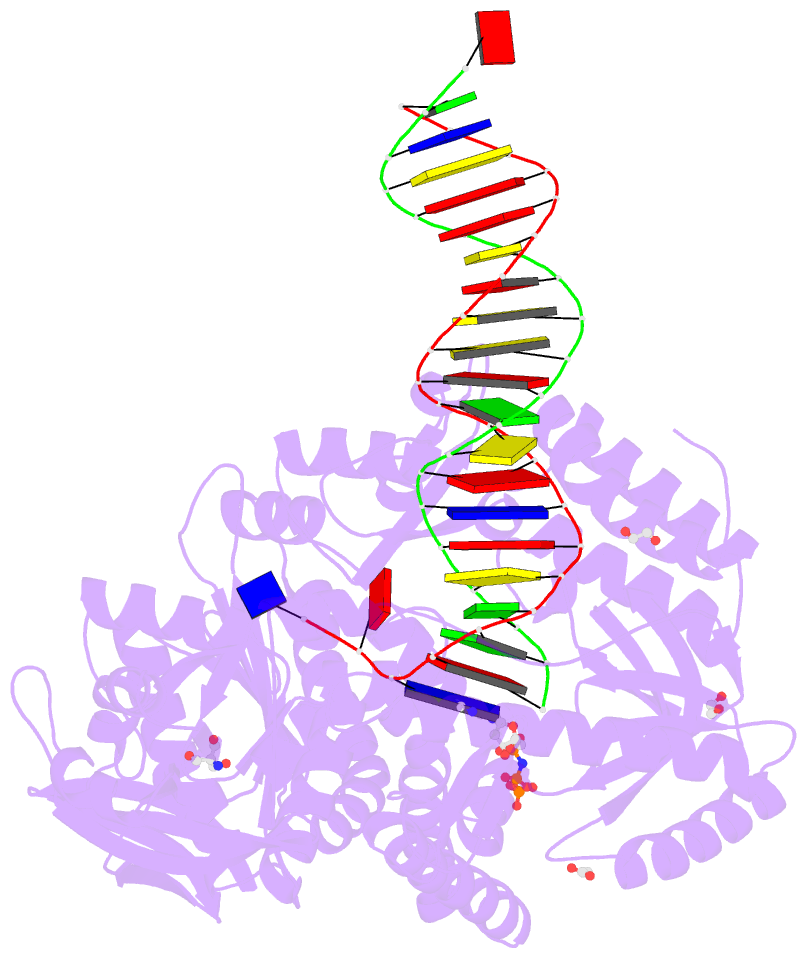
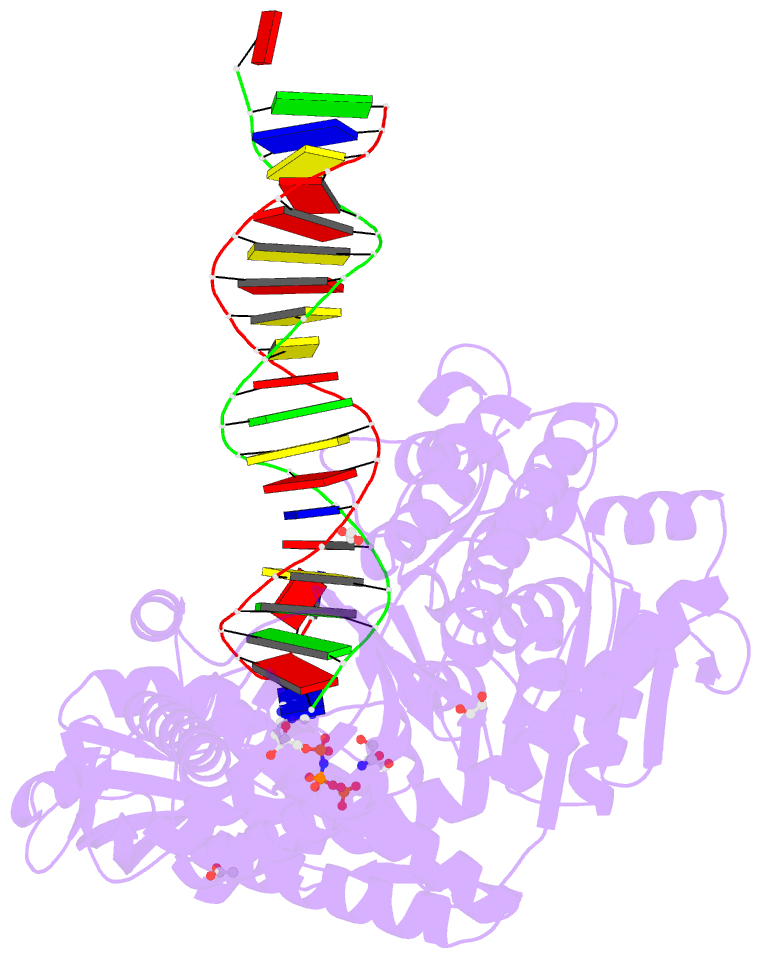
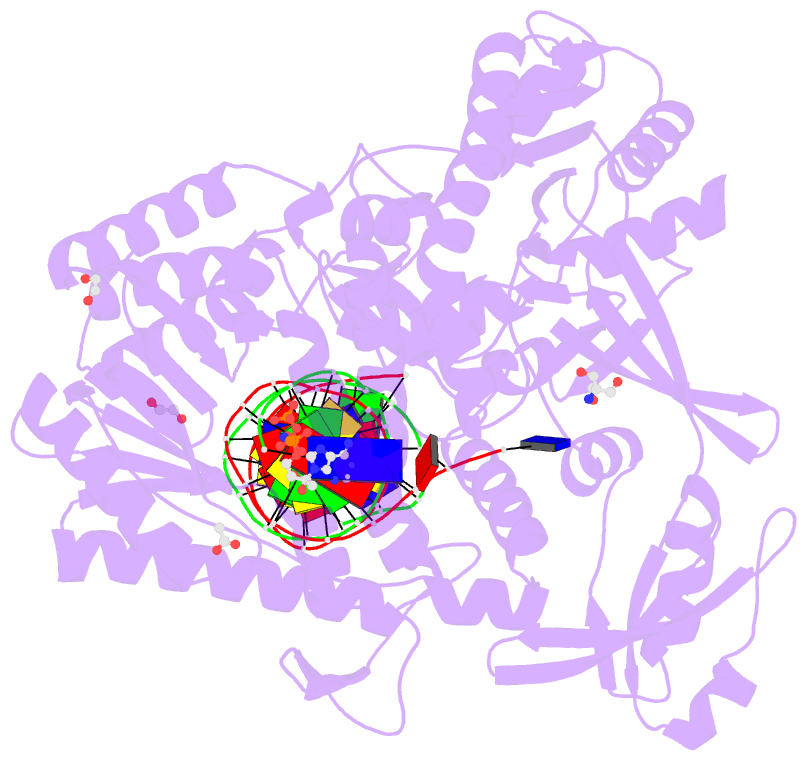
- Rtx (reverse transcription xenopolymerase) in complex
with a DNA duplex and dampnpp
- Reference
-
Choi WS, He P, Pothukuchy A, Gollihar J, Ellington AD,
Yang W (2020): "How a B
family DNA polymerase has been evolved to copy RNA."
Proc.Natl.Acad.Sci.USA, 117,
21274-21280. doi: 10.1073/pnas.2009415117.
- Abstract
- We report here crystal structures of a reverse
transcriptase RTX, which was evolved in vitro from the B
family polymerase KOD, in complex with either a DNA duplex
or an RNA-DNA hybrid. Compared with the apo, binary, and
ternary complex structures of the original KOD polymerase,
the 16 substitutions that result in the function of copying
RNA to DNA do not change the overall protein structure.
Only six substitutions occur at the substrate-binding
surface, and the others change domain-domain interfaces in
the polymerase to enable RNA-DNA hybrid binding and reverse
transcription. Most notably, F587L at the Palm and Thumb
interface stabilizes the open and apo conformation of the
Thumb. The intrinsically flexible Thumb domain seems to
play a major role in accommodating the RNA-DNA hybrid
product distal to the active site. This is reminiscent of
naturally occurring RNA-dependent DNA polymerases,
including telomerase, which have a dramatically augmented
Thumb domain, and of reverse transcriptase, which extends
its Thumb with the RNase H domain.