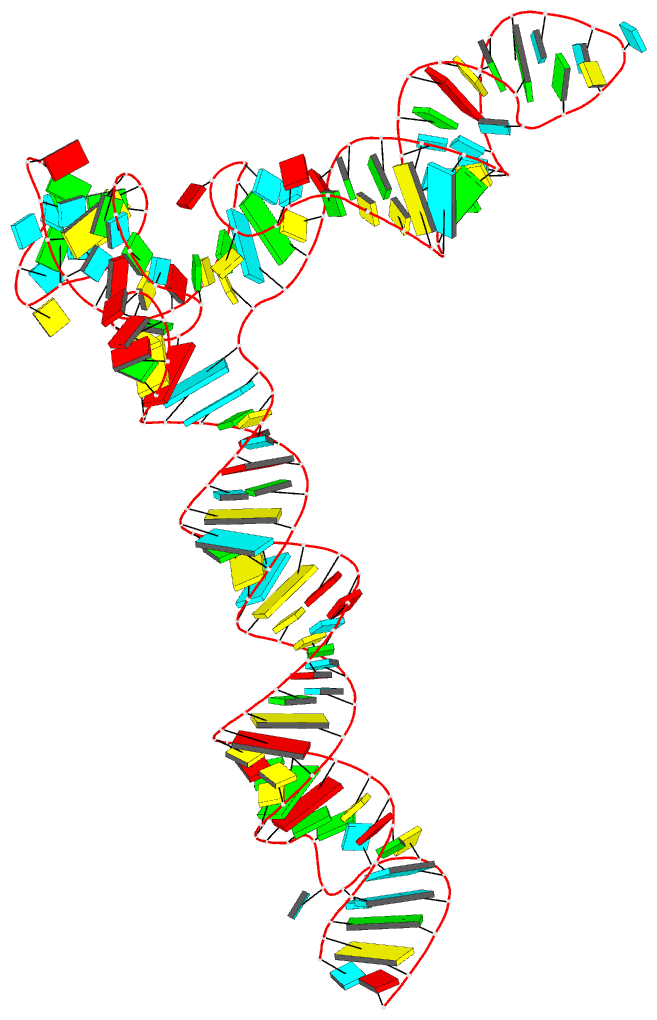
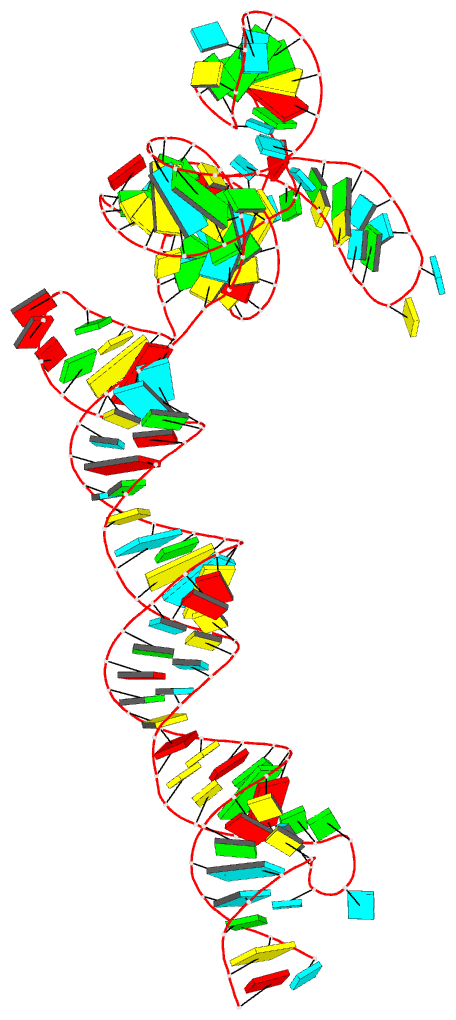
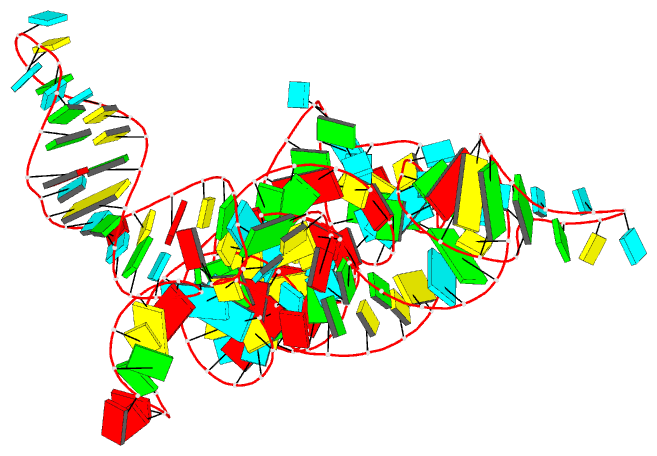
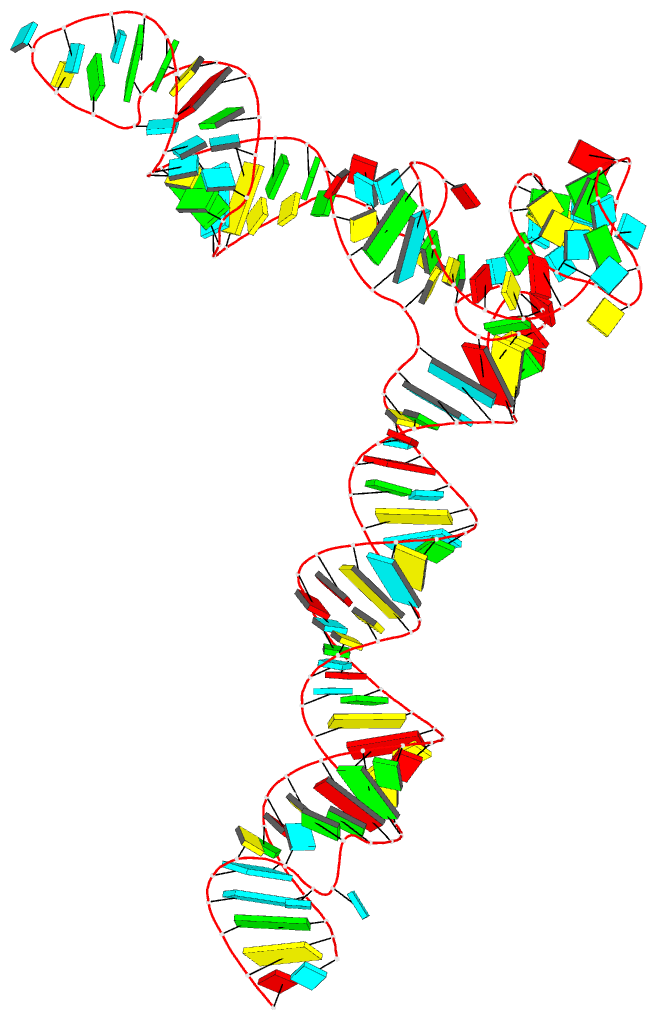
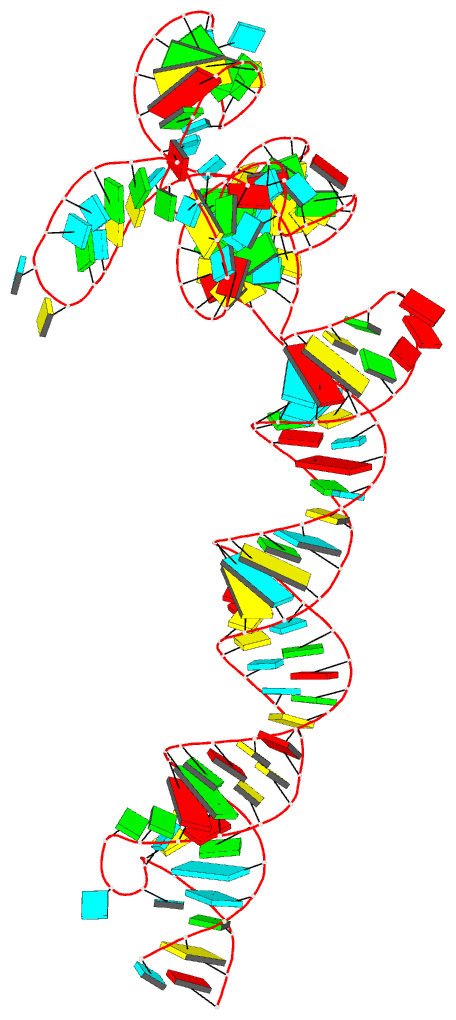
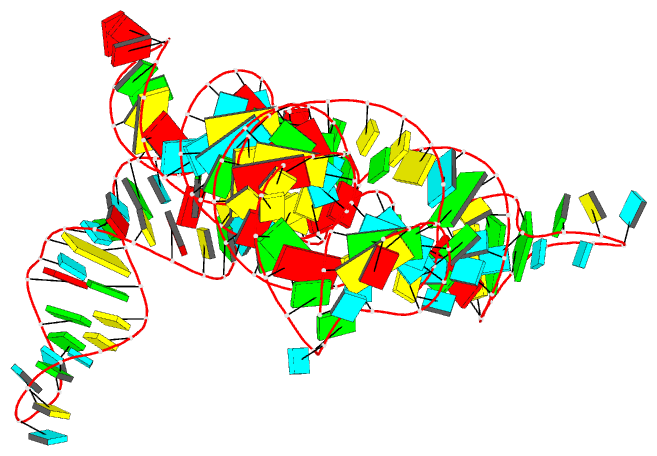
Summary information and primary citation
- PDB-id
-
8qo5;
DSSR-derived features in text and
JSON formats
- Class
- virus
- Method
- cryo-EM (6.5 Å)
- Summary
- Conserved structures and dynamics in 5-proximal regions
of betacoronavirus RNA genomes
- Reference
-
de Moura TR, Purta E, Bernat A, Martin-Cuevas EM,
Kurkowska M, Baulin EF, Mukherjee S, Nowak J, Biela AP,
Rawski M, Glatt S, Moreno-Herrero F, Bujnicki JM (2024):
"Conserved
structures and dynamics in 5'-proximal regions of
Betacoronavirus RNA genomes." Nucleic Acids
Res., 52, 3419-3432. doi: 10.1093/nar/gkae144.
- Abstract
- Betacoronaviruses are a genus within the Coronaviridae
family of RNA viruses. They are capable of infecting
vertebrates and causing epidemics as well as global
pandemics in humans. Mitigating the threat posed by
Betacoronaviruses requires an understanding of their
molecular diversity. The development of novel antivirals
hinges on understanding the key regulatory elements within
the viral RNA genomes, in particular the 5'-proximal
region, which is pivotal for viral protein synthesis. Using
a combination of cryo-electron microscopy, atomic force
microscopy, chemical probing, and computational modeling,
we determined the structures of 5'-proximal regions in RNA
genomes of Betacoronaviruses from four subgenera: OC43-CoV,
SARS-CoV-2, MERS-CoV, and Rousettus bat-CoV. We obtained
cryo-electron microscopy maps and determined
atomic-resolution models for the stem-loop-5 (SL5) region
at the translation start site and found that despite low
sequence similarity and variable length of the helical
elements it exhibits a remarkable structural conservation.
Atomic force microscopy imaging revealed a common domain
organization and a dynamic arrangement of structural
elements connected with flexible linkers across all four
Betacoronavirus subgenera. Together, these results reveal
common features of a critical regulatory region shared
between different Betacoronavirus RNA genomes, which may
allow targeting of these RNAs by broad-spectrum antiviral
therapeutics.