Summary information and primary citation
- PDB-id
-
2zha;
DSSR-derived features in text and
JSON formats
- Class
- transferase-RNA
- Method
- X-ray (2.95 Å)
- Summary
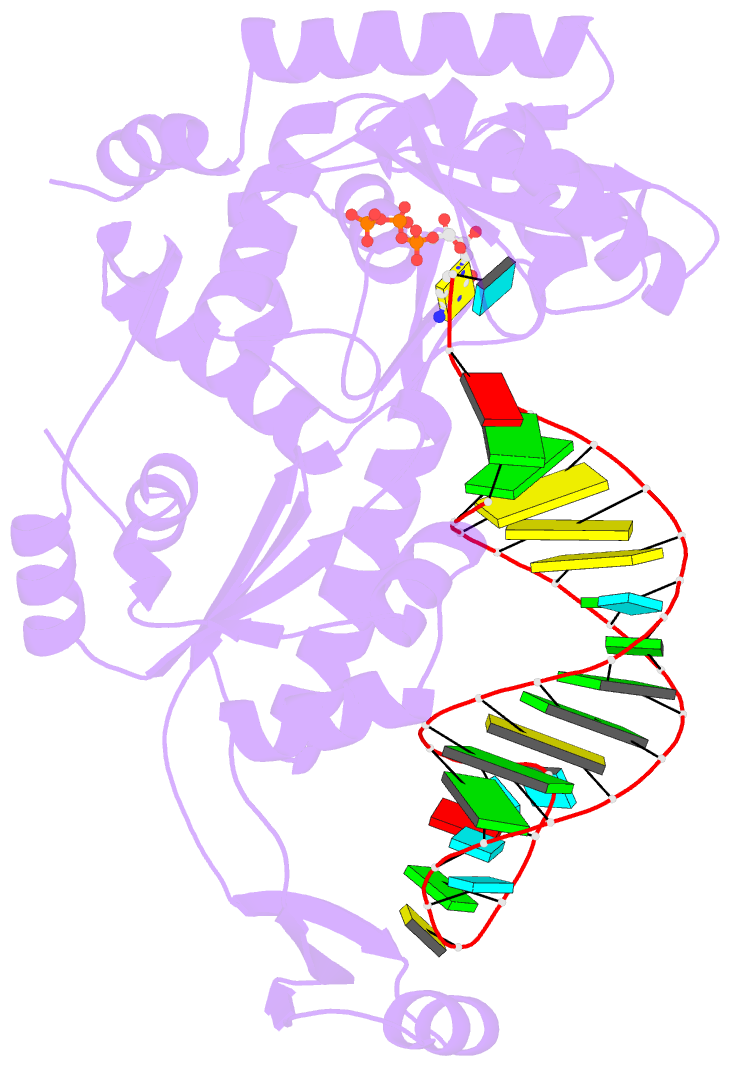
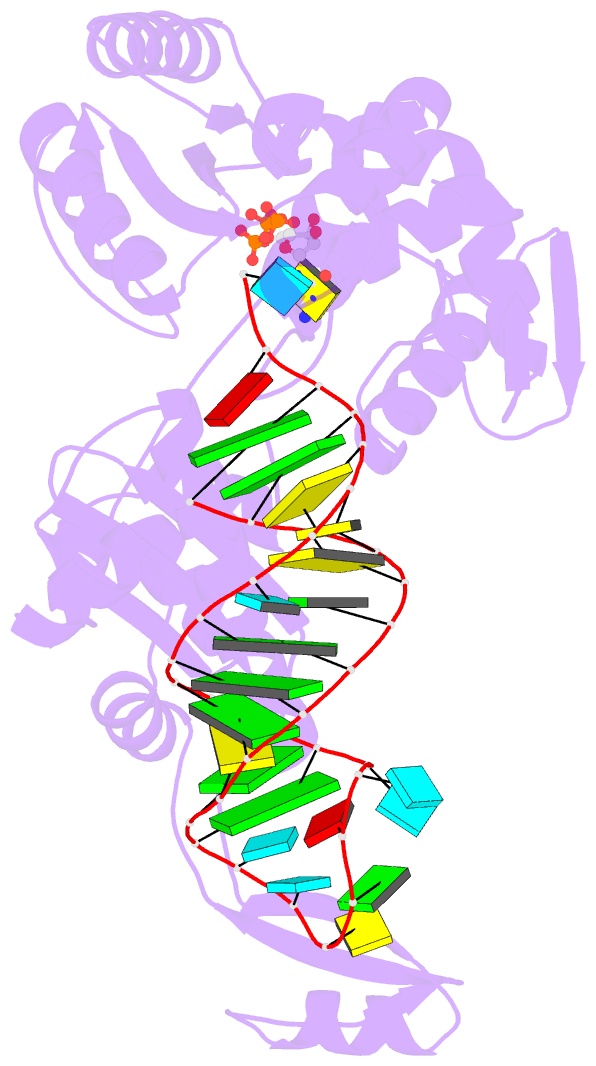
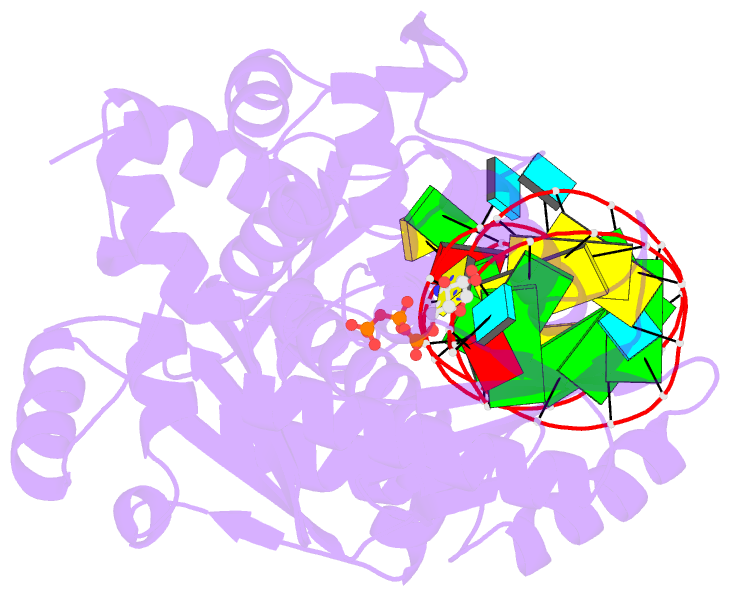
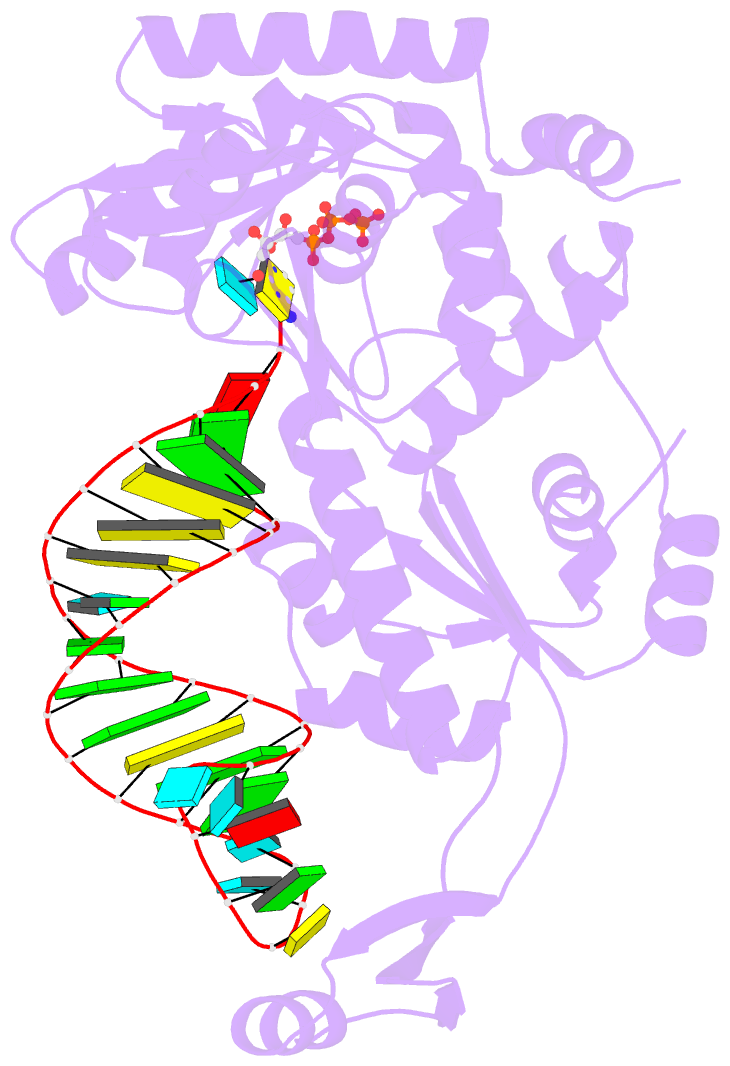
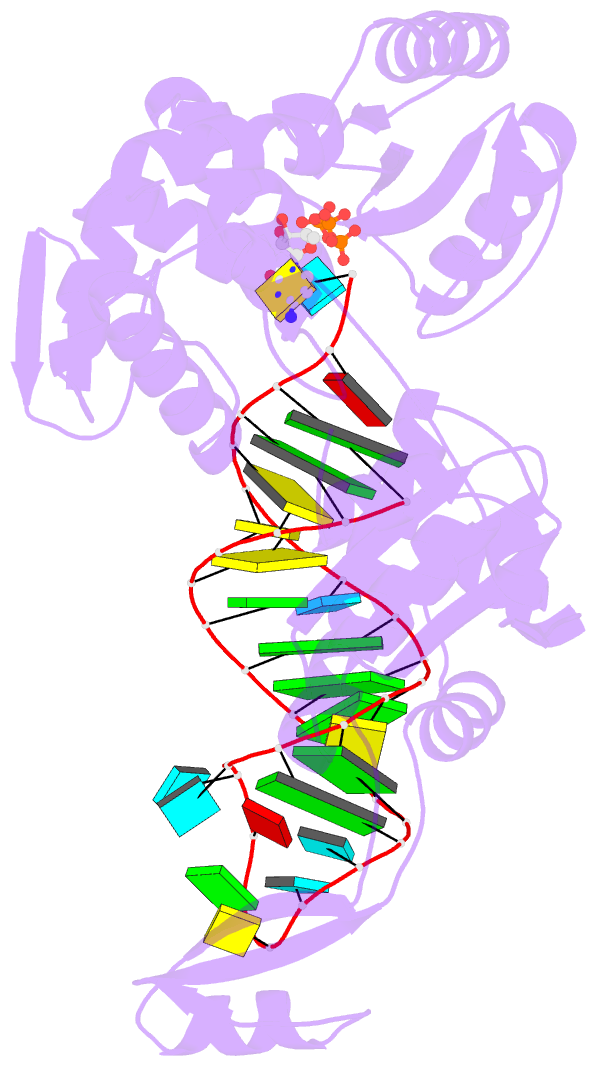
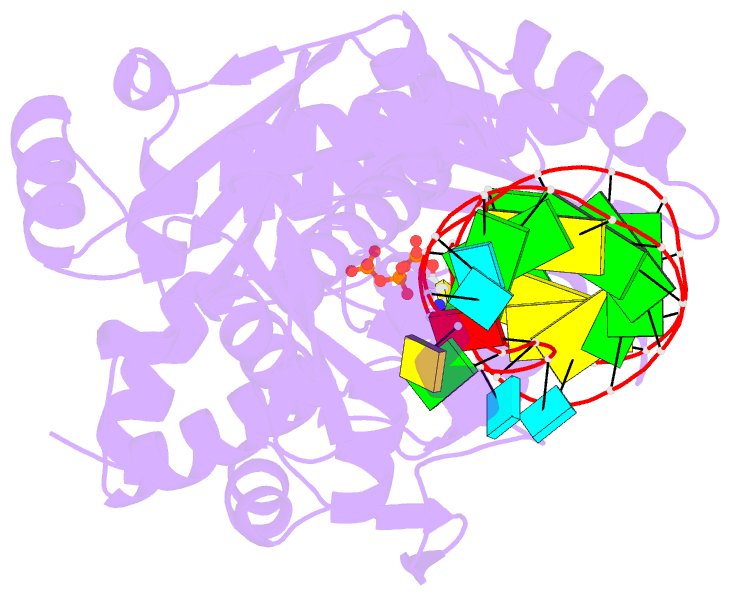
- Complex structure of afcca with trnaminidu and ctp
- Reference
-
Toh Y, Numata T, Watanabe K, Takeshita D, Nureki O,
Tomita K (2008): "Molecular
basis for maintenance of fidelity during the CCA-adding
reaction by a CCA-adding enzyme." Embo J.,
27, 1944-1952. doi: 10.1038/emboj.2008.124.
- Abstract
- CCA-adding enzyme builds the 3'-end CCA of tRNA without
a nucleic acid template. The mechanism for the maintenance
of fidelity during the CCA-adding reaction remains elusive.
Here, we present almost a dozen complex structures of the
class I CCA-adding enzyme and tRNA mini-helices
(mini-D(73)N(74), mini-D(73)N(74)C(75) and
mini-D(73)C(74)N(75); D(73) is a discriminator nucleotide
and N is either A, G, or U). The mini-D(73)N(74) complexes
adopt catalytically inactive open forms, and CTP shifts the
enzymes to the active closed forms and allows N(74) to flip
for CMP incorporation. In contrast, unlike the
catalytically active closed form of the
mini-D(73)C(74)C(75) complex, the mini-D(73)N(74)C(75) and
mini-D(73)C(74)N(75) complexes adopt inactive open forms.
Only the mini-D(73)C(74)U(75) accepts AMP to a similar
extent as mini-D(73)C(74)C(75), and ATP shifts the enzyme
to a closed, active form and allows U(75) to flip for AMP
incorporation. These findings suggest that the 3'-region of
RNA is proofread, after two nucleotide additions, in the
closed, active form of the complex at the AMP incorporation
stage. This proofreading is a prerequisite for the
maintenance of fidelity for complete CCA synthesis.