Summary information and primary citation
- PDB-id
-
5uzz;
DSSR-derived features in text and
JSON formats
- Class
- transport protein-RNA
- Method
- NMR
- Summary
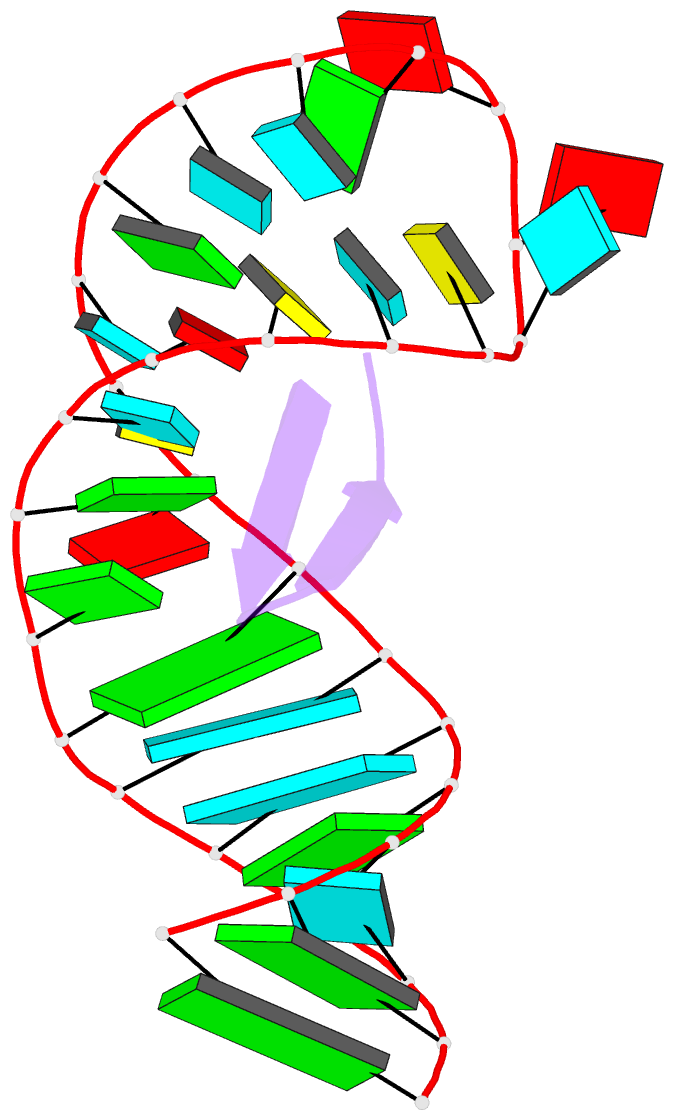
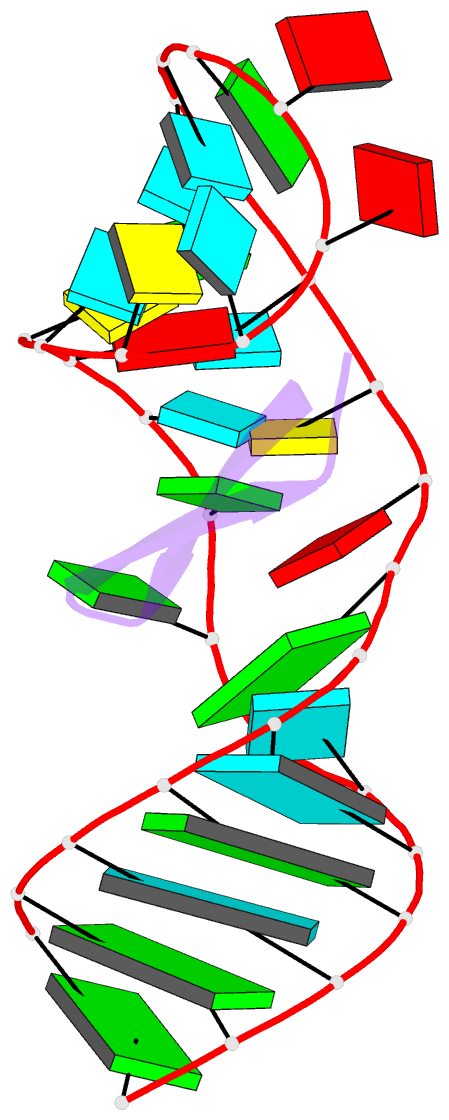
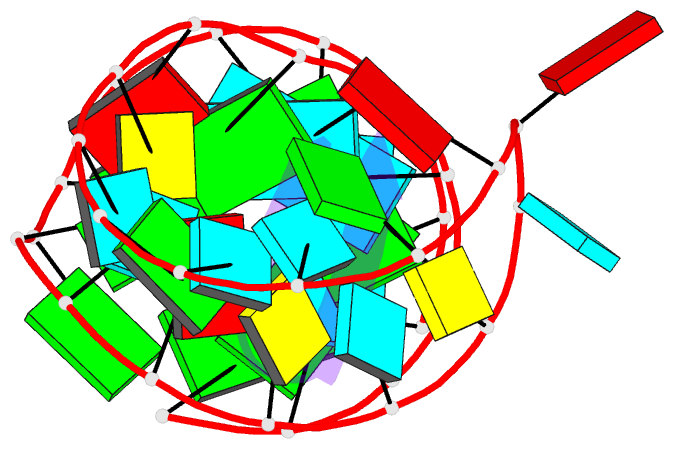
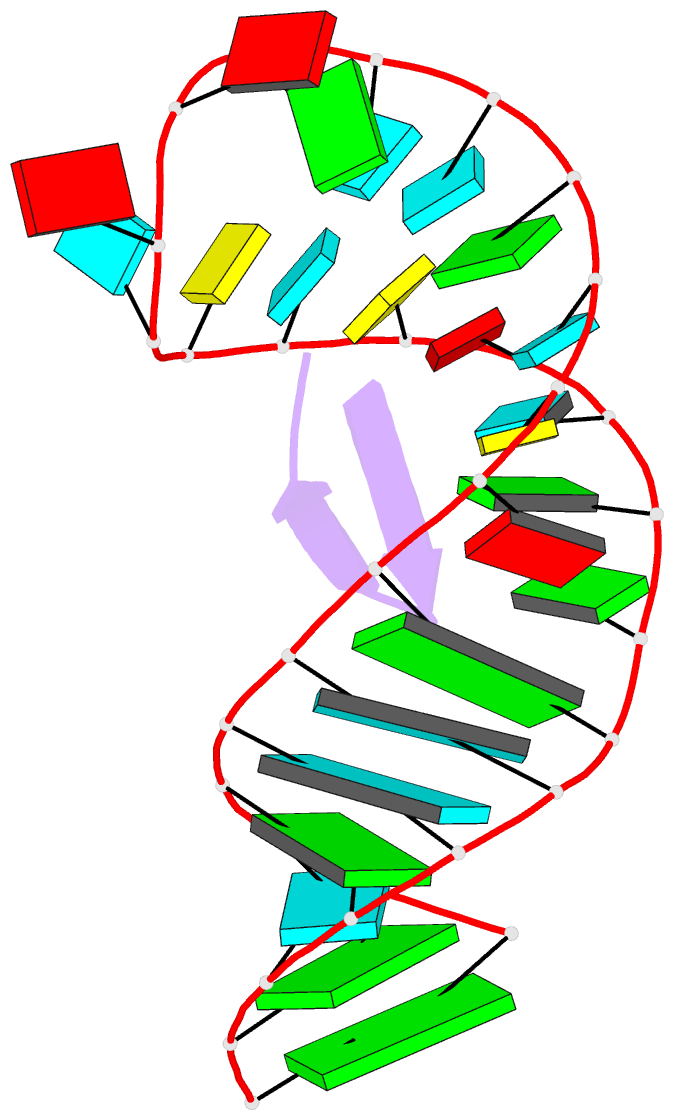
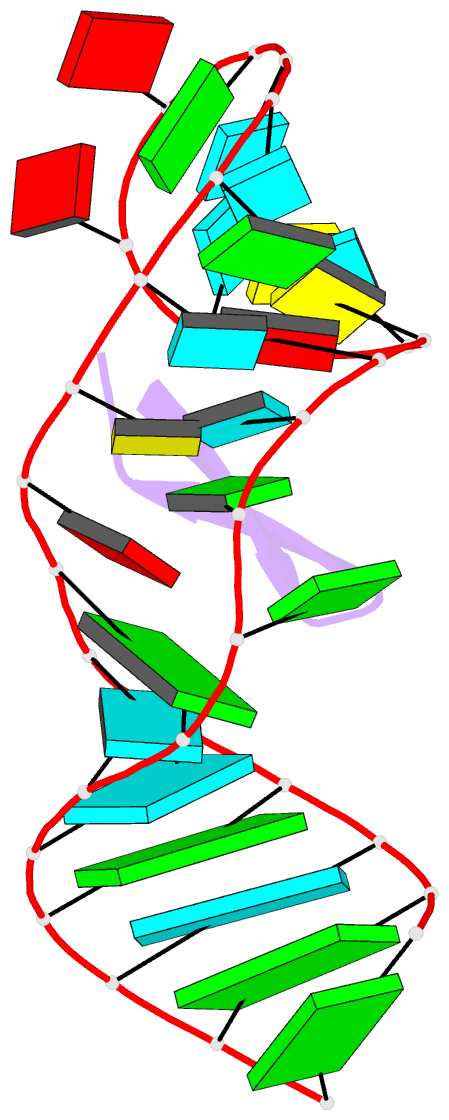
- Structure of wild type pre-mir21 apical loop
- Reference
-
Shortridge MD, Walker MJ, Pavelitz T, Chen Y, Yang W,
Varani G (2017): "A
Macrocyclic Peptide Ligand Binds the Oncogenic
MicroRNA-21 Precursor and Suppresses Dicer
Processing." ACS Chem. Biol.,
12, 1611-1620. doi: 10.1021/acschembio.7b00180.
- Abstract
- MicroRNAs (miRNAs) help orchestrate cellular growth and
survival through post-transcriptional mechanisms. The
dysregulation of miRNA biogenesis can lead to cellular
growth defects and chemotherapeutic resistance and plays a
direct role in the development of many chronic diseases.
Among these RNAs, miR-21 is consistently overexpressed in
most human cancers, leading to the down-regulation of key
tumor-suppressing and pro-apoptotic factors, suggesting
that inhibition of miR-21 biogenesis could reverse these
negative effects. However, targeted inhibition of miR-21
using small molecules has had limited success. To overcome
difficulties in targeting RNA secondary structure with
small molecules, we developed a class of cyclic β-hairpin
peptidomimetics which bind to RNA stem-loop structures,
such as miRNA precursors, with potent affinity and
specificity. We screened an existing cyclic peptide library
and discovered a lead structure which binds to pre-miR21
with K<sub>D</sub> = 200 nM and prefers it over
other pre-miRNAs. The NMR structure of the complex shows
that the peptide recognizes the Dicer cleavage site and
alters processing of the precursor to the mature miRNA in
vitro and in cultured cells. The structure provides a
rationale for the peptide binding activity and clear
guidance for further improvements in affinity and
targeting.