Summary information and primary citation
- PDB-id
-
8atv;
DSSR-derived features in text and
JSON formats
- Class
- transcription
- Method
- cryo-EM (3.39 Å)
- Summary
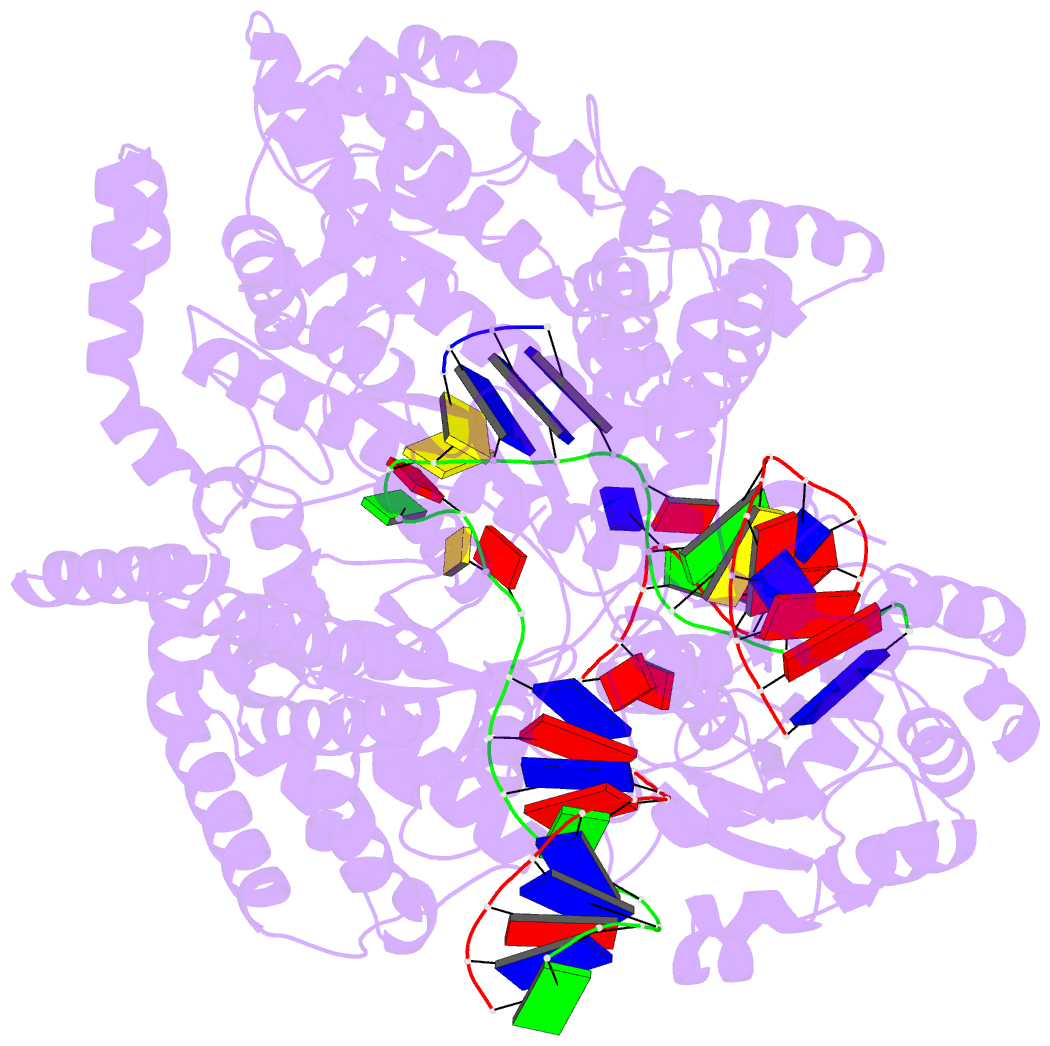
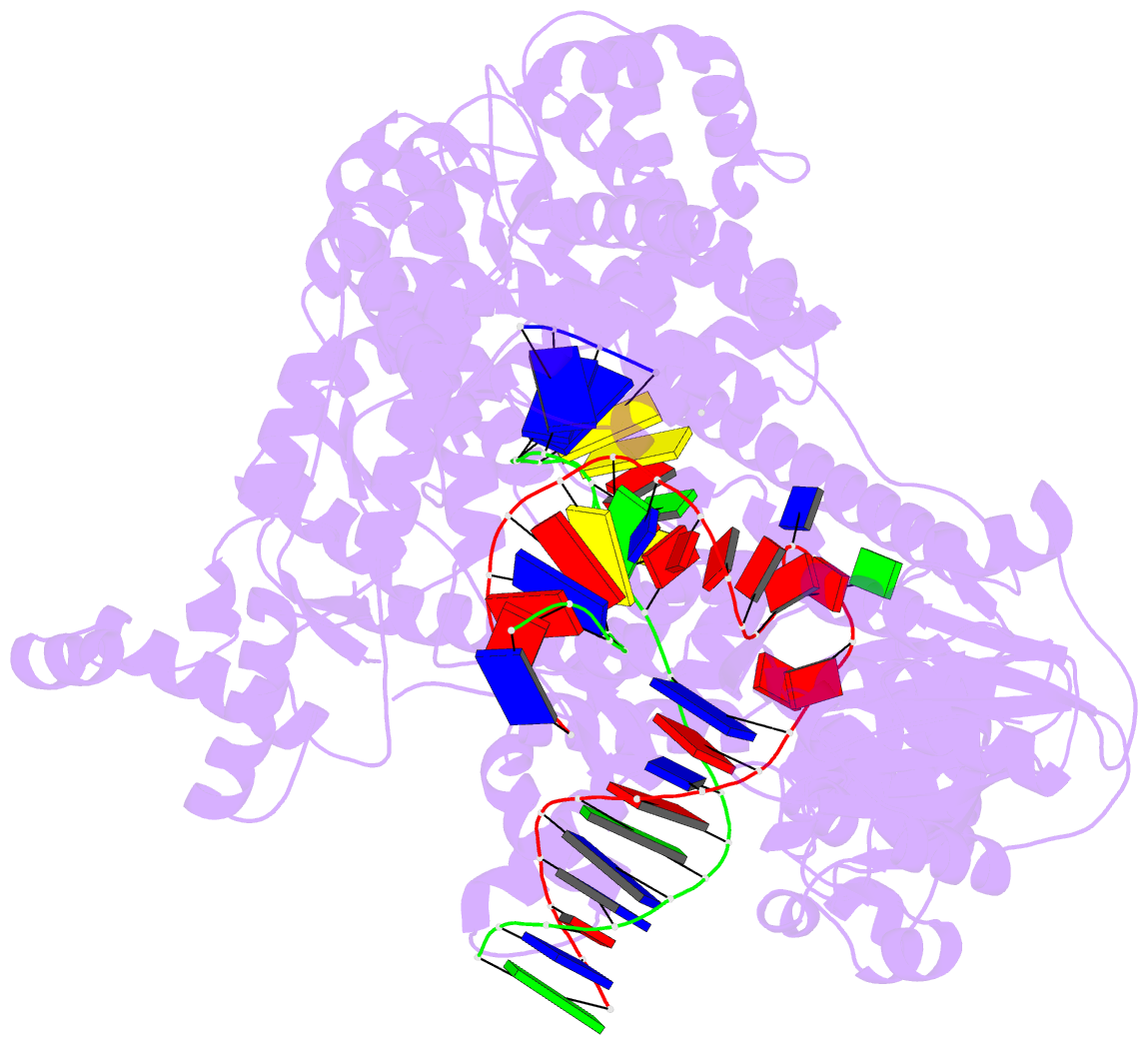
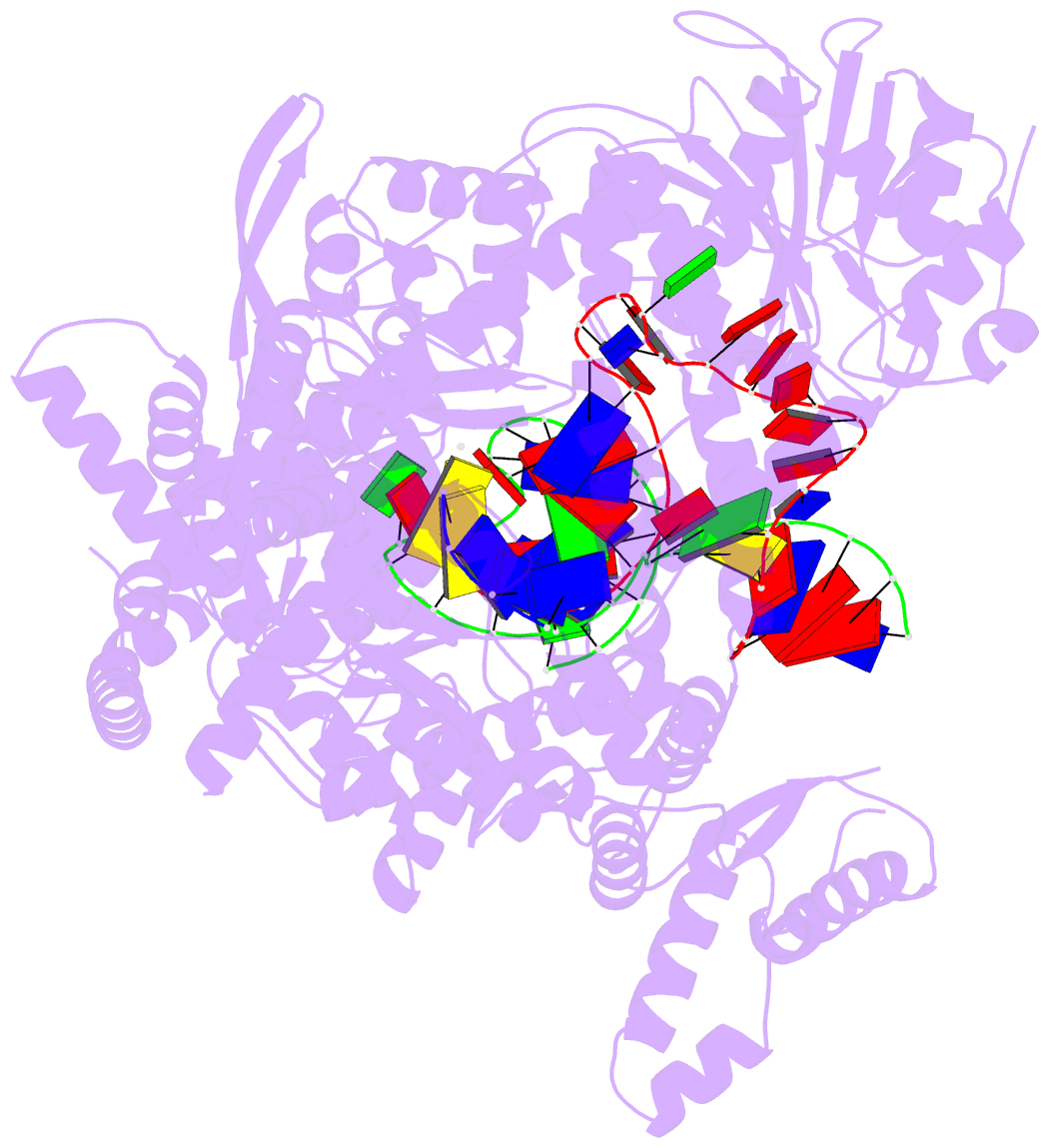
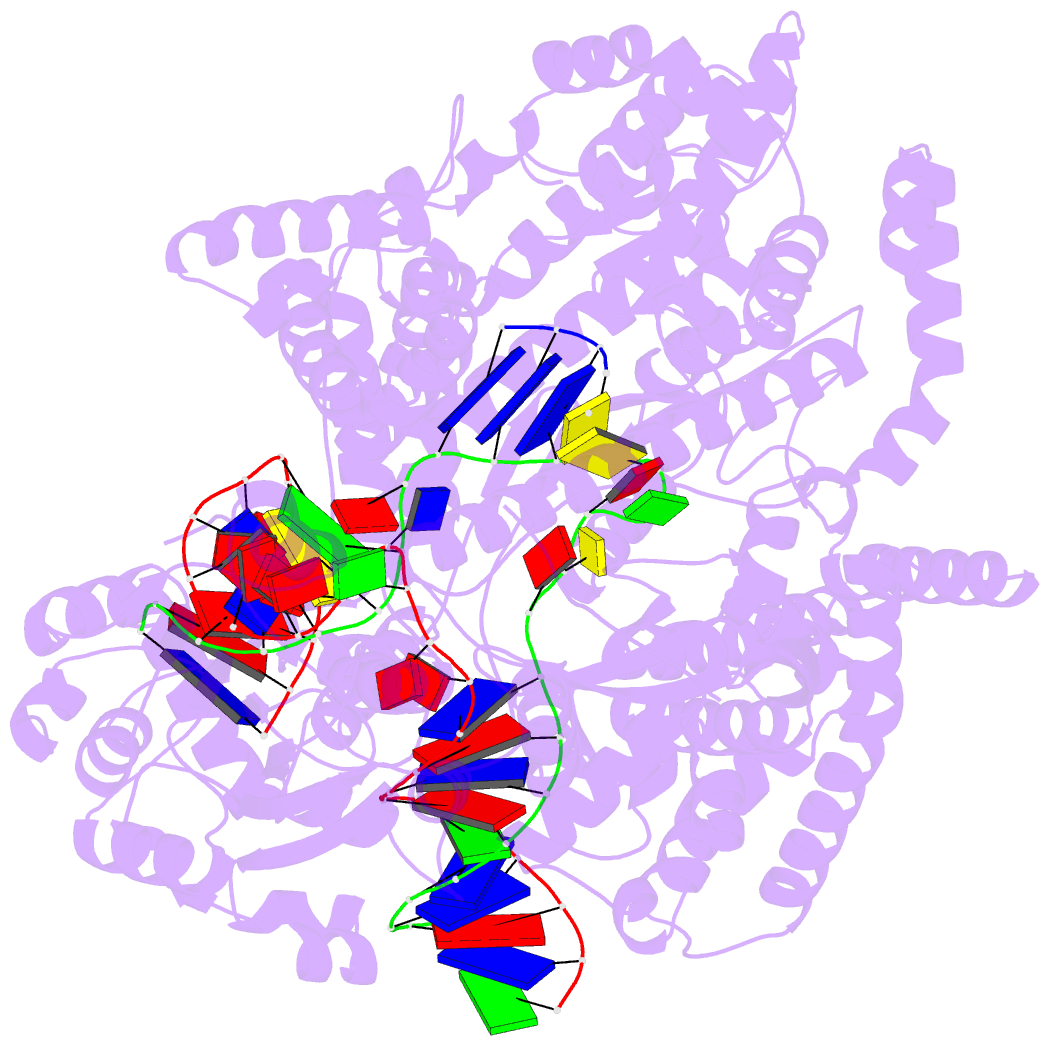
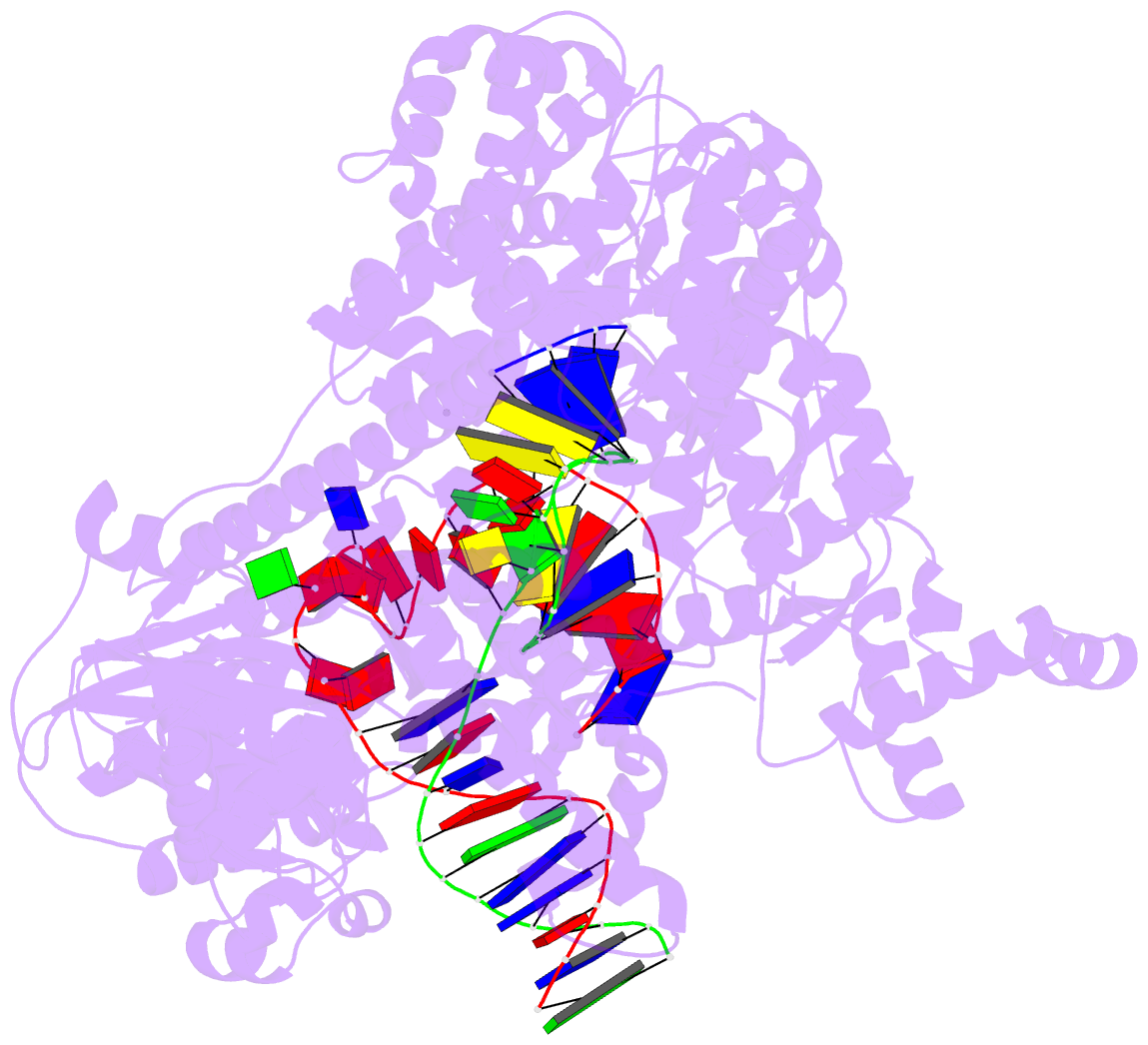
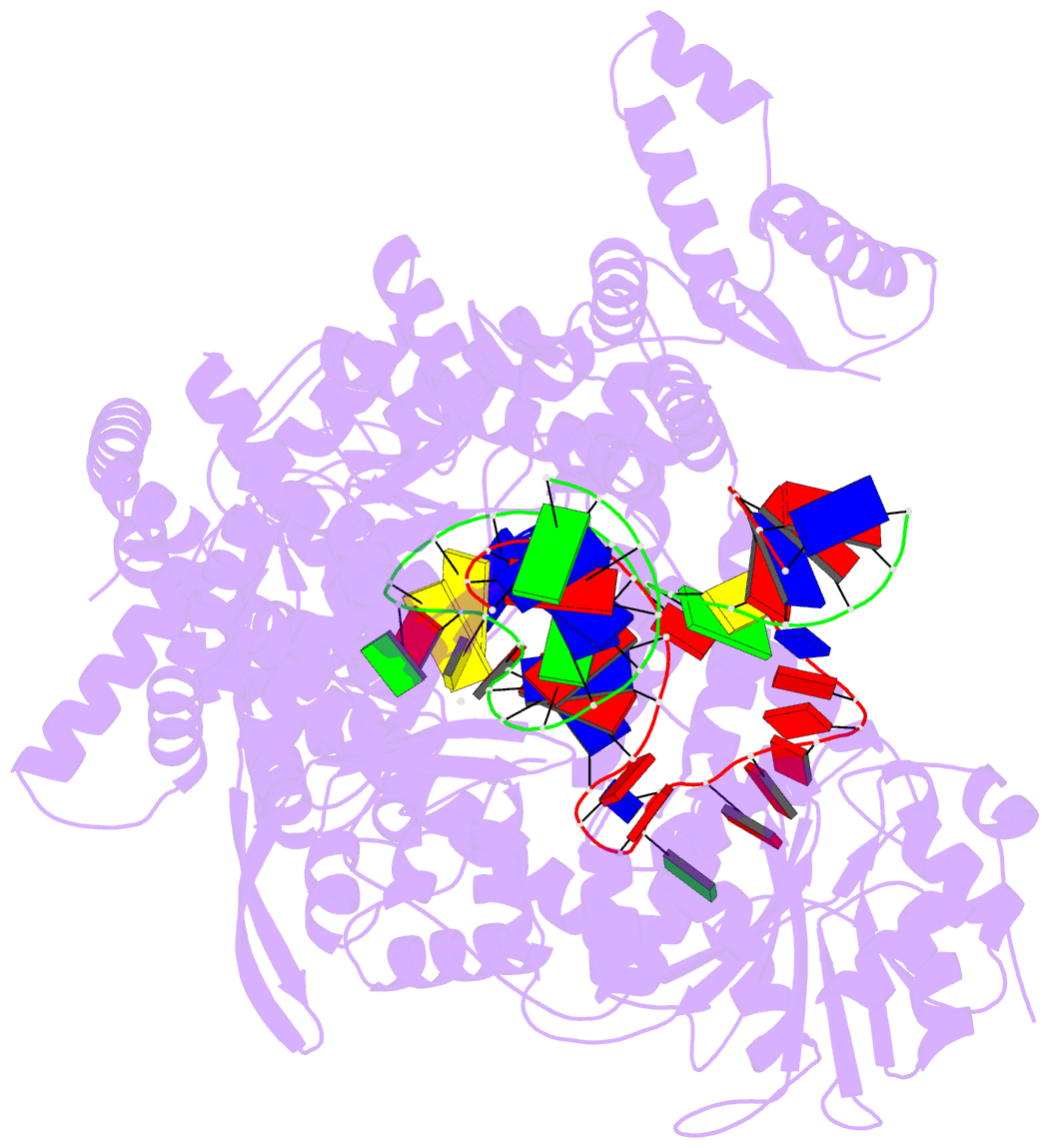
- cryo-EM structure of yeast mitochondrial RNA polymerase
transcription initiation complex with 5-mer RNA,
pppgpgpapapa (ic5)
- Reference
-
Goovaerts Q, Shen J, De Wijngaert B, Basu U, Patel SS,
Das K (2023): "Structures
illustrate step-by-step mitochondrial transcription
initiation." Nature, 622,
872-879. doi: 10.1038/s41586-023-06643-y.
- Abstract
- Transcription initiation is a key regulatory step in
gene expression during which RNA polymerase (RNAP)
initiates RNA synthesis de novo, and the synthesized RNA at
a specific length triggers the transition to the elongation
phase. Mitochondria recruit a single-subunit RNAP and one
or two auxiliary factors to initiate transcription.
Previous studies have revealed the molecular architectures
of yeast<sub>1</sub> and
human<sub>2</sub> mitochondrial RNAP initiation
complexes (ICs). Here we provide a comprehensive,
stepwise mechanism of transcription initiation by solving
high-resolution cryogenic electron microscopy
(cryo-EM) structures of yeast mitochondrial RNAP and
the transcription factor Mtf1 catalysing two- to
eight-nucleotide RNA synthesis at single-nucleotide
addition steps. The growing RNA-DNA is accommodated in the
polymerase cleft by template scrunching and non-template
reorganization, creating stressed intermediates. During
early initiation, non-template strand scrunching and
unscrunching destabilize the short two- and
three-nucleotide RNAs, triggering abortive synthesis.
Subsequently, the non-template reorganizes into a
base-stacked staircase-like structure supporting processive
five- to eight-nucleotide RNA synthesis. The expanded
non-template staircase and highly scrunched template in IC8
destabilize the promoter interactions with Mtf1 to
facilitate initiation bubble collapse and promoter escape
for the transition from initiation to the elongation
complex (EC). The series of transcription initiation
steps, each guided by the interplay of multiple structural
components, reveal a finely tuned mechanism for potential
regulatory control.